
A Year That Redefined the Digital Experience
Web design in 2020 will always be remembered as the year the world moved online almost overnight. As remote work, online learning, telehealth, and digital commerce surged, websites stopped being just marketing assets and became critical infrastructure. Designers were tasked with building experiences that were not only visually appealing but also reliable, accessible, and capable of handling unprecedented traffic and complexity.
This pressure accelerated trends that had been quietly building for years. Dark mode moved from niche feature to mainstream expectation. Accessibility leapt from compliance checkbox to design principle. Performance optimization became non-negotiable. And visual styles like neumorphism and glassmorphism captured imaginations, even when they raised valid concerns about usability.
Hire AAMAX.CO for Web Design and Development Services
Navigating the design and development landscape that emerged from 2020 requires a partner that understands both the human and technical sides of digital experiences. AAMAX.CO helps organizations design and build websites that serve real-world needs, whether that means launching a new e-commerce platform, modernizing an outdated corporate site, or rolling out a content-rich web application. Their global team blends strategy, design, and engineering to ensure that every project they deliver feels modern, performs well, and supports long-term business growth.
Dark Mode Goes Mainstream
By 2020, dark mode had become a defining visual trend. Operating systems, mobile apps, and major platforms all rolled out dark themes, and websites quickly followed. Designers began creating dual-theme experiences that respected user preferences set at the system level, using CSS custom properties and the prefers-color-scheme media query to switch palettes automatically.
Beyond aesthetics, dark mode raised important conversations about contrast, legibility, and emotional tone. Designers had to learn how to translate brand colors into a darker context without losing recognizability. They also had to consider that pure black backgrounds with pure white text could cause eye strain, leading to the widespread adoption of softer dark grays and slightly muted whites.
Neumorphism and Glassmorphism Capture Attention
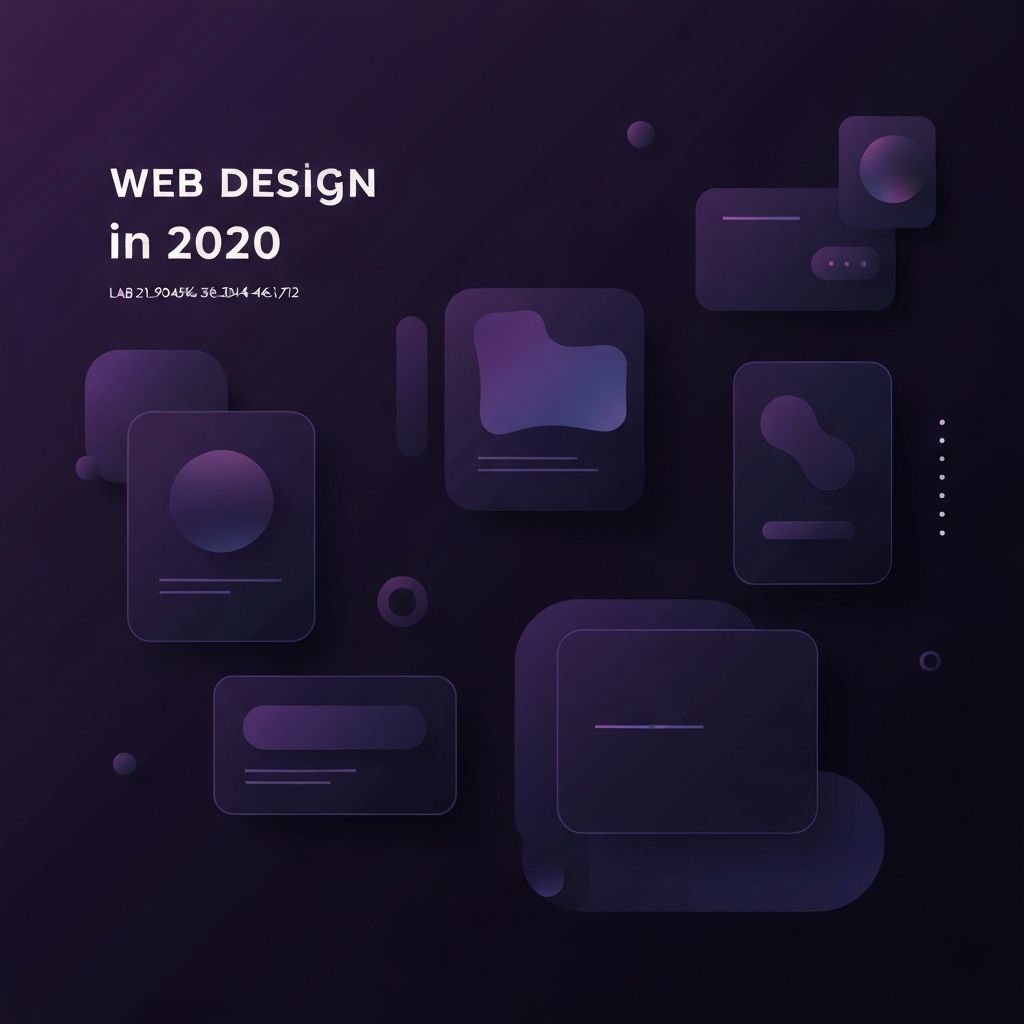
2020 also saw the rise of two visually striking trends: neumorphism and glassmorphism. Neumorphism, with its soft, extruded shapes and subtle inner shadows, offered a fresh take on skeuomorphism, blending realism with minimalism. Glassmorphism, defined by frosted, translucent layers floating above colorful backgrounds, brought a sense of depth and modernity to interfaces.
While both styles were widely shared on design platforms, they sparked important debates about accessibility. Low-contrast neumorphic buttons could be invisible to users with low vision, and complex glass effects could harm performance. The takeaway was clear: visual trends should always be evaluated against the real-world needs of diverse users, not just adopted because they look impressive in mockups.
Accessibility Becomes a Core Pillar
One of the most lasting shifts in 2020 was the renewed focus on accessibility. With more critical services moving online, ensuring that everyone could use a website became a moral, legal, and business imperative. Designers and developers paid closer attention to color contrast, keyboard navigation, screen reader support, semantic markup, and cognitive load.
Tools that automated accessibility checks became standard parts of design and development workflows. Beyond automation, however, teams began recognizing that real accessibility requires human review and lived-experience input. Investing in inclusive website design is no longer a nice-to-have; it is the baseline expectation for any organization that takes its digital presence seriously.
Remote Collaboration Reshapes Workflows
With design teams suddenly distributed across cities and time zones, the tools and rituals of digital collaboration changed dramatically. Cloud-based design platforms like Figma exploded in popularity, allowing real-time multi-user editing, commenting, and prototyping. Whiteboarding tools, asynchronous video updates, and structured documentation became essential to keep projects moving forward without in-person meetings.
This shift also made design and development handoff more transparent. Developers could inspect design files directly, copy CSS values, and leave contextual feedback without waiting for formal review meetings. The result was faster iteration cycles and more collaborative relationships between disciplines, a benefit that has continued well beyond the original lockdown period.
Performance and Core Web Vitals
2020 also marked the beginning of a more measurable approach to web performance. Google introduced Core Web Vitals, a set of metrics focused on loading, interactivity, and visual stability, and signaled that they would influence search rankings. Designers and developers had to think more carefully about how images, fonts, scripts, and animations affected real-world user experience.
This shift connected design decisions directly to business outcomes. Slow, jittery, or laggy pages did not just frustrate users; they hurt search visibility and conversion rates. As a result, performance became a first-class consideration in every website development conversation, from initial wireframes to final launch.
E-commerce and Digital Services Surge
The pandemic-driven surge in online activity forced many businesses to invest heavily in their digital storefronts and service platforms. Brands that had previously relied on physical locations had to launch or expand e-commerce capabilities almost overnight. This created enormous demand for thoughtful product page layouts, streamlined checkout flows, and trustworthy content design.
Designers responded with patterns that emphasized clarity and confidence: prominent product imagery, transparent pricing, clear return policies, and reassuring micro-copy throughout the purchase journey. These patterns continue to define successful online stores today, and they will likely keep evolving as commerce becomes even more deeply integrated into everyday digital life.
The Lasting Legacy of 2020
Web design in 2020 was shaped by extraordinary circumstances, but its lessons are universal. It reminded the industry that websites are tools for real people in real situations, that accessibility and performance are non-negotiable, and that visual creativity must always serve usability. The trends that emerged were not just stylistic; they reflected deep changes in how people lived, worked, and connected through screens.
For brands looking to build on this legacy, the path forward is to combine empathy, accessibility, and performance with a strong, distinctive visual identity. With the right partner, the lessons of 2020 can be translated into digital experiences that feel both human and future-ready.