
Understanding how markets function is one of the most important foundations of economics. Different goods are sold in different types of markets, and the structure of those markets strongly influences pricing, competition, and consumer choices. One of the most important market structures studied in economics is pure competition.
When asked, “The market for which item generally involves pure competition: cola, corn, jeans, or ice cream?” the correct answer is corn.
But why?
To fully understand this, we need to explore what pure competition really means, how it differs from other market structures, and why agricultural products like corn fit this model almost perfectly while cola, jeans, and ice cream clearly do not.
This article breaks it down in depth so you can clearly see why corn is the classic example of a purely competitive market.
What Is Pure Competition?
Pure competition (also called perfect competition) is a theoretical market structure that has very strict characteristics. In this type of market:
- There are many buyers and many sellers
- The product sold is identical (homogeneous)
- No single seller can influence the market price
- Buyers and sellers have complete information
- There are no barriers to entry or exit
- Firms are price takers, not price makers
This type of market structure is rare in its purest form, but some real-world industries come very close. Agricultural commodities are the best examples.
Key Features of Purely Competitive Markets
To understand why corn fits and cola, jeans, and ice cream do not, let’s examine the defining features more closely.
Homogeneous Products
In pure competition, all products are identical. There is no brand distinction, no quality difference, and no way for consumers to prefer one seller over another.
A bushel of corn from Farmer A is the same as a bushel from Farmer B.
Large Number of Sellers
There are thousands of producers. Because no one controls a large share of the market, no one can influence prices.
Price Takers
Sellers accept the market price. They cannot charge more because buyers would simply go elsewhere.
Easy Entry and Exit
Anyone with the necessary resources can enter the market. There are no special brand requirements, patents, or advertising barriers.
Perfect Information
Buyers know the price and quality everywhere. There is no confusion or marketing manipulation.
Now let’s compare these features to each item in the question.
Why the Market for Corn Is Purely Competitive
Corn is one of the best real-world examples of pure competition.
Identical Product
Corn is a standardized agricultural commodity. A bushel of Grade A corn is the same regardless of who grows it. Buyers do not ask, “Which brand of corn is this?” because there is no meaningful difference.
Thousands of Farmers
There are massive numbers of corn producers across the country and the world. No single farmer produces enough corn to influence the price.
Farmers Are Price Takers
Farmers cannot decide the price of corn. They sell at the market price determined by global supply and demand. If they try to charge more, buyers will purchase from another farmer.
Commodity Market Pricing
Corn is traded in commodity exchanges where the price is publicly known and standardized. This is a hallmark of pure competition.
No Advertising or Branding
You never see commercials for “Brand X Corn.” There is no brand loyalty. Corn is corn.
Easy Market Entry (Relatively)
Anyone who can grow corn and meet quality standards can sell it. There are no intellectual property restrictions or brand requirements.
Because corn meets nearly all the criteria of pure competition, economists frequently use it as a textbook example.
Why Cola Is Not a Purely Competitive Market
Now let’s examine cola.
Strong Brand Identity
Coca-Cola and Pepsi dominate the market. People have brand preferences. This alone violates the rule of homogeneous products.
Heavy Advertising
Cola companies spend billions on advertising to influence consumer preference. This does not happen in pure competition.
Price Makers, Not Price Takers
Coca-Cola can set prices based on its brand power. Customers may still buy it even if it costs more than competitors.
Barriers to Entry
It is extremely difficult for a new cola company to enter the market and compete with established brands.
Cola is an example of monopolistic competition or even an oligopoly, not pure competition.
Why Jeans Are Not a Purely Competitive Market
Jeans may seem like a simple product, but they clearly do not fit pure competition.
Differentiation
Levi’s, Wrangler, Diesel, and countless other brands offer different styles, quality levels, and designs.
Brand Loyalty
Consumers care deeply about brand, fit, and fashion. This is the opposite of a homogeneous product.
Advertising and Marketing
Jeans companies invest heavily in branding.
Pricing Power
Brands can charge more due to reputation.
Jeans operate in a monopolistic competition market structure.
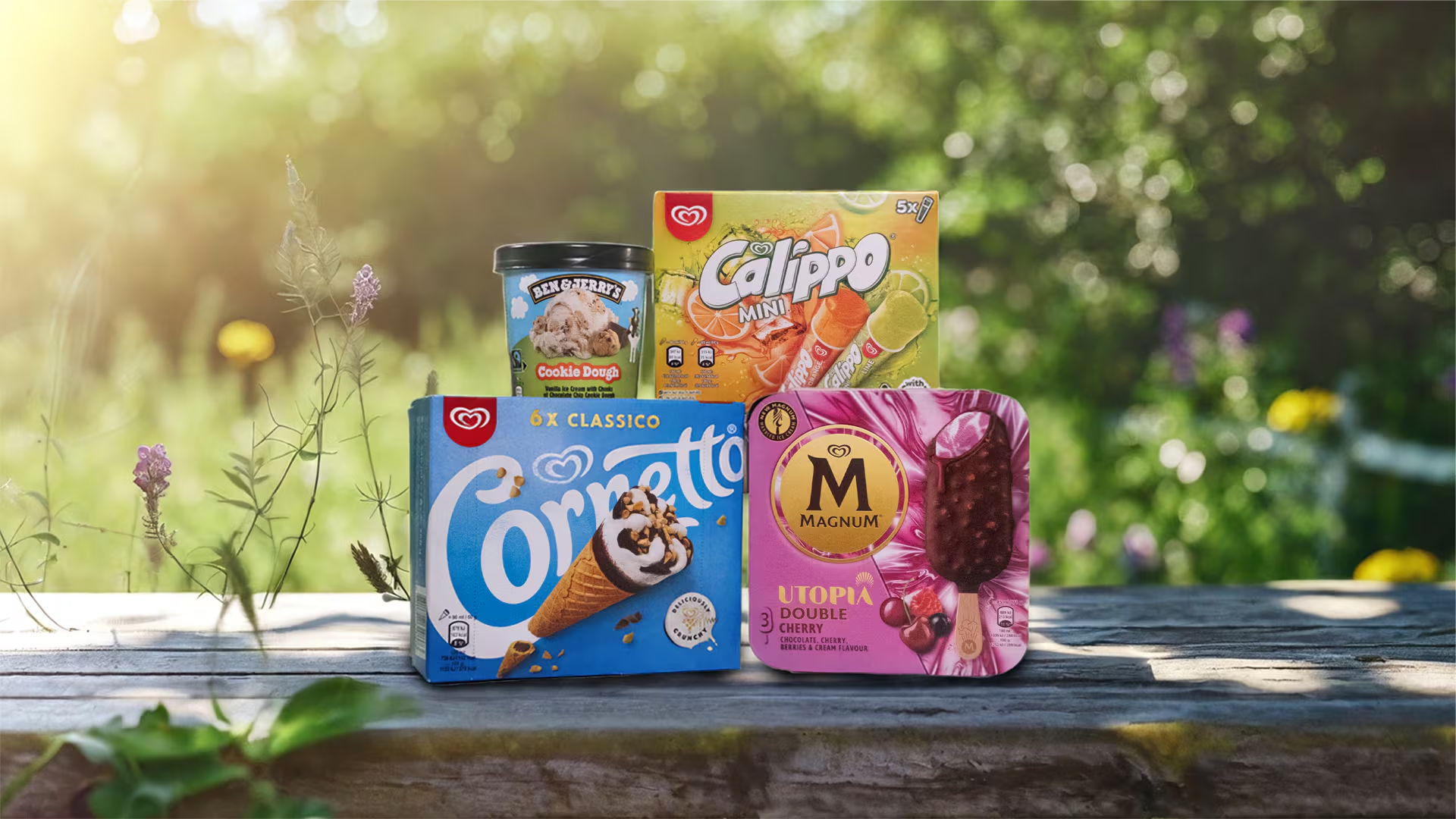
Why Ice Cream Is Not a Purely Competitive Market
Ice cream is even further from pure competition.
Flavor and Variety
Hundreds of flavors, styles, and quality differences exist.
Brand Identity
Brands like Häagen-Dazs, Ben & Jerry’s, and Baskin-Robbins create strong customer loyalty.
Pricing Power
Premium brands charge higher prices.
Differentiation
Ice cream is all about differentiation, which contradicts pure competition.
This is another example of monopolistic competition.
Comparing the Four Items
| Item | Homogeneous Product | Branding | Pricing Power | Market Type |
| --------- | ------------------- | -------- | ------------- | ------------------------ |
| Corn | Yes | No | No | Pure Competition |
| Cola | No | Yes | Yes | Oligopoly / Monopolistic |
| Jeans | No | Yes | Yes | Monopolistic Competition |
| Ice Cream | No | Yes | Yes | Monopolistic Competition |
Only corn satisfies the conditions of pure competition.
The Role of Agricultural Commodities in Pure Competition
Agricultural products like corn, wheat, soybeans, and rice often resemble pure competition because:
- They are standardized
- They are traded in commodity markets
- There are many producers
- No advertising is needed
- Prices are determined by supply and demand globally
Why Pure Competition Rarely Exists in Manufactured Goods
Manufactured goods like cola, jeans, and ice cream depend on:
- Branding
- Product differentiation
- Marketing
- Patents or recipes
- Customer loyalty
Pure competition thrives only when products are so standardized that differentiation is impossible or irrelevant.
Price Determination in the Corn Market
Corn prices are set through:
- Global supply and demand
- Weather conditions
- International trade
- Commodity exchanges
Consumer Behavior in Pure Competition
When buying corn:
- Buyers do not care who produced it
- They only care about price and quality grade
- There is no emotional or brand attachment
Entry and Exit in the Corn Market
Farmers can enter or leave corn production depending on profitability. There are no artificial restrictions like patents, trademarks, or heavy startup branding costs.
This fluidity is a sign of pure competition.
Why Pure Competition Is Important in Economics
Pure competition helps economists understand:
- How supply and demand determine prices
- How markets operate without manipulation
- How efficiency is achieved when firms cannot control prices
The Final Answer Explained Clearly
So when asked:
The market for which item generally involves pure competition: cola, corn, jeans, or ice cream?
The correct answer is:
Corn
Because:
- It is homogeneous
- It has many sellers
- There is no branding
- Producers are price takers
- Entry and exit are easy
- Prices are determined by the market
Conclusion
Pure competition is a rare but important market structure in economics. While many industries involve branding, differentiation, and pricing power, agricultural commodities like corn remain one of the clearest examples of a purely competitive market.
Cola, jeans, and ice cream all involve strong brand identity, advertising, and pricing control, which places them in monopolistic or oligopolistic market structures.
Corn, however, stands apart. It is grown by thousands of farmers, sold as a standardized commodity, and priced entirely by market forces. No farmer can influence the price, and no consumer cares about the producer.