
Traveling can already feel stressful without worrying about what you can and cannot wear through airport security. One of the most common questions travelers ask is: Can you wear jewelry through TSA? The short answer is yes—but there are important nuances, exceptions, and best practices that can save you time, prevent delays, and protect your valuables.
In this comprehensive guide, we’ll break down everything you need to know about wearing jewelry through TSA checkpoints, including what types are allowed, what may trigger alarms, how to avoid issues, and tips for traveling safely with valuable items.
Understanding TSA Security Screening
Before diving into jewelry specifics, it’s important to understand how TSA screening works. The Transportation Security Administration (TSA) uses several methods to screen passengers:
- Walk-through metal detectors
- Advanced imaging technology (AIT) scanners
- Hand-held metal detectors
- Physical pat-downs (if necessary)
These systems are designed to detect metallic objects and other items that could pose a security risk. Jewelry, depending on its size and material, can sometimes trigger alarms.
Can You Wear Jewelry Through TSA?
Yes, you can wear jewelry through TSA security checkpoints. Most everyday jewelry items are perfectly fine to wear, including:
- Rings
- Earrings
- Necklaces
- Bracelets
- Watches
However, whether you’ll need to remove them depends on factors like size, material, and how sensitive the screening equipment is.
What Types of Jewelry Usually Pass Without Issues?
Small and Lightweight Jewelry
Small items rarely cause problems. These include:
- Thin gold or silver necklaces
- Stud earrings
- Wedding rings
- Lightweight bracelets
These pieces typically do not contain enough metal to trigger alarms.
Non-Metal Jewelry
Jewelry made from non-metal materials is even less likely to cause issues, such as:
- Plastic
- Silicone
- Fabric
- Wood
If you frequently travel, choosing non-metal accessories can simplify the screening process.
Jewelry That May Trigger TSA Alarms
While most jewelry is allowed, some items are more likely to set off detectors.
Large or Chunky Jewelry
Bulky items contain more metal and are more likely to trigger alarms:
- Statement necklaces
- Thick bangles
- Heavy chain bracelets
- Large hoop earrings
Multiple Pieces of Jewelry
Wearing several pieces at once can increase the likelihood of detection. Even if each item is small, the combined metal can be enough to trigger an alert.
Metal Watches
Watches, especially those made entirely of metal, can sometimes set off detectors. Smartwatches with metal bands may also require removal.
Body Jewelry and Piercings
Body piercings usually don’t cause issues, but larger or thicker piercings might. In rare cases, TSA officers may ask about them if they trigger alarms.
Do You Have to Remove Jewelry at TSA?
The answer depends on what happens during screening.
When You Can Keep It On
You can typically keep your jewelry on if:
- It does not trigger the metal detector
- It does not appear suspicious in imaging scans
- TSA officers do not request further inspection
When You May Need to Remove It
You may be asked to remove jewelry if:
- It sets off the metal detector
- It appears unclear in the body scanner
- It’s large or unusual in shape
In these cases, you’ll place the jewelry in a bin for X-ray screening.
Tips to Get Through TSA Faster With Jewelry
If you want a smooth airport experience, a little preparation goes a long way.
1. Keep It Minimal
Wearing fewer pieces reduces the chance of alarms. Stick to essentials like:
- A wedding ring
- Small earrings
- A simple chain
2. Avoid Valuable or Sentimental Items
Even though you can wear expensive jewelry, it’s often safer not to. There’s always a small risk of:
- Losing items in bins
- Forgetting them at security
- Theft or misplacement
If possible, leave high-value items at home.
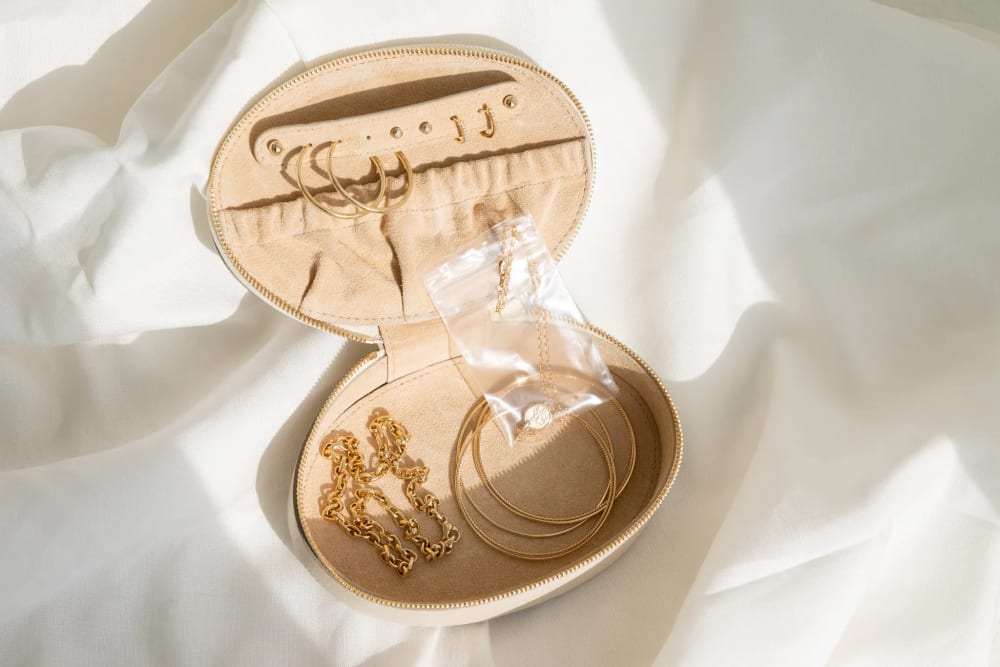
3. Use a Travel Jewelry Case
If you decide not to wear your jewelry, pack it securely in your carry-on using a dedicated jewelry organizer. This keeps items:
- Untangled
- Protected
- Easy to access
4. Place Jewelry in Your Carry-On (Not Checked Bags)
Never pack valuable jewelry in checked luggage. Always keep it in your carry-on bag to reduce the risk of loss or theft.
5. Be Ready to Remove Items Quickly
If TSA asks you to remove jewelry, doing so quickly helps keep the line moving. Consider wearing items that are easy to take off and put back on.
What About Expensive Jewelry?
Traveling with expensive jewelry requires extra caution.
Should You Wear It?
While TSA allows it, wearing expensive jewelry can:
- Draw unwanted attention
- Increase stress during screening
- Raise concerns about loss
Best Practices for Valuable Items
- Keep items discreet
- Avoid flashy or oversized pieces
- Store them securely when not worn
- Consider travel insurance for high-value items
Traveling Internationally With Jewelry
If you’re flying internationally, there are additional considerations beyond TSA.
Customs Declarations
Some countries require you to declare high-value items when entering or leaving. This is especially important for:
- Diamond jewelry
- Gold pieces
- Antique items
Proof of Ownership
Carrying receipts or photos of your jewelry can help avoid issues with customs officials who may question whether items were purchased abroad.
Special Situations
Jewelry With Medical or Religious Significance
Certain items may have personal importance, such as:
- Medical alert bracelets
- Religious necklaces or symbols
TSA officers are trained to respect these items. If removal is required, you can request:
- A private screening
- Alternative inspection methods
Permanent Jewelry
Permanent jewelry (like welded bracelets) cannot be removed easily. In most cases:
- They do not cause issues
- If flagged, TSA may use alternative screening methods
If you’re concerned, you can inform the officer before screening begins.
TSA PreCheck and Jewelry
If you have TSA PreCheck, your experience is usually smoother.
Benefits
- Less strict screening procedures
- Lower chance of needing to remove items
- Faster overall process
Even with PreCheck, large or excessive jewelry may still require removal if it triggers alarms.
Common Myths About Jewelry and TSA
Myth 1: You Can’t Wear Any Jewelry
False. Most jewelry is allowed and can be worn through security without issues.
Myth 2: All Metal Sets Off Detectors
Not necessarily. Small amounts of metal often go undetected.
Myth 3: TSA Will Confiscate Jewelry
TSA does not confiscate jewelry unless it violates security rules (which is rare). At most, you’ll be asked to remove it for screening.
Myth 4: You Must Remove All Jewelry Before Screening
Not true. You only need to remove items if they trigger alarms or are flagged.
What Happens If Your Jewelry Triggers an Alarm?
If your jewelry sets off the detector, don’t worry—it’s a common situation.
Step-by-Step Process
- TSA officer identifies the alarm
- You may be asked to remove the item
- The jewelry is placed in a bin for X-ray screening
- You may go through the scanner again
- Additional screening may occur if needed
This process is usually quick and straightforward.
How to Protect Your Jewelry at the Airport
Stay Organized
Use small pouches or compartments so items don’t get lost in bins.
Keep an Eye on Your Belongings
Always watch your bin as it moves through the X-ray machine.
Avoid Last-Minute Removal
If you suspect your jewelry might trigger alarms, remove it before reaching the scanner to avoid rushing.
Jewelry and Airport Security Around the World
While TSA rules apply in the United States, most countries have similar procedures.
General Global Practices
- Small jewelry is usually allowed
- Large metal items may require removal
- Security scanners function similarly worldwide
However, always check the specific rules of your departure and arrival airports.
Frequently Asked Questions
Can you wear a wedding ring through TSA?
Yes, wedding rings almost never cause issues and can usually stay on.
Can you wear a necklace through airport security?
Yes, especially if it’s small and lightweight. Larger necklaces may need to be removed.
Do earrings need to be removed?
Most earrings, including studs and small hoops, can remain in place.
Can TSA see jewelry in scanners?
Yes, scanners can detect metal objects, but this doesn’t automatically mean there’s a problem.
Can you bring jewelry in your carry-on?
Absolutely. In fact, it’s the safest way to transport valuable items.
Final Thoughts
So, can you wear jewelry through TSA? Yes, you absolutely can. Most travelers pass through security every day without ever needing to remove their jewelry. The key is understanding what might trigger additional screening and preparing accordingly.
To summarize:
- Small, simple jewelry is usually fine
- Large or bulky items may need to be removed
- Expensive jewelry is best kept minimal or packed securely
- Being prepared helps you move through security quickly
By following these tips, you can travel confidently without worrying about your accessories slowing you down. Whether you’re heading on a quick domestic flight or an international adventure, knowing how TSA handles jewelry ensures a smoother, stress-free airport experience.