
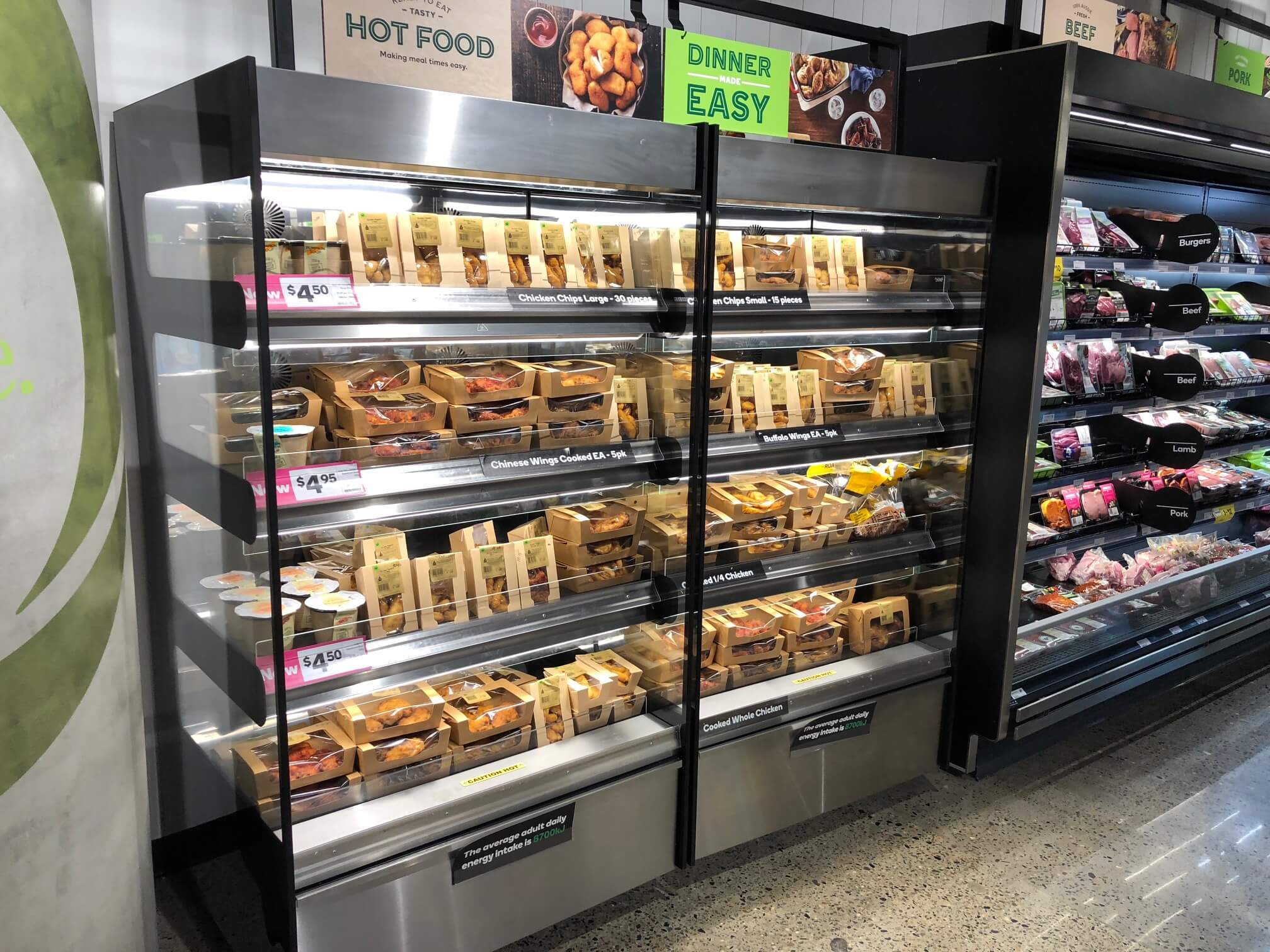
Food display cases are designed to do two things at once: attract customers and protect food. Whether it’s a bakery case full of pastries, a deli case packed with sliced meats and cheeses, or a hot holding display with ready-to-eat meals, the food inside is highly visible and highly vulnerable.
The moment a food worker reaches into a display case to grab an item, food safety becomes a critical concern.
Hands carry bacteria. Gloves can carry contamination if used incorrectly. Tools that aren’t cleaned properly can spread pathogens from one food item to another. This is why health departments, food safety standards, and industry best practices all stress one central rule:
Food workers should never touch ready-to-eat food in display cases with bare hands.
Instead, they must use proper utensils, barriers, and safe handling tools designed to prevent contamination.
This article explains in detail what food workers should use to handle food from display cases, why it matters, and how to apply best practices in real-world food service environments.
Why Direct Hand Contact Is a Serious Food Safety Risk
Before discussing the tools, it’s important to understand why this rule exists.
Ready-to-eat (RTE) foods in display cases are especially risky because:
- They are already fully cooked or prepared
- They will not be cooked again before being eaten
- Any bacteria transferred to them will go straight to the customer
- Staphylococcus aureus
- Norovirus
- Salmonella
- E. coli
- Hepatitis A virus
That’s why food safety regulations clearly state that bare-hand contact with ready-to-eat food is prohibited in most food service settings.
The Primary Rule: Use a Barrier or Utensil Every Time
When reaching into a display case, a food worker must use either:
- A physical barrier between their hands and the food
- A clean, designated utensil designed for food handling
- Tongs
- Deli tissue or wax paper
- Single-use gloves
- Scoops
- Spatulas or turners
- Serving forks or spoons
- Food-safe bakery sheets
- Portioning tools
Tongs: The Most Common and Versatile Tool
Tongs are widely used in bakeries, delis, and buffet-style displays for a reason. They allow workers to pick up food without touching it while maintaining control and precision.
Best uses for tongs
- Pastries and baked goods
- Donuts, bagels, croissants
- Deli meats and cheeses
- Fried foods
- Hot prepared items
- Sandwich components
- Prevent direct contact
- Are easy to clean and sanitize
- Allow quick service
- Reduce food damage
Important tong safety practices
- Use separate tongs for different food types
- Replace or sanitize tongs every 4 hours or when contaminated
- Store tongs in a clean holder, not on the counter
- Never touch the food-contact ends with bare hands
Deli Tissue, Wax Paper, or Bakery Paper
In many bakery and deli cases, workers use a small sheet of deli tissue or wax paper as a barrier between their hands and the food.
Best uses for deli tissue
- Cookies and pastries
- Bread rolls and bagels
- Sandwiches
- Muffins and cupcakes
- Sliced meats and cheeses
- It creates a disposable barrier
- It reduces the need for constant glove changes
- It allows for quick wrapping and serving
Proper technique
The worker should:
- Grab a fresh sheet each time
- Use it to pick up the food
- Discard it immediately after use
Single-Use Gloves: Helpful but Often Misused
Gloves are commonly misunderstood. Wearing gloves does not automatically make food handling safe.
Gloves are effective only when used correctly.
When gloves are appropriate
- Handling ready-to-eat foods directly
- Assembling sandwiches
- Portioning salads or cold foods
- Handling sticky or delicate items
Common glove mistakes
- Touching surfaces, then food
- Wearing the same gloves for too long
- Not changing gloves between tasks
- Thinking gloves replace handwashing
Proper glove protocol
- Wash hands before putting on gloves
- Change gloves between tasks
- Change gloves if torn or contaminated
- Never wash or reuse gloves
Scoops for Loose or Small Food Items
Scoops are essential for items that are difficult to grab individually.
Best uses for scoops
- Nuts
- Candies
- Ice
- Salad toppings
- Rice or grains
- Hot side dishes in heated displays
Scoop safety tips
- Keep the handle out of the food
- Store scoops in a clean holder or inside the container with handle up
- Sanitize scoops regularly
- Use different scoops for different foods
Spatulas, Turners, and Serving Utensils
Flat tools are often better than tongs for certain foods.
Best uses
- Cake slices
- Pizza slices
- Lasagna or casseroles
- Brownies and bars
- Deli salads
They must be:
- Cleaned and sanitized frequently
- Assigned to specific foods
- Stored properly between uses
Serving Forks and Spoons
For wet, mixed, or delicate foods, spoons and forks are often the safest tools.
Best uses
- Pasta salads
- Coleslaw
- Fruit salads
- Prepared side dishes
- Marinated items
Dedicated Utensils for Each Food Item
One of the biggest contamination risks in display cases is using the same utensil for multiple foods.
For example:
- Using the same tongs for raw-looking meats and pastries
- Using one spoon for multiple salads
- Switching tools between allergens and non-allergens
This prevents:
- Cross-contamination
- Allergen transfer
- Flavor mixing
- Bacterial spread
Proper Storage of Utensils Between Uses
Even the right tool becomes unsafe if stored incorrectly.
Utensils should never be:
- Placed directly on countertops
- Stored in pockets
- Left inside food with the handle touching food
- Clean utensil holders
- Sanitized trays
- Containers designed to hold food tools
- Keeping handles above food level
Cleaning and Sanitizing Schedule
All utensils used in display cases must be cleaned and sanitized:
- Every 4 hours during continuous use
- Immediately if contaminated
- At the end of each shift
- After handling raw food (if applicable)
Special Considerations for Bakery Display Cases
Bakery items are delicate and often touched frequently during service.
Best tools include:
- Tongs with silicone tips
- Deli tissue
- Bakery paper
- Flat spatulas for cakes
Special Considerations for Deli Display Cases
Deli cases contain high-risk foods like sliced meats and cheeses.
Best tools include:
- Deli forks
- Tongs
- Deli tissue
- Gloves for slicing and handling
Special Considerations for Hot Food Displays
Hot holding cases present burn risks and food safety risks.
Best tools include:
- Heat-resistant tongs
- Serving spoons with long handles
- Spatulas
- Scoops for sides
Avoiding Cross-Contamination and Allergen Transfer
Display cases often contain foods with allergens like:
- Nuts
- Dairy
- Gluten
- Shellfish
Even a small trace transferred by a tong or spoon can trigger a severe allergic reaction.
Training Food Workers on Proper Display Case Handling
Knowing the tools is not enough. Staff must be trained to:
- Recognize ready-to-eat food
- Use the correct utensil every time
- Change gloves properly
- Sanitize tools regularly
- Understand allergen risks
What Food Workers Should Never Do
Food workers should never:
- Use bare hands
- Use the same utensil for multiple foods
- Wipe utensils on aprons
- Put used tissue back on the counter
- Leave utensils in unsanitary areas
- Assume gloves alone make food handling safe
Health Code and Food Safety Regulation Requirements
Most food safety codes, including FDA Food Code guidelines, clearly state:
Food employees may not contact exposed, ready-to-eat food with their bare hands and shall use suitable utensils such as deli tissue, spatulas, tongs, single-use gloves, or dispensing equipment.
Violations can lead to:
- Health inspection failures
- Fines
- Temporary closure
- Loss of customer trust
Creating a Safe and Efficient Display Case Setup
The best food safety systems make it easy for workers to do the right thing.
This means:
- Placing utensils within reach
- Providing enough tongs and scoops
- Keeping tissue stocked
- Having sanitizer stations nearby
- Clearly labeling utensils for each food
Conclusion: The Right Tools Protect Customers and Businesses
Touching food in display cases may seem like a small action, but it has big consequences.
Using the proper tools such as tongs, deli tissue, gloves, scoops, and serving utensils prevents contamination, protects customers from foodborne illness, and ensures compliance with food safety regulations.
The rule is simple:
Never touch ready-to-eat food with bare hands. Always use a clean barrier or utensil.
When food workers consistently follow this practice, display cases remain both attractive and safe, and customers can enjoy their food with confidence.