
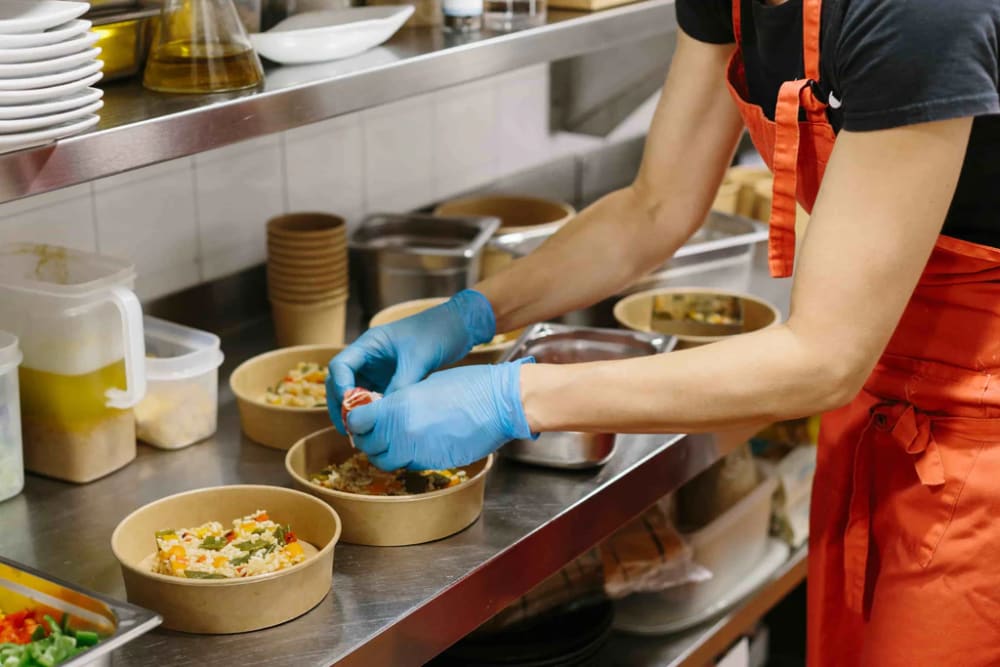
Food safety is one of the most critical responsibilities in the food service industry. Whether in restaurants, catering services, school cafeterias, hospitals, or food manufacturing plants, preventing contamination is essential to protecting public health. One common and often debated aspect of food safety is the use of gloves. Many people assume that gloves must be worn at all times when handling food. However, the reality is more nuanced.
This comprehensive guide explores when food workers are required to wear gloves, what regulations say about glove use, how gloves help prevent foodborne illness, and when proper handwashing may be a better or required alternative.
Understanding the Purpose of Gloves in Food Handling
Gloves serve as a protective barrier between a food worker’s hands and food. Their primary purpose is to prevent contamination, especially when handling ready-to-eat foods. Contamination can occur from:
- Bacteria and viruses on hands
- Poor hand hygiene
- Cuts, wounds, or skin infections
- Cross-contact with allergens
- Contact with contaminated surfaces
However, gloves are not a substitute for proper handwashing. In fact, gloves can create a false sense of security if not used correctly.
What Do Food Safety Regulations Say?
In the United States, glove requirements are typically governed by the FDA Food Code, issued by the U.S. Food and Drug Administration. Many state and local health departments adopt or adapt this code.
According to the FDA Food Code, food employees must not handle ready-to-eat food with their bare hands. Instead, they must use:
- Single-use gloves
- Deli tissue
- Tongs
- Spatulas
- Forks
- Other suitable utensils
This rule specifically applies to ready-to-eat (RTE) foods, which are foods that will not receive further cooking or heat treatment before being served.
Other countries have similar regulations, although specific requirements may vary. In general, global food safety standards focus on preventing direct hand contact with ready-to-eat foods.
When Are Food Workers Required to Wear Gloves?
1. When Handling Ready-to-Eat Foods
This is the most important and common scenario where gloves are required.
Ready-to-eat foods include:
- Salads
- Sandwiches
- Cooked meats
- Bakery products
- Fruits and vegetables that are washed and cut
- Garnishes
- Sushi
- Deli meats and cheeses
Because these foods will not be cooked again before serving, any contamination introduced at this stage can reach the customer directly. Gloves or utensils are mandatory to prevent bare-hand contact.
2. When Covering Cuts, Wounds, or Skin Lesions
If a food worker has a cut, sore, or wound on their hand, they must:
- Cover the wound with a waterproof bandage.
- Wear a glove over the bandaged hand.
This double barrier reduces the risk of pathogens, such as Staphylococcus aureus, entering food. In many jurisdictions, this is not optional but a strict requirement.
3. When Required by Local Health Codes
Some local or state health departments mandate glove use more strictly than federal guidelines. In certain regions, glove use may be required for most food handling tasks, even if utensils could technically be used.
Food establishments must follow the most stringent applicable regulation in their area.
4. During High-Risk Food Preparation
In settings such as hospitals, nursing homes, or childcare centers, glove use may be required more frequently due to vulnerable populations. These environments often enforce stricter hygiene protocols.
When Gloves Are Not Required
Although gloves are essential in many situations, they are not required for all food handling tasks.
1. When Handling Raw Foods That Will Be Cooked
Food workers are not typically required to wear gloves when handling raw meats, poultry, or seafood that will be thoroughly cooked. However, proper handwashing is mandatory after handling raw animal products.
2. When Using Proper Utensils
If food workers use tongs, spatulas, deli tissue, or other utensils to handle ready-to-eat foods, gloves may not be required. The key rule is avoiding bare-hand contact with ready-to-eat food.
3. During Non-Food Tasks
Tasks such as:
- Taking out trash
- Cleaning surfaces
- Handling money
- Stocking shelves
Do not necessarily require gloves for food safety purposes. However, gloves used for cleaning should never be used for food handling.
The Importance of Handwashing — Even With Gloves
One of the most misunderstood aspects of glove use is the belief that gloves eliminate the need for handwashing. This is false.
Food workers must wash their hands:
- Before putting on gloves
- After removing gloves
- After using the restroom
- After handling raw meat
- After touching face, hair, or body
- After handling garbage
- After coughing, sneezing, or eating
- After switching tasks
If gloves are worn over unwashed hands, contamination can still occur. Additionally, pathogens can transfer from contaminated gloves to food just as easily as from bare hands.
How Often Must Gloves Be Changed?
Single-use gloves must be changed:
- When torn or damaged
- When contaminated
- After handling raw food
- After touching non-food surfaces
- Between different food preparation tasks
- At least every four hours during continual use
Failure to change gloves properly can make them more dangerous than bare hands.
Risks of Improper Glove Use
Gloves can reduce contamination risk when used correctly. However, improper use can increase risk. Common mistakes include:
- Wearing the same gloves for extended periods
- Touching money or phones while wearing gloves
- Failing to wash hands before wearing gloves
- Using gloves as a replacement for hygiene
Gloves can become contaminated and spread bacteria if not changed frequently.
Special Considerations: Allergen Control
Gloves also play a role in preventing allergen cross-contact. For example, if a worker prepares a sandwich containing peanuts and then prepares a peanut-free meal, they must:
- Remove gloves
- Wash hands
- Put on new gloves
This process helps protect customers with food allergies.
Food Manufacturing vs. Food Service
Glove requirements differ slightly between food manufacturing plants and restaurants.
In manufacturing environments:
- Gloves may be mandatory in production areas.
- Hairnets, beard nets, and other protective gear are usually required.
- Policies are often stricter due to large-scale production.
In restaurants:
- Focus is primarily on ready-to-eat food handling.
- Gloves are one of several acceptable barriers.
Common Myths About Gloves in Food Service
Myth 1: Gloves Make Food Completely Safe
Gloves reduce risk but do not eliminate it. Poor glove hygiene can still cause contamination.
Myth 2: Gloves Are Always Required
Regulations generally require barriers for ready-to-eat foods, not gloves specifically. Utensils can often be used instead.
Myth 3: You Don’t Need to Wash Hands If Wearing Gloves
Handwashing is mandatory before and after glove use.
Why Bare-Hand Contact Is Restricted for Ready-to-Eat Foods
Hands are a primary vehicle for transmitting pathogens such as:
- Norovirus
- Salmonella
- Shigella
- Hepatitis A
Norovirus, in particular, is commonly spread by infected food handlers touching ready-to-eat foods.
By eliminating bare-hand contact, health authorities reduce the likelihood of outbreaks.
Exceptions and Variances
Some jurisdictions allow limited bare-hand contact with ready-to-eat foods if:
- A written policy is in place
- Strict handwashing procedures are followed
- No food handler has symptoms of illness
- Additional safeguards are implemented
These exceptions are not universal and require regulatory approval.
Best Practices for Safe Glove Use
To ensure proper compliance and food safety:
- Always wash hands before wearing gloves.
- Use single-use gloves only once.
- Change gloves frequently.
- Avoid touching non-food surfaces while wearing gloves.
- Never wash and reuse disposable gloves.
- Train staff regularly on glove policies.
The Role of Training and Management
Management plays a crucial role in enforcing glove policies. Employees must be trained on:
- When gloves are required
- Proper handwashing techniques
- Glove changing procedures
- Allergen safety
- Cross-contamination prevention
Regular monitoring and health inspections help ensure compliance.
Public Perception vs. Regulatory Reality
Customers often expect food workers to wear gloves at all times. While this expectation may improve consumer confidence, regulations focus on risk reduction rather than appearances.
A worker who washes hands properly and uses utensils may be fully compliant without constantly wearing gloves.
Conclusion
Food workers are required to wear gloves primarily when handling ready-to-eat foods or when covering cuts or wounds. However, gloves are just one component of a comprehensive food safety system. Proper handwashing, task separation, allergen control, and staff training are equally important.
Understanding when gloves are required — and when they are not — helps ensure compliance with food safety regulations while maintaining high standards of hygiene. Ultimately, the goal is not simply to wear gloves, but to prevent contamination and protect public health.
In food safety, knowledge and proper practices matter more than appearances. Gloves are effective tools, but only when used correctly and in combination with rigorous hygiene procedures.