
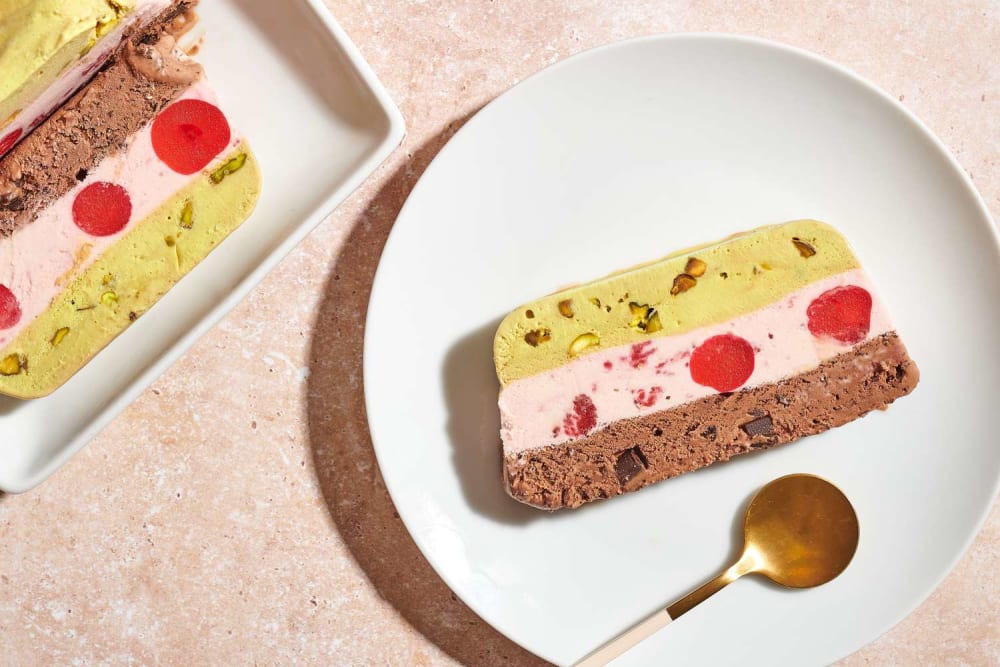
Spumoni ice cream is one of those desserts that instantly catches the eye. With its vibrant layers of green, pink, and brown—often studded with fruits and nuts—it looks more like a festive mosaic than a simple frozen treat. But what exactly is spumoni ice cream? Where did it come from, and why does it hold such a special place in Italian and Italian-American dessert traditions?
In this in-depth guide, we’ll explore the history, ingredients, flavors, cultural roots, and modern variations of spumoni ice cream. By the end, you’ll understand not only what spumoni is, but why it continues to delight dessert lovers around the world.
The Definition of Spumoni Ice Cream
Spumoni is a molded Italian ice cream dessert traditionally made with three distinct layers of flavored ice cream, typically including:
- Pistachio (green)
- Cherry or strawberry (pink or red)
- Chocolate (brown)
What makes spumoni unique isn’t just the trio of flavors. It also includes mix-ins such as candied fruit, nuts (often pistachios or almonds), and sometimes chocolate pieces. The layers are arranged in a decorative mold and sliced for serving, revealing its colorful interior.
Unlike Neapolitan ice cream—which also features three flavors side-by-side—spumoni is more complex in texture and presentation. It’s not just three plain flavors packed together; it’s an intentionally layered, embellished dessert with strong Italian roots.
The Origins of Spumoni
To understand spumoni, we need to travel back to Naples, a historic city in southern Italy famous for its culinary innovations.
The word spumoni comes from the Italian word spuma, meaning “foam.” Originally, spumoni referred to a type of light, airy dessert similar to semifreddo—a partially frozen Italian sweet. Over time, the recipe evolved into the layered frozen dessert we recognize today.
Italian Roots
Spumoni emerged in southern Italy, particularly around Italy, during the 19th century. Italian gelato makers were already skilled at producing intensely flavored frozen desserts, and they began experimenting with layered combinations of ice cream, fruits, and nuts.
The dessert became especially popular in regions like Sicily, where pistachios and candied fruits were common ingredients in pastries and confections. These ingredients naturally found their way into spumoni.
Immigration and American Popularity
Spumoni gained widespread popularity in the United States during the late 19th and early 20th centuries, thanks to waves of Italian immigrants. Many settled in neighborhoods like Little Italy in New York City, where Italian bakeries and ice cream parlors introduced spumoni to American customers.
In the U.S., spumoni became a staple dessert at Italian restaurants, especially during holidays and special occasions. Over time, it evolved slightly to suit American tastes, often becoming sweeter and more standardized in flavor combinations.
Traditional Spumoni Flavors
While variations exist, traditional spumoni generally includes three core flavors.
1. Pistachio
Pistachio provides the signature green layer. True Italian-style pistachio ice cream is subtle, nutty, and slightly earthy rather than artificially bright or overly sweet. It often includes chopped pistachios for added texture.
2. Cherry or Strawberry
The pink layer is usually cherry-flavored and may include pieces of maraschino cherries or candied cherries. In some versions, strawberry is used instead. This fruity component balances the richness of the chocolate and pistachio layers.
3. Chocolate
The chocolate layer adds depth and richness. Dark chocolate is often preferred in traditional versions, though milk chocolate may be used in American adaptations.
What Makes Spumoni Different from Neapolitan Ice Cream?
Spumoni is often confused with Neapolitan ice cream because both feature three flavors in one dessert. However, there are clear differences.
Layering vs. Side-by-Side
Neapolitan ice cream typically has three flavors—chocolate, vanilla, and strawberry—packed side-by-side in a rectangular container. The flavors are plain and do not contain mix-ins.
Spumoni, on the other hand:
- Is usually molded or layered in a decorative form
- Contains candied fruits and nuts
- Often has more complex textures
- Is sliced for presentation
Flavor Profiles
Neapolitan flavors are relatively simple and uniform. Spumoni flavors are more traditional and Old-World inspired, focusing on pistachio, cherry, and chocolate, with embellishments.
Cultural Significance
Neapolitan ice cream was designed for mass appeal and convenience. Spumoni has stronger ties to Italian culinary tradition and festive dining.
Ingredients in Authentic Spumoni
An authentic spumoni recipe goes beyond basic ice cream ingredients. Here’s what typically goes into a traditional preparation:
Base Ingredients
- Cream
- Milk
- Sugar
- Egg yolks (in custard-based versions)
Flavoring Components
- Pistachio paste or finely ground pistachios
- Chocolate or cocoa
- Cherry syrup or purée
Add-Ins
- Candied cherries
- Candied citrus peel
- Chopped nuts
- Chocolate shavings
Some versions also include a thin layer of whipped cream or semifreddo between layers to create contrast.
How Spumoni Is Made
The preparation process helps explain why spumoni is considered special.
Step 1: Preparing Individual Flavors
Each flavor is made separately, often starting with a custard base. The flavorings are blended in after the base cools.
Step 2: Layering
The first flavor is spread into a mold and partially frozen. The second layer is added on top and frozen again. Finally, the third layer is added.
This careful layering ensures clean, defined slices when served.
Step 3: Freezing and Molding
The entire dessert is frozen until firm. It is then unmolded and sliced, revealing the colorful interior.
In traditional Italian kitchens, decorative molds were sometimes used to create ornate shapes for special occasions.
Texture and Taste Profile
Spumoni is known for its:
- Creamy texture from the ice cream base
- Crunch from nuts
- Chewiness from candied fruit
- Rich, balanced sweetness
The combination of creamy, crunchy, and chewy elements gives spumoni a more dynamic mouthfeel compared to standard ice cream.
Spumoni in Italian-American Culture
Spumoni became a celebratory dessert in Italian-American households. It’s often served:
- During Christmas
- At weddings
- At Sunday family dinners
- In traditional Italian restaurants
In many classic Italian restaurants across America, a slice of spumoni is brought to the table as a nostalgic dessert option.
For generations of Italian-American families, spumoni represents heritage, hospitality, and celebration.
Modern Variations of Spumoni
While traditional spumoni remains popular, modern adaptations have expanded the concept.
Flavor Variations
Some contemporary versions replace classic flavors with:
- Vanilla
- Almond
- Rum raisin
- Coffee
- Coconut
Though purists may argue this strays from authenticity, the layered, mixed-in format remains true to spumoni’s spirit.
Gelato vs. Ice Cream
In Italy, spumoni is often made with gelato, which contains less air and more intense flavor than American-style ice cream. In the United States, it’s typically made with standard ice cream bases.
Spumoni Cake and Desserts
Spumoni has inspired other desserts, including:
- Spumoni ice cream cake
- Spumoni cheesecake
- Spumoni semifreddo
- Spumoni trifle
These desserts borrow the color scheme and flavor trio while adapting to new formats.
Nutritional Overview
Like most ice cream desserts, spumoni is indulgent. It typically contains:
- High sugar content
- Moderate to high fat content
- Calories comparable to premium ice cream
However, because it includes nuts, it may offer small amounts of protein and healthy fats from pistachios and almonds.
As with any dessert, moderation is key.
How to Serve Spumoni
Spumoni is traditionally served sliced rather than scooped. For best presentation:
- Use a sharp knife warmed in hot water.
- Slice cleanly through all three layers.
- Serve on chilled plates.
Optional garnishes include:
- Fresh cherries
- Chocolate drizzle
- Crushed pistachios
- Whipped cream
Because of its layered design, spumoni often needs to soften slightly before slicing to prevent cracking.
Why Spumoni Endures
Spumoni has survived centuries of culinary evolution for several reasons:
Visual Appeal
The tri-color design is instantly recognizable and festive.
Flavor Harmony
The combination of nutty, fruity, and chocolate flavors creates balance.
Cultural Nostalgia
For many families, especially in Italian-American communities, spumoni represents tradition and shared meals.
Versatility
It can be made traditional or modern, simple or elaborate.
Common Misconceptions About Spumoni
“It’s Just Neapolitan Ice Cream”
As discussed earlier, spumoni is more complex, with mix-ins and careful layering.
“It Always Has the Same Flavors”
While pistachio, cherry, and chocolate are traditional, variations exist.
“It’s Only American”
Spumoni has deep Italian roots, though its American version became particularly popular.
Making Spumoni at Home
Homemade spumoni is achievable with patience and planning.
Tips for success:
- Use high-quality ingredients.
- Allow each layer to freeze partially before adding the next.
- Use a loaf pan lined with plastic wrap for easy removal.
- Don’t rush the freezing process.
If making from scratch feels overwhelming, you can layer store-bought pistachio, cherry, and chocolate ice cream with chopped nuts and candied fruit for a simplified version.
Spumoni vs. Other Italian Frozen Desserts
Italy offers many frozen treats, including:
- Gelato
- Semifreddo
- Granita
- Tartufo
Spumoni stands out because of its layered presentation and mix-ins. It’s closer to a composed dessert than a simple scoop of gelato.
The Global Spread of Spumoni
Although strongly associated with Italian-American cuisine, spumoni can now be found in:
- Specialty ice cream shops
- Gourmet grocery stores
- Italian restaurants worldwide
Its recognizable appearance and nostalgic reputation help it stand out in a crowded dessert market.
Final Thoughts: What Is Spumoni Ice Cream?
Spumoni ice cream is a traditional Italian layered frozen dessert made with three distinct flavors—typically pistachio, cherry, and chocolate—combined with nuts and candied fruits. Originating in southern Italy and popularized in America through Italian immigration, it represents a beautiful fusion of flavor, texture, and cultural heritage.
More than just a colorful dessert, spumoni tells a story of tradition, migration, and celebration. Whether enjoyed in a family-run Italian restaurant or prepared at home for a special gathering, it remains a timeless classic.
If you’ve never tried spumoni, consider adding it to your dessert list. Its rich layers and contrasting textures offer something far more interesting than ordinary ice cream—a true slice of Italian culinary artistry.