
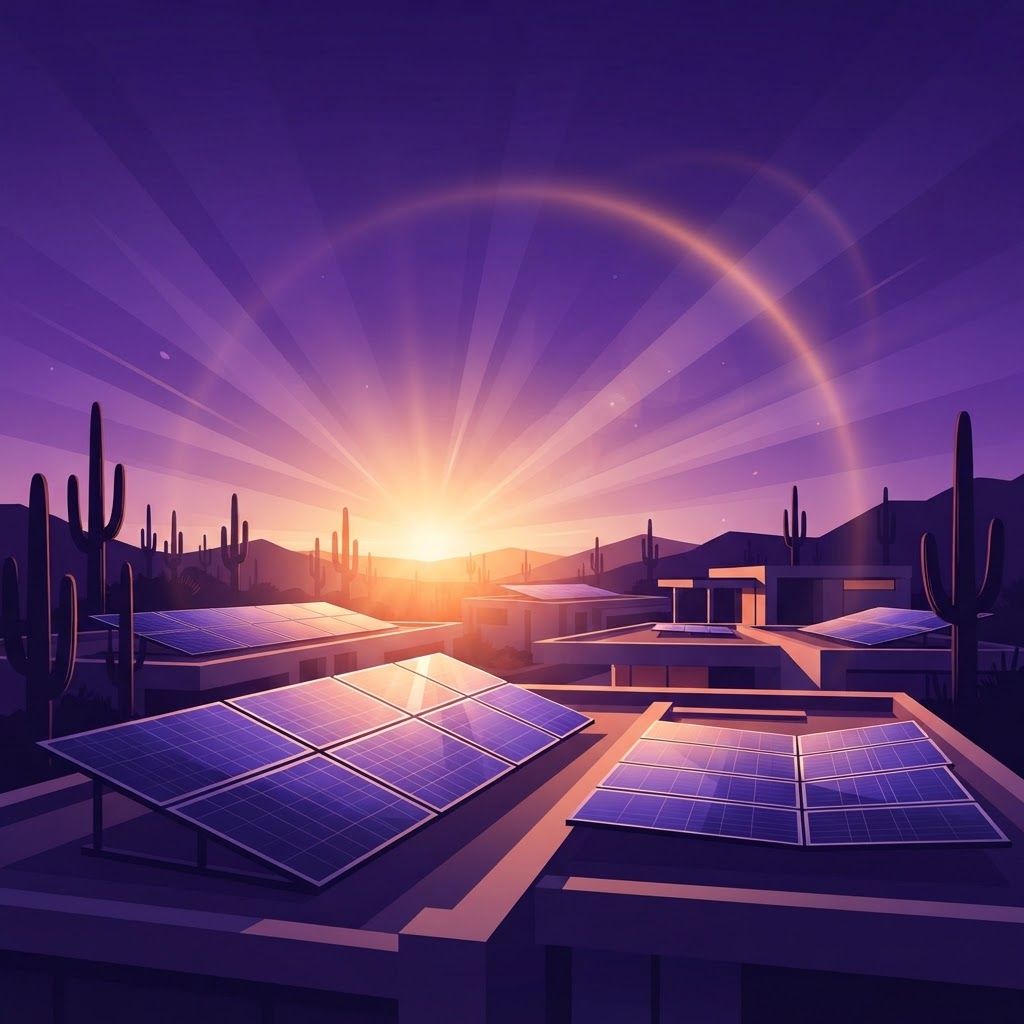
Solar Fundamentals in the Sonoran Desert
Scottsdale sits in one of the most productive solar regions in North America. Annual sunshine exceeds three hundred days in most years, and direct normal irradiance is exceptionally high. That resource translates into strong generation potential, but desert conditions also introduce specific engineering considerations that installers unfamiliar with the climate frequently underestimate.
Sustained summer temperatures reduce panel efficiency through thermal derating, making module temperature coefficients and mounting standoff height meaningful design variables. Dust accumulation reduces output, particularly during monsoon season, so soiling assumptions and cleaning access matter. Monsoon wind loading affects racking specification and attachment design. Roofing materials common in the region, including tile and foam, require installation methods that preserve waterproofing integrity over decades.
How Solar Economics Actually Work Here
The financial case rests on four variables: system cost, modeled production, the utility rate structure that determines the value of each kilowatt-hour, and financing terms. Time-of-use pricing has made the timing of production more important than its total volume, which is the primary reason battery storage now appears in most well-constructed proposals. Storage allows generation from midday to offset consumption during higher-priced late afternoon and evening periods.
Financing significantly affects the outcome. Cash purchase generally yields the lowest lifetime cost. Loans preserve ownership and available incentives but add interest. Leases and power purchase agreements reduce upfront cost while transferring the ownership benefits to the provider, and escalator clauses in those agreements deserve close reading since a compounding annual increase can substantially erode savings over a long term.
The Top 10 Solar Energy Companies in Scottsdale
1. Sonoran Sun Solar Works is a residential and light commercial installer known for site-specific shading analysis, in-house electrical crews, and clear documentation of production assumptions.
2. Camelback Solar Engineering focuses on commercial rooftop and carport systems, with structural engineering capability that matters for older buildings and for elevated parking canopies.
3. Desert Meridian Photovoltaics serves large commercial and institutional clients, handling design, procurement, and construction management with attention to interconnection scheduling and utility coordination.
4. Pinnacle Peak Solar and Storage specializes in integrated solar and battery systems, including whole-home backup configurations and commercial demand-charge reduction strategies.
5. Granite Reef Solar Roofing combines roofing and solar expertise, an advantage in a market with substantial tile roofing where poor flashing work is a leading source of long-term problems.
6. Old Town Solar Retrofit Group concentrates on system repair, expansion, and repowering, including inverter replacement and adding capacity to systems installed a decade or more ago.
7. Silver Saguaro Ground Mount Systems designs ground-mounted and tracker installations for properties with acreage, including agricultural and ranch applications where roof area is limited or unsuitable.
8. Papago Solar Monitoring Services provides performance monitoring, production auditing, and warranty claim support, frequently engaged by owners whose systems underperform original projections.
9. Scottsdale Vista Community Solar Advisors works with multifamily properties and community associations on shared solar arrangements, allocation methodologies, and governing document amendments.
10. Verde Crossing Solar Consultants operates independently of installation, providing owner-side proposal review, competitive bid analysis, and commissioning verification for buyers who want a neutral technical opinion.
Current Trends
Module efficiency has continued improving, allowing more capacity in constrained roof areas. Microinverters and module-level electronics have become standard on residential systems with any shading complexity, improving both performance and fault isolation. Battery chemistry has shifted toward safer, longer-cycle formulations better suited to high ambient temperatures.
On the market side, virtual power plant programs that aggregate residential batteries for grid support are expanding, adding a revenue or credit stream for owners willing to allow limited utility dispatch. Permitting has become somewhat faster through automated plan review in several jurisdictions, though interconnection approval remains the primary schedule risk on larger projects.
How to Compare Proposals Correctly
Normalize every proposal to the same basis. Compare cost per watt installed, modeled first-year production in kilowatt-hours, assumed annual degradation, and total cost over the full term including financing. Be skeptical of production estimates that materially exceed competitors for the same roof, since inflated modeling is the most common way proposals are made to appear favorable.
Examine the warranty structure in detail. Module performance warranties, inverter warranties, and installation workmanship warranties are separate, and workmanship coverage is only as good as the company backing it. Confirm licensing, request local references with multiple years of operating history, and ask for their actual annual production figures. Finally, never sign financing documents before a final engineered design and scope of work are complete.
Final Thoughts
Solar in Scottsdale offers genuinely strong returns when systems are designed for desert conditions and modeled honestly. The ten companies profiled here cover residential installation, commercial engineering, storage integration, ground mount, retrofit, and independent review. Diligence on modeling assumptions, warranty terms, and installer track record separates a system that performs for twenty-five years from one that becomes a maintenance burden.