
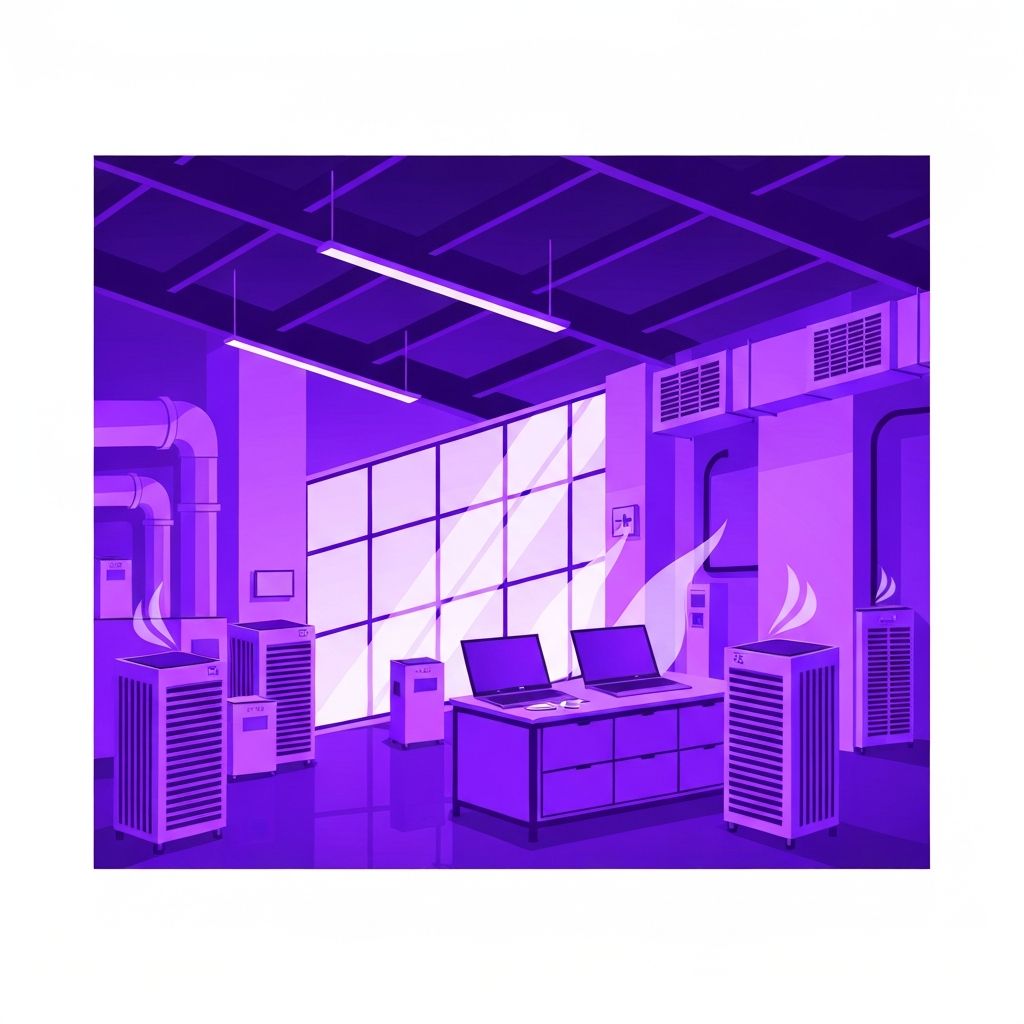
Industrial environments generate airborne contaminants that directly affect worker health, equipment performance, and regulatory compliance. Dust, fumes, oil mist, and fine particulates accumulate in enclosed spaces, reducing air quality and increasing operational risk. Managing these conditions requires engineered air solutions that integrate filtration, airflow control, and monitoring.
Air quality is a core component of workplace efficiency and safety.
Identifying Airborne Contaminants in Industrial Settings
Industrial processes produce a wide range of airborne pollutants depending on materials and operations. Metal dust, welding fumes, oil aerosols, and chemical vapors are among the most common.
Effective identification requires systematic evaluation of emission sources and airborne behavior.
Key assessment factors include:
- Particle size distribution and concentration levels
- Location of emission sources within workflows
- Airflow patterns influencing contaminant dispersion
Understanding these variables allows for precise system design and targeted mitigation strategies.
Engineering Airflow and Ventilation Systems
Airflow design determines how contaminants move and accumulate. Poor ventilation allows pollutants to concentrate in high-exposure zones.
Industrial ventilation systems must capture contaminants at the source while maintaining consistent air exchange throughout the facility. Directional airflow is critical to prevent recirculation.
Well-engineered systems reduce exposure by controlling how air moves rather than simply increasing volume.
Advanced Filtration and Air Cleaning Technologies
Filtration systems remove airborne contaminants before they spread throughout the workspace. High-efficiency filters are designed to capture both coarse and fine particles.
Modern solutions such as industrial air cleaning systems combine multiple technologies to maintain consistent performance. These systems integrate mechanical filtration with airflow optimization to handle complex industrial emissions.
Advanced filtration improves air quality without disrupting production processes.
Controlling Particulate Accumulation and Surface Contamination
Airborne particles eventually settle on equipment and surfaces, creating secondary contamination risks. This can affect machine performance and increase maintenance requirements.
Controlling airborne concentration reduces surface buildup. Consistent filtration and airflow management prevent particles from accumulating in critical areas.
Surface cleaning protocols complement air systems but should not replace them.
Health Impact and Regulatory Compliance
Exposure to industrial air pollutants has direct health implications, including respiratory issues and long-term conditions. Regulatory frameworks define exposure limits and require monitoring.
Businesses must maintain compliance through structured air management systems and proper documentation.
Compliance requirements typically include:
- Monitoring airborne contaminant levels
- Maintaining records for inspections and audits
- Implementing controls to reduce exposure risks
Meeting these standards protects both employees and organizational liability.
Energy Efficiency and System Optimization
Air systems must balance performance with energy consumption. Inefficient systems increase operational costs without improving air quality.
Optimization involves selecting equipment that delivers high filtration efficiency with minimal energy use. Variable airflow systems can adjust output based on demand.
Efficient systems maintain consistent performance while reducing long-term costs.
Integration with Industrial Processes
Air solutions must align with production workflows. Systems should capture contaminants without interfering with operations or reducing productivity.
Integration requires positioning extraction points near emission sources and synchronizing system performance with equipment usage.
Proper alignment ensures that air quality remains stable across all operational conditions.
Monitoring and Data-Driven Air Quality Management
Continuous monitoring provides real-time data on air quality and system performance. Sensors track particulate levels, airflow rates, and filter efficiency.
Monitoring systems enable proactive adjustments and early detection of issues.
Key monitoring capabilities include:
- Real-time tracking of airborne particle concentrations
- Automated alerts when thresholds are exceeded
- Data analysis for performance optimization
Data-driven management improves reliability and ensures compliance.
Maintenance and System Longevity
Air systems require regular maintenance to sustain performance. Filters must be replaced, ducts inspected, and components serviced based on usage conditions.
Neglected systems lose efficiency and may fail to meet regulatory requirements. Preventive maintenance ensures consistent operation and extends equipment lifespan.
Maintenance is essential for long-term system reliability.
Long-Term Impact on Productivity and Operations
Clean air improves worker performance and reduces health-related disruptions. It also protects equipment from contamination, lowering maintenance costs.
Consistent air quality supports stable operations and reduces downtime. Over time, this leads to improved efficiency and lower operational risk.