
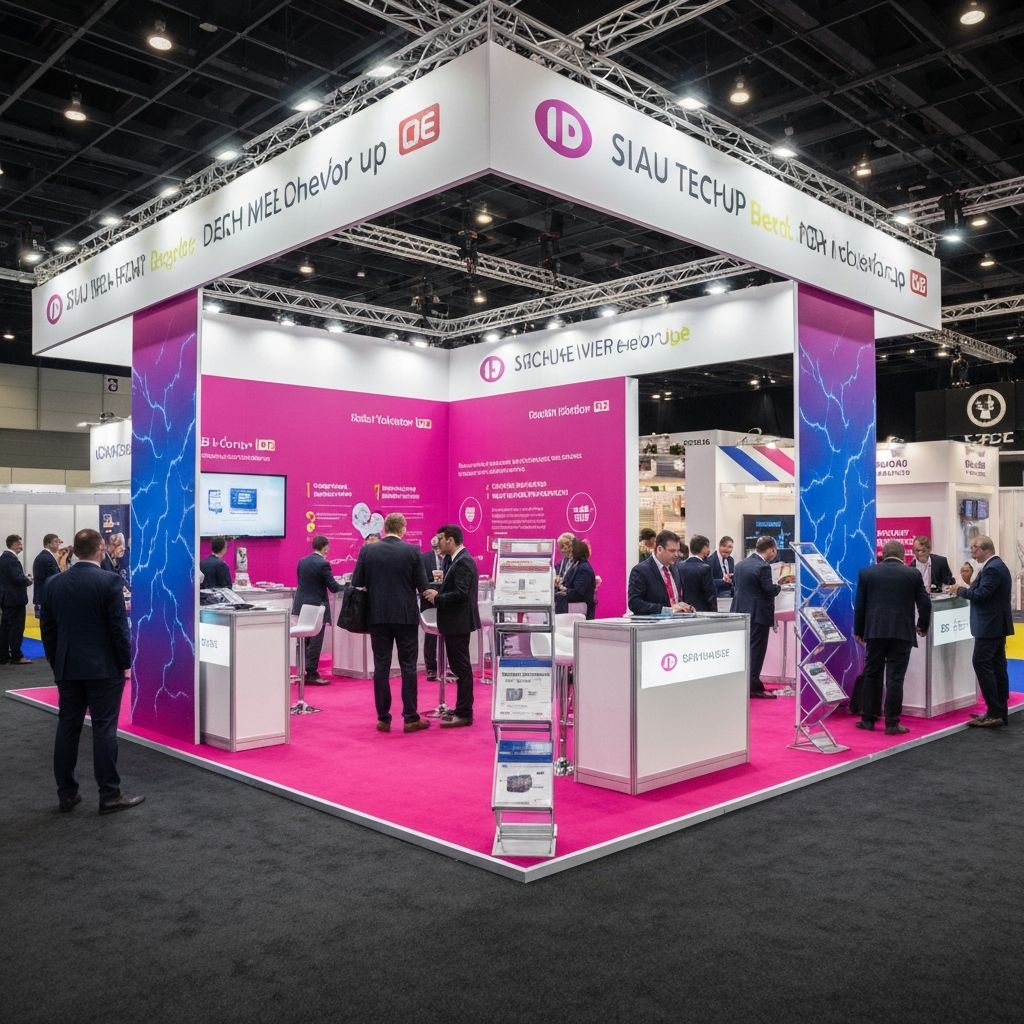
Event displays operate in competitive, high-density environments where attention is limited and decision-making is rapid. Attracting customers requires a combination of visual hierarchy, spatial efficiency, and interaction design. Each display element must contribute to visibility, clarity, and engagement without creating confusion.
Effective displays are engineered systems, not decorative setups.
Establish a Strong Visual Hierarchy
Customers process visual information quickly. Displays must present information in a clear hierarchy, prioritizing key messages such as brand identity, product value, or promotional offers.
Large-format signage, bold typography, and high-contrast color schemes improve readability from a distance. Primary messaging should be visible within seconds, while secondary details can be layered for closer inspection.
Hierarchy ensures that customers understand the purpose of the display without requiring explanation.
Optimize Table Presentation and Surface Branding
Tables are central to most event setups, yet they are often underutilized as branding tools. Surface presentation should be structured to reinforce identity and guide attention.
Using elements such as customized table runners allows businesses to integrate branding directly into the display surface. These runners create a defined visual line across the table, improving recognition and organization.
Effective table presentation includes controlled spacing, alignment of products, and consistent color application. This prevents visual clutter and ensures that each item is clearly visible.
Use Vertical Space for Increased Visibility
Horizontal displays alone are insufficient in crowded environments. Vertical elements extend visibility above surrounding booths and attract attention from a distance.
Structures such as banners, backdrops, and elevated signage create a layered display system. These elements should align with the overall visual hierarchy and avoid conflicting messages.
Vertical design improves visibility without increasing footprint, making it essential for space-limited environments.
Integrate Lighting for Focus and Contrast
Lighting is a critical factor in display effectiveness. Proper illumination highlights key elements and separates the display from surrounding areas.
Targeted lighting should be used to emphasize products or messaging. LED spotlights and backlit panels provide consistent brightness with minimal heat output.
Lighting design must avoid glare and shadow distortion. Controlled contrast ensures that details remain visible under varying conditions.
Create Defined Interaction Zones
Displays should be structured to guide customer movement and interaction. Defined zones improve flow and prevent congestion.
Common zones include:
- Entry areas that introduce the brand
- Product zones for direct interaction
- Transaction or consultation areas
Clear zoning allows customers to navigate the display efficiently. It also supports staff in managing interactions without overlap.
Incorporate Interactive Elements
Static displays limit engagement. Interactive features encourage customers to spend more time and explore offerings.
Touchscreens, product demonstrations, and hands-on samples provide direct interaction. These elements should be intuitive and require minimal instruction.
Interactive systems increase retention and improve understanding of products or services.
Maintain Consistent Branding Across All Elements
Inconsistent branding reduces recognition and weakens impact. All display components must follow the same design language.
This includes color schemes, typography, and layout structure. Consistency ensures that every element contributes to a unified presentation.
Standardization improves recall and strengthens brand identity.
Manage Product Placement Strategically
Product placement affects both visibility and accessibility. High-priority items should be positioned at eye level, while secondary items can be placed lower or in grouped arrangements.
Spacing is critical. Overcrowding reduces clarity and makes individual items harder to evaluate.
Strategic placement ensures that customers can quickly identify key offerings without distraction.
Use Modular and Scalable Display Systems
Event environments vary in size and layout. Modular display systems allow businesses to adapt configurations without redesigning the entire setup.
Components such as adjustable shelving, interchangeable signage, and portable structures support flexibility. This reduces setup time and improves consistency across events.
Scalable systems ensure that displays remain effective in different environments.
Control Visual Noise and Clutter
Excessive visual elements reduce effectiveness. Displays should focus on essential components and eliminate unnecessary distractions.
Minimalist design principles improve clarity. Each element should serve a defined purpose, whether it is informational, structural, or promotional.
Reducing clutter enhances readability and directs attention to key areas.
Train Staff to Complement the Display
Staff interaction is an extension of the display system. Even well-designed setups require effective communication to convert interest into engagement.
Staff should be positioned strategically and trained to approach customers without disrupting flow. Their role is to guide interaction, answer questions, and reinforce messaging.
Human interaction complements visual design and improves overall effectiveness.
Event displays that attract more customers are built on structured design principles. Visual hierarchy, lighting, and spatial organization work together to create clarity and engagement. By integrating branding into surfaces, optimizing layout, and incorporating interaction, businesses can create displays that stand out and perform consistently across different environments.