
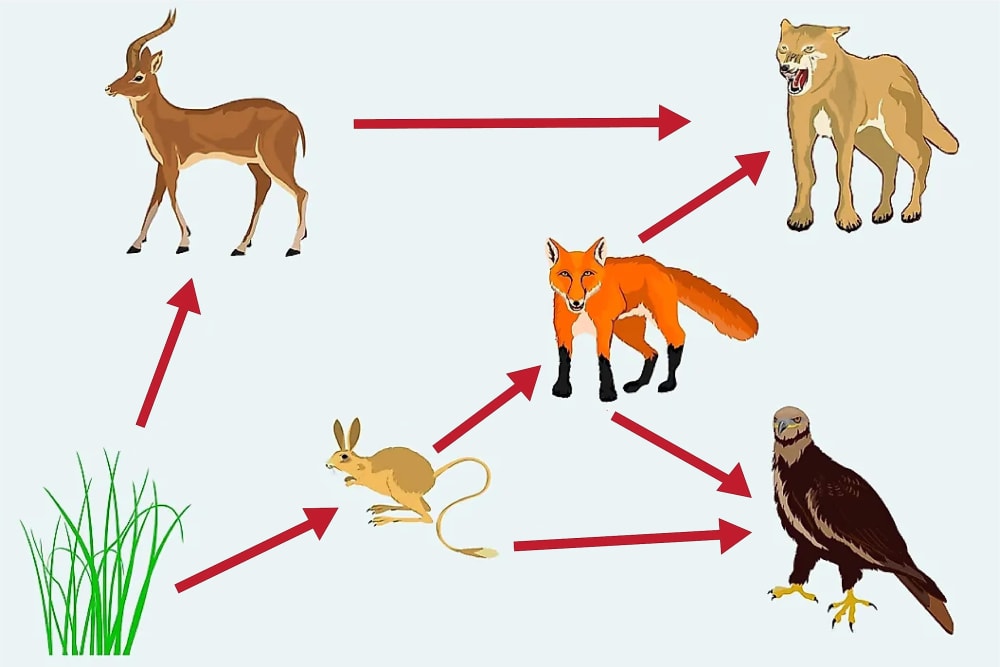
Understanding how energy moves through ecosystems is one of the most important concepts in ecology. A food web is a powerful visual tool that helps students, educators, and researchers understand the complex feeding relationships between organisms in an ecosystem. Unlike a simple food chain, which shows a single linear pathway of energy transfer, a food web illustrates the interconnected network of multiple food chains.
Learning how to make a food web helps you understand biodiversity, ecological balance, and the interdependence of living organisms. Whether you are a student completing a science project, a teacher preparing classroom material, or someone interested in environmental science, building a food web is a valuable educational exercise.
This in-depth guide will explain everything you need to know—from understanding the concept of food webs to creating one step by step.
What Is a Food Web?
A food web is a diagram that shows how different organisms in an ecosystem are connected through feeding relationships. It represents how energy flows from one organism to another.
Every ecosystem contains many food chains, and these chains overlap and connect. When these multiple chains interact, they form a food web.
Food webs illustrate several key ecological principles:
- Energy flows through ecosystems
- Organisms depend on each other for survival
- Removing one species can affect many others
- Biodiversity strengthens ecosystem stability
Food webs exist in all environments, including forests, oceans, grasslands, deserts, wetlands, and even urban ecosystems.
Food Chain vs Food Web
Before learning how to make a food web, it's important to understand the difference between a food chain and a food web.
Food Chain
A food chain is a simple linear pathway showing how energy moves through an ecosystem.
Example:
Sun → Grass → Grasshopper → Frog → Snake → Hawk
This example shows a single route of energy flow.
Food Web
A food web shows multiple interconnected food chains. In reality, animals usually eat more than one type of organism, which makes ecosystems far more complex than a single chain.
For example:
- Frogs eat insects
- Snakes eat frogs and mice
- Hawks eat snakes, mice, and frogs
When these relationships are combined, they create a network known as a food web.
Why Food Webs Are Important
Food webs are essential tools for understanding ecosystems and environmental science.
1. Shows Ecosystem Interdependence
Food webs demonstrate how species rely on one another for survival.
2. Explains Energy Flow
Energy from the sun moves through producers, herbivores, carnivores, and decomposers.
3. Helps Predict Environmental Impact
If one species disappears due to pollution, climate change, or habitat loss, food webs help scientists predict how other organisms will be affected.
4. Supports Conservation Efforts
Environmental scientists use food webs to understand biodiversity and design conservation strategies.
Key Components of a Food Web
To understand how to make a food web, you must first learn about its main components.
Producers
Producers are organisms that make their own food using sunlight through photosynthesis.
Examples include:
- Grass
- Trees
- Algae
- Phytoplankton
- Plants
Producers form the base of every food web because they supply energy to all other organisms.
Primary Consumers (Herbivores)
Primary consumers eat producers.
Examples include:
- Rabbits
- Deer
- Grasshoppers
- Caterpillars
- Zooplankton
These animals obtain energy directly from plants.
Secondary Consumers
Secondary consumers eat herbivores.
Examples include:
- Frogs
- Small fish
- Spiders
- Lizards
They occupy the next level in the food web.
Tertiary Consumers
Tertiary consumers eat secondary consumers.
Examples include:
- Snakes
- Larger fish
- Birds of prey
They are usually predators.
Apex Predators
Apex predators are at the top of the food web and have no natural predators.
Examples include:
- Eagles
- Sharks
- Lions
- Wolves
They help control populations of other species.
Decomposers
Decomposers break down dead organisms and return nutrients to the soil.
Examples include:
- Fungi
- Bacteria
- Earthworms
Without decomposers, ecosystems would fill with dead organic material.
Materials Needed to Make a Food Web
Creating a food web does not require complicated tools. You can use simple materials.
Common materials include:
- Paper or poster board
- Pencil
- Colored pens or markers
- Sticky notes
- Ruler
- Reference books or internet resources
Digital tools can also be used, such as:
- Presentation software
- Diagram apps
- Graphic design tools
- Online ecosystem simulators
Step-by-Step Guide: How to Make a Food Web
Follow these steps to create a clear and accurate food web.
Step 1: Choose an Ecosystem
The first step is selecting the ecosystem you want to represent.
Examples include:
- Forest ecosystem
- Ocean ecosystem
- Desert ecosystem
- Grassland ecosystem
- Pond ecosystem
- Arctic ecosystem
Choosing a specific ecosystem makes it easier to identify organisms that live together.
For example, a pond ecosystem might include:
- Algae
- Water plants
- Insects
- Small fish
- Frogs
- Snakes
- Birds
Step 2: List the Organisms
Write down all the organisms that live in your chosen ecosystem.
Try to include organisms from different trophic levels:
Producers
Primary consumers
Secondary consumers
Tertiary consumers
Apex predators
Decomposers
Example list for a forest ecosystem:
Producers
- Trees
- Grass
- Shrubs
Primary consumers
- Deer
- Rabbits
- Caterpillars
Secondary consumers
- Frogs
- Birds
- Foxes
Tertiary consumers
- Snakes
- Owls
Apex predators
- Eagles
- Wolves
Decomposers
- Fungi
- Bacteria
Step 3: Draw the Producers at the Bottom
Start your diagram by drawing producers at the bottom of the page.
Producers are the foundation of the food web because they supply energy for the entire ecosystem.
Example layout:
Sun → Plants → Herbivores → Carnivores
Although the sun is not always shown, it is the original energy source.
Step 4: Add Consumers Above Producers
Next, place primary consumers above the producers.
These animals eat plants.
Then add secondary and tertiary consumers above them.
Example structure:
Bottom layer: Plants
Second layer: Herbivores
Third layer: Small predators
Top layer: Apex predators
This layered arrangement helps readers quickly understand the energy hierarchy.
Step 5: Draw Arrows Showing Energy Flow
Arrows are one of the most important parts of a food web.
Arrows show who eats whom.
The arrow always points from the food to the eater.
Example:
Grass → Grasshopper
Grasshopper → Frog
Frog → Snake
Snake → Hawk
In a food web, multiple arrows connect different organisms.
For example:
Grass → Rabbit
Grass → Grasshopper
Rabbit → Fox
Rabbit → Hawk
Grasshopper → Frog
Frog → Snake
This creates a network rather than a straight line.
Step 6: Include Decomposers
Add decomposers to the diagram.
They connect to many organisms because they break down dead plants and animals.
Example connections:
Dead plants → Fungi
Dead animals → Bacteria
Decomposers return nutrients to the soil, which helps producers grow again.
This completes the ecological cycle.
Step 7: Label Each Organism
Clearly label every organism in the food web.
You may also label trophic levels such as:
- Producers
- Primary consumers
- Secondary consumers
- Tertiary consumers
- Decomposers
Color-coding can make the diagram easier to understand.
Example color system:
Green – Producers
Yellow – Herbivores
Orange – Secondary consumers
Red – Top predators
Brown – Decomposers
Step 8: Review the Connections
Finally, check the accuracy of your food web.
Ask the following questions:
- Does every consumer have a food source?
- Are arrows pointing in the correct direction?
- Are there multiple food chains connected?
- Are decomposers included?
A good food web should show many interconnected feeding relationships.
Example of a Simple Pond Food Web
Here is a simplified example of a pond ecosystem food web.
Producers
- Algae
- Water plants
Primary consumers
- Zooplankton
- Snails
- Insect larvae
Secondary consumers
- Small fish
- Frogs
Tertiary consumers
- Larger fish
- Water snakes
Apex predators
- Herons
- Eagles
Decomposers
- Bacteria
- Fungi
Connections might include:
Algae → Zooplankton
Zooplankton → Small fish
Small fish → Large fish
Large fish → Heron
At the same time:
Insect larvae → Frog
Frog → Snake
Snake → Eagle
All these chains combine to create a food web.
Tips for Creating an Effective Food Web
When learning how to make a food web, the following tips can help improve clarity and accuracy.
Keep the Layout Organized
Avoid placing organisms randomly. Use layers that represent trophic levels.
Use Arrows Carefully
Always ensure arrows point toward the organism that consumes the food.
Avoid Oversimplification
Real ecosystems contain many feeding relationships. Try to include multiple connections.
Research Organisms Carefully
Make sure animals in your food web actually live in the ecosystem you selected.
Use Visual Elements
Colors, icons, or small drawings can make your food web easier to understand.
Common Mistakes to Avoid
Many beginners make mistakes when creating food webs.
Incorrect Arrow Direction
Arrows must point toward the consumer, not the food.
Incorrect: Fox → Rabbit
Correct: Rabbit → Fox
Missing Decomposers
Decomposers are essential for nutrient recycling.
Mixing Ecosystems
Do not include ocean animals in a forest ecosystem or desert animals in a pond ecosystem.
Too Few Connections
A food web should contain multiple interconnected food chains.
How Food Webs Change Over Time
Food webs are dynamic and constantly changing.
Factors that influence food webs include:
- Climate change
- Habitat destruction
- Pollution
- Invasive species
- Natural disasters
For example, if a predator disappears, prey populations may grow rapidly. This can reduce plant populations and affect the entire ecosystem.
Understanding food webs helps scientists monitor these environmental changes.
Food Web Activities for Students
Teachers often use food webs as interactive learning activities.
Popular activities include:
Classroom Poster Projects
Students create large ecosystem food web posters.
Digital Food Web Diagrams
Students build diagrams using online tools.
Role-Playing Games
Each student represents an organism and demonstrates energy transfer.
Ecosystem Simulations
Computer simulations show how removing species affects the food web.
These activities help students visualize ecological relationships.
Final Thoughts
Learning how to make a food web is an essential step in understanding ecology and environmental science. Food webs reveal the complex connections that sustain life on Earth. From microscopic algae to powerful predators, every organism plays a role in maintaining ecosystem balance.
By following a structured approach—choosing an ecosystem, listing organisms, arranging trophic levels, drawing energy arrows, and including decomposers—you can build a clear and informative food web diagram.
Whether used for school projects, scientific studies, or environmental education, food webs provide valuable insight into the delicate relationships that shape our natural world. The more we understand these connections, the better equipped we are to protect ecosystems and preserve biodiversity for future generations.