
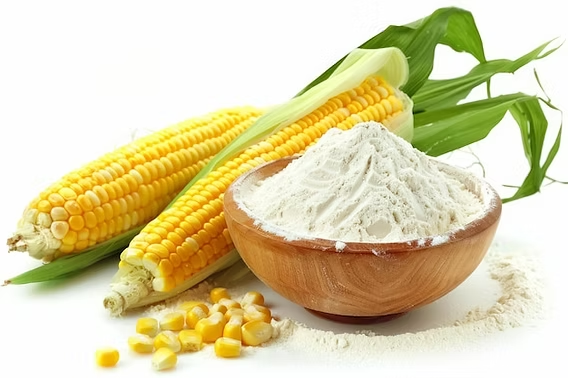
Modified food starch is one of the most common functional ingredients used across the global food industry. Found in everything from salad dressings and sauces to bakery items, frozen meals, and dairy products, it serves as a reliable thickener, stabilizer, and texture enhancer. While the name may sound highly technical or even concerning to some consumers, modified food starch is a well-studied, versatile ingredient with clear technological purposes in modern food manufacturing.
This in-depth guide breaks down what modified food starch is, how it is made, why it is used, its different types, labeling requirements, potential allergens, safety considerations, and its role in both conventional and clean-label food production.
Understanding Modified Food Starch
Modified food starch refers to starch that has been altered from its original form to improve its performance in specific food applications. The “modification” does not necessarily imply genetic engineering or harmful chemicals; rather, it includes a range of physical, enzymatic, and chemical processes designed to change how the starch behaves under heat, cold, or mechanical stress.
Why Modify Starch?
Native starches—such as those from corn, potato, tapioca, wheat, and rice—have natural limitations:
- They can break down under high heat.
- They lose thickness when frozen and thawed.
- They may not tolerate acidity.
- They can become unstable during prolonged storage.
- They may not give the desired smoothness or mouthfeel.
Common Sources of Modified Food Starch
Modified starch can be made from virtually any starch-rich plant, but some sources dominate the commercial market due to efficiency and availability.
1. Corn Starch
Corn is the most common source, especially in the U.S. Corn starch is inexpensive and produces consistently reliable results.
2. Potato Starch
Potato-based modified starch offers a neutral flavor, high clarity, and excellent thickening ability.
3. Tapioca Starch
Derived from cassava, tapioca starch provides elasticity and chewiness, making it popular in gluten-free and Asian foods.
4. Wheat Starch
Widely used in Europe, but poses concerns for individuals with gluten intolerance unless specifically purified to be gluten-free.
5. Rice Starch
Rice starch has a small granule size that creates a smooth, creamy texture suitable for baby foods and delicate applications.
The label typically reads “modified food starch” unless the source is wheat, which must be declared in regions with strict allergen laws.
How Modified Food Starch Is Made
The modification of starch can involve physical, enzymatic, or chemical processes. These processes change how the starch behaves under different conditions but do not typically alter it into something unrecognizable on a molecular level.
1. Physical Modification
These methods alter the structure of starch using heat, moisture, or pressure.
Examples include:
- Pregelatinization – starch is cooked and dried so it can thicken instantly in cold water.
- Heat-moisture treatment – improves stability under high temperatures.
2. Enzymatic Modification
Enzymes partially break down starch molecules, improving solubility or reducing viscosity. This approach is considered natural by many regulatory agencies and is widely used in baby foods and specialty products.
3. Chemical Modification
Chemical processes attach or remove certain functional groups from the starch molecules. Common treatments include:
- Acetylation
- Oxidation
- Cross-linking
- Phosphorylation
Chemical modifications are safe when performed according to regulatory standards and are used to achieve performance characteristics that cannot easily be achieved through physical methods.
Why Food Manufacturers Use Modified Food Starch
Modified starch plays a crucial functional role in thousands of products. Here are the main reasons manufacturers rely on it.
### 1. Thickening
Modified starch provides a reliable thickening effect in soups, gravies, sauces, and desserts.
2. Stabilizing
It prevents ingredients from separating, an important feature for dressings, dips, and dairy products.
3. Improving Texture and Mouthfeel
It enhances creaminess, smoothness, or gel-like properties depending on the formulation.
4. Freeze-Thaw Stability
Native starch breaks down after freezing and thawing, causing watery texture. Modified starch remains stable, making it essential for frozen meals and ice creams.
5. Heat and Acid Resistance
Canned soups, pasteurized sauces, and acidic foods require starches that do not degrade during processing.
6. Extending Shelf Life
Modified starch helps maintain consistency during storage, transport, and temperature fluctuations.
7. Replacing Fat
Some modified starches mimic the creamy mouthfeel of fats, allowing manufacturers to reduce calories while maintaining taste and texture.
8. Supporting Gluten-Free Formulation
Modified tapioca and corn starches help gluten-free bread, snacks, and pastries achieve the elasticity and structure that normally comes from gluten.
Types of Modified Food Starch
Modified food starch is not a single ingredient but a category that includes many varieties, each designed for a specific purpose.
1. Cross-Linked Starch
Strong molecular bonds make this type highly resistant to heat, acid, and mixing. Common in canned soups, pie fillings, and sauces.
2. Oxidized Starch
Used when a lighter texture or lower viscosity is needed, such as in bakery glazes or confectionary coatings.
3. Acetylated Starch
Prevents starch from becoming too rigid, making it soft, stable, and flexible in frozen foods.
4. Pregelatinized Starch
Thickens instantly without heating. Common in instant puddings, bakery fillings, and ready-to-eat meals.
5. Substituted Starch
Involves adding groups like phosphate to improve hydration and texture.
Each type has unique performance characteristics that help formulators achieve precise product goals, especially in large-scale manufacturing where consistency is essential.
Modified Food Starch vs. Native Starch
| Property | Native Starch | Modified Food Starch |
| | | - |
| Heat Stability | Low | High |
| Freeze-Thaw Stability | Poor | Excellent |
| Acid Resistance | Weak | Strong |
| Texture | Can be grainy | Smooth and consistent |
| Thickening Power | Good but limited | Strong and predictable |
| Cost Efficiency | Higher quantities needed | Lower quantities needed |
| Shelf Stability | Unpredictable | Reliable and long-lasting |
Modified starch outperforms native starch in almost every category relevant to commercial food production.
Is Modified Food Starch Safe?
Yes, modified food starch is considered safe by major regulatory bodies, including:
- The U.S. Food and Drug Administration (FDA)
- European Food Safety Authority (EFSA)
- Health Canada
- Codex Alimentarius
Digestibility
Modified starch is digested similarly to regular starch; the modification does not make it harder for the body to process.
Chemical Residues
Chemical modifications use food-grade reagents, and any residues are required to be well within safe limits.
Additive Classification
Modified food starch is generally classified as a food additive, but many types—especially physically or enzymatically modified starches—are also considered “natural” under certain regional regulations.
Allergen and Gluten Concerns
Gluten
If a modified food starch is made from wheat, it must be labeled accordingly.
Corn, potato, tapioca, and rice starches are naturally gluten-free.
Allergenicity
Modified starch is typically considered low-risk for allergies since the modification processes remove most proteins. However, individuals with severe wheat allergies should verify the source.
Cross-Contamination
Products labeled gluten-free must meet strict standards (usually <20 ppm gluten), even if the starch comes from a wheat-derived source that has been purified.
Clean-Label Alternatives to Modified Food Starch
As consumers increasingly demand simpler and more recognizable ingredients, many manufacturers are shifting toward “clean-label starches.”
Examples of Clean-Label Starches
- Native corn starch with improved processing
- Rice flour or rice starch
- Tapioca starch or cassava flour
- Potato starch
- Functional flours created through physical treatments
However, clean-label starches usually:
- Cost more
- Are less stable in certain applications
- May require reformulation
Common Foods That Contain Modified Food Starch
You can find modified starch in dozens of everyday products. Some of the most common examples include:
- Gravies and instant sauces
- Canned soups
- Puddings and pie fillings
- Ice cream and frozen desserts
- Yogurts and dairy drinks
- Dressings and dips
- Processed meats
- Bakery goods
- Snack foods and chips
- Gluten-free breads and pastries
Labeling Requirements
In the U.S.
The ingredient is typically labeled as “modified food starch.”
If it comes from wheat, the label must state “wheat” for allergen disclosure.
In the European Union
Modified starches are often listed by E-numbers, such as:
- E1400 (dextrins)
- E1404 (oxidized starch)
- E1422 (acetylated distarch adipate)
- E1442 (hydroxypropyl distarch phosphate)
In Other Regions
Most countries follow similar guidelines requiring allergen disclosure and accurate representation of the modification type.
Frequently Asked Questions
Is modified food starch the same as GMO starch?
No. “Modified” refers to processing, not genetic modification. While some starch sources may come from GMO crops (such as certain corn varieties), the modification process itself is unrelated to genetic engineering.
Can you cook with modified starch at home?
Some types—like instant clear jels—are sold commercially for home use, especially in baking and canning.
Does modified starch add calories?
Yes, it provides roughly the same calories as native starch, though usually used in small amounts.
Is modified food starch vegan?
Yes. Modified starch is plant-derived and suitable for vegan diets unless processed with non-vegan ingredients (which is rare).
The Role of Modified Food Starch in Modern Food Production
Modified food starch has become an essential technological ingredient in food systems that rely on stability, efficiency, and consistency. While some consumers hesitate at the term “modified,” the reality is that starch modification has been used for decades and is tightly regulated for safety.
Benefits to Manufacturers
- Improved texture and stability
- Lower production costs
- Extended shelf life
- Consistent results across batches
- Flexibility in designing complex products
Benefits to Consumers
- Better texture in sauces, soups, and desserts
- Stable frozen foods that do not become watery
- Affordable products due to efficiency gains
- Improved gluten-free options
Conclusion
Modified food starch is a functional, versatile, and safe ingredient used in countless food products. By altering the natural properties of starch through physical, enzymatic, or chemical processes, manufacturers can create textures and stability that native starches alone cannot provide. Despite misconceptions, modified starch is well-regulated and widely accepted by food safety authorities around the world.
As clean-label trends continue to evolve, some brands are shifting toward more natural alternatives, but modified starch remains vital in applications requiring heat resistance, freeze-thaw stability, and long-term quality.
Understanding what modified food starch is—and what it is not—helps consumers make informed choices without unnecessary confusion or fear.