
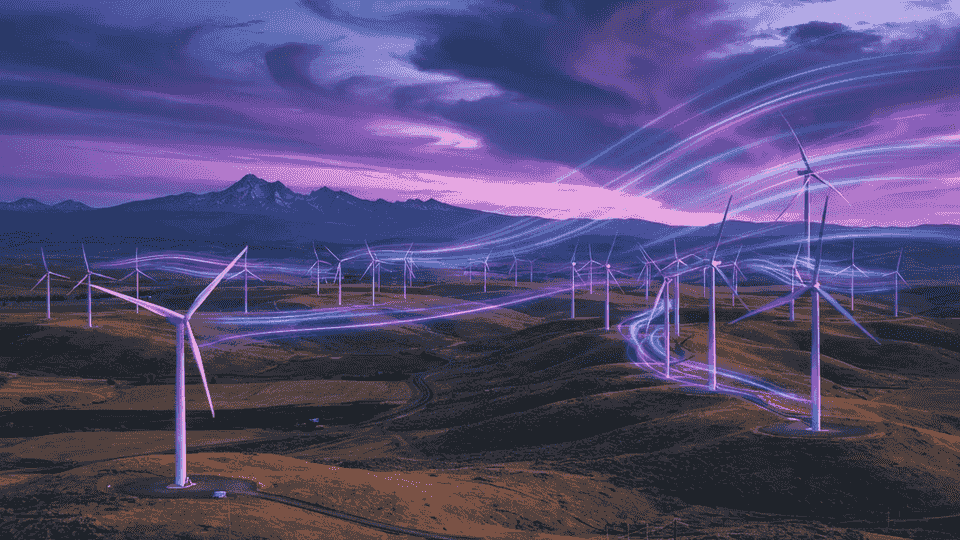
Washington’s Wind Corridor
Wind power has become a major complement to Washington hydropower. Strong resources east of the Cascades and near the Columbia River support utility-scale projects, while transmission links renewable generation with population centers west of the mountains. The sector contributes lease income, construction activity, local tax revenue, and technical jobs, though every project must address wildlife, views, tribal interests, land use, and grid constraints.
This list includes Washington utilities and national companies with meaningful projects or operational influence in the state. It is intended as a market overview. Developers, landowners, and power purchasers should evaluate project-specific records, financial capacity, community engagement, safety, and long-term decommissioning plans.
1. Puget Sound Energy
Bellevue-based Puget Sound Energy is one of Washington’s most visible wind owners. Its Wild Horse Wind and Solar Facility near Ellensburg and Lower Snake River Wind Facility in Garfield County illustrate the state’s geographic potential. PSE also uses public education and visitor programming at Wild Horse to connect utility-scale generation with community understanding.
2. Avangrid Renewables
Avangrid Renewables has developed and operated wind assets across the Pacific Northwest, including projects linked to Washington’s Columbia River region. The company brings utility-scale development, power marketing, operations, and asset-management capabilities. Large portfolios can provide purchasing and technical efficiencies, but local relationships remain essential throughout a project’s operating life.
3. Brookfield Renewable
Brookfield Renewable owns and operates renewable assets across North America, including wind interests relevant to Washington and the broader Northwest grid. Its scale and infrastructure-investment experience support long-duration asset management. For energy buyers, experienced ownership can matter because wind farms must maintain performance through equipment cycles, market changes, and evolving environmental obligations.
4. Clearway Energy Group
Clearway develops, owns, and operates wind, solar, and storage projects in the United States, with activity across the Pacific Northwest. Its multi-technology model is increasingly relevant as buyers seek portfolios that balance variable generation. Pairing wind with solar, storage, or flexible demand can improve the timing and usefulness of clean electricity.
5. EDF Renewables
EDF Renewables is a major developer and operator with experience in Western power markets. The company offers development, operations, maintenance, and asset-optimization capabilities. Its broad technical resources are useful in a maturing market where repowering older turbines may increase production while using established sites and transmission relationships.
6. Ørsted
Ørsted is globally recognized for renewable-energy development and has expanded its North American onshore portfolio through wind, solar, and storage. For Washington stakeholders, its relevance lies in large-project expertise, corporate power arrangements, and the wider competitive landscape for clean infrastructure. Project-specific local presence should always be confirmed during procurement.
7. NextEra Energy Resources
NextEra Energy Resources is among North America’s largest renewable generators and has extensive wind-development and operating capabilities. Its scale supports forecasting, equipment procurement, financing, and long-term power contracts. Large developers can accelerate deployment, while counties and landowners should still negotiate clear construction, road, restoration, and end-of-life responsibilities.
8. Vestas
Vestas supplies and services wind turbines rather than primarily selling electricity. Its technology, maintenance programs, and operational analytics influence project output and availability. Turbine selection must account for wind regime, transport routes, cold weather, noise, service access, and expected component life—not simply nameplate capacity.
9. GE Vernova
GE Vernova provides wind turbines, grid technology, and energy-system expertise. Its equipment and service capabilities make it an important participant in the supply chain supporting Northwest projects. Grid-forming controls, forecasting, and reliable interconnection are increasingly important as renewable penetration rises.
10. Energy Northwest
Richland-based Energy Northwest develops and operates generating resources for public-power members, including the Nine Canyon Wind Project near Kennewick. Its cooperative structure gives Washington public utilities a pathway to shared renewable assets. This regional model can distribute expertise and investment while keeping public-power needs central.
What Comes Next for Wind
Future growth depends on transmission. Excellent wind sites have limited value if interconnection queues are congested or lines cannot move output to customers. Repowering may offer near-term gains, while better forecasting, batteries, and coordinated hydropower can help manage variability. Offshore wind remains a separate, technically challenging discussion because Washington’s deep coastal waters, fisheries, ports, and tribal resources require careful study.
High-quality development begins with early engagement and continues for decades. Communities should seek transparent wildlife monitoring, fair land agreements, road protections, local benefits, and funded decommissioning. Companies that combine technical performance with durable community trust will be best positioned in Washington’s next wind-energy chapter.