
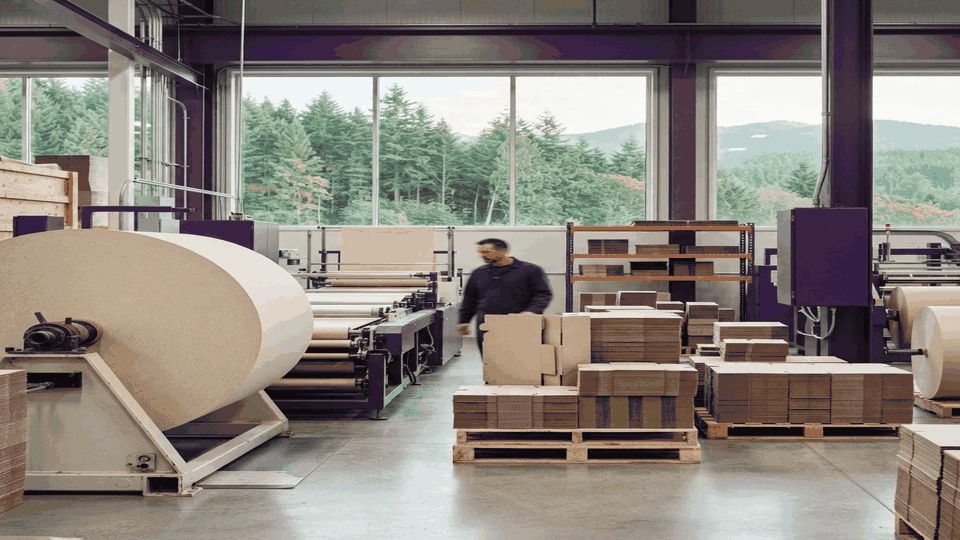
Washington’s Paper and Packaging Heritage
Forests, ports, recycling networks, and access to renewable electricity helped make paper an important Washington industry. Today’s sector is more diverse than traditional printing paper. It includes containerboard, corrugated boxes, tissue, food packaging, specialty fiber products, and converted packaging designed for modern supply chains.
1. Inland Empire Paper Company
Spokane-based Inland Empire Paper Company produces paper while investing in efficient processes and responsible fiber sourcing. Its location supports customers throughout the Inland Northwest. The company represents the combination of established papermaking knowledge and modern environmental management required to remain competitive.
2. WestRock Tacoma Operations
WestRock’s presence in Tacoma connects Washington manufacturers with corrugated packaging and paperboard capabilities. Corrugated products are essential to seafood, agriculture, e-commerce, and industrial shipping. Scale, structural design expertise, and the ability to coordinate packaging programs across multiple facilities are important benefits for larger customers.
3. Packaging Corporation of America
Packaging Corporation of America serves Washington through corrugated manufacturing and distribution operations. Its solutions range from standard shipping cases to designed packaging that protects products and improves pallet utilization. Businesses with variable demand can benefit from suppliers that combine dependable board supply with local converting and inventory planning.
4. Georgia-Pacific
Georgia-Pacific has long participated in the Pacific Northwest forest-products economy and supplies tissue, packaging, and building-related paper goods. Its broad manufacturing scale supports consistent specifications and established quality programs. Buyers should evaluate the specific regional plant and product line relevant to their application.
5. International Paper
International Paper serves the Washington market with fiber-based packaging and related products. The company’s broad network can support multi-location customers and demanding distribution schedules. Structural design, testing, and material optimization are valuable services for companies seeking to reduce product damage or excess packaging.
6. KapStone and North Pacific Paper Legacy Operations
Large mill operations in southwest Washington have shaped the region’s paper workforce and infrastructure. Facilities associated with companies such as North Pacific Paper in Longview highlight the importance of publication, packaging, and recycled-fiber markets. Their capabilities depend on industrial scale, rail and port access, and disciplined energy management.
7. Port Townsend Paper Company
Port Townsend Paper Company is a prominent Olympic Peninsula manufacturer producing kraft pulp, paper, and containerboard. Its location links forest resources with maritime logistics. Recycled fiber use, mill efficiency, and community environmental performance are especially important considerations for stakeholders assessing major paper producers.
8. Sound Packaging
Sound Packaging in the Puget Sound region provides corrugated packaging and displays for local businesses. Regional converters can respond quickly, create prototypes, and help smaller brands avoid quantities that exceed their needs. Their design teams often improve protection while reducing board usage and packing labor.
9. Seattle-Tacoma Box Company
Seattle-Tacoma Box Company has deep regional roots and produces packaging for agriculture, seafood, and industrial customers. Its understanding of wet, refrigerated, and export environments is particularly relevant in Washington. Packaging in these sectors must maintain strength through temperature changes, moisture, stacking, and long transportation routes.
10. Clearwater Paper
Spokane-headquartered Clearwater Paper is a major producer of tissue and paperboard products. Its private-brand tissue experience and paperboard capabilities give it a substantial role in North American consumer and packaging markets. Manufacturing scale, quality consistency, and fiber procurement expertise are key differentiators.
What Buyers Should Evaluate
Start with performance: compression strength, moisture resistance, print requirements, food-contact needs, and converting compatibility. Then examine total cost, including storage, packing time, product damage, transportation, and disposal. A lighter package is not an improvement if it fails in distribution.
Sustainability should be measured with specifics such as recycled content, certified fiber, source reduction, recyclability in common collection systems, and mill resource efficiency. Washington companies also need packaging that survives long export routes through Seattle and Tacoma. The best manufacturer combines verified environmental progress with repeatable performance, responsive design assistance, and reliable local supply.