
How We Chose Washington Service Providers
Washington's varied climate supports different pest pressures: moisture-loving ants and rodents are familiar in western communities, while wasps, spiders, stored-product pests, and seasonal invaders occur statewide. Effective pest management begins with correct identification and exclusion rather than automatic repeated treatment. A professional should explain what was found, why it is present, which nonchemical steps matter, and how any product will be used. These national and regional providers are useful candidates for household evaluation.
This editorial list considers service breadth, Washington relevance, specialization, operating history, and the practical information customers need to compare providers. It is not a guarantee or paid ranking. Company offerings, ownership, territories, and policies can change, so readers should independently verify current details and request written terms.
Washington Industry Trends and Local Considerations
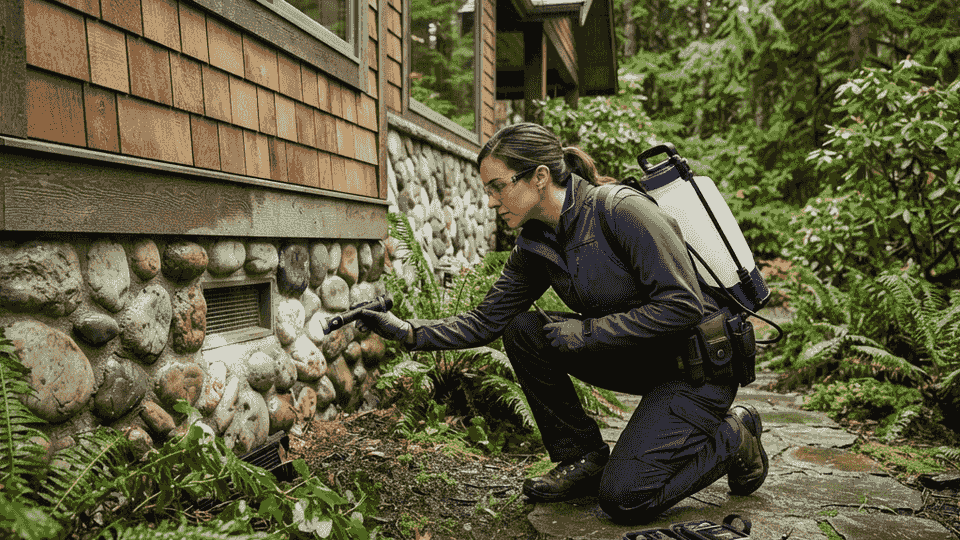
Integrated pest management is the industry's most valuable trend. It combines inspection, sanitation, moisture correction, sealing, monitoring, and targeted treatment. This approach can reduce unnecessary product use and address the conditions that let pests return. Washington homeowners should pay particular attention to crawl spaces, roof gaps, vegetation touching structures, standing water, bird feeding, and food storage. Wood-destroying organisms require specialized knowledge, and wildlife concerns may fall under different rules than ordinary insect control.
The 10 Best Companies to Consider
1. Parker Eco Pest Control
A Seattle-area company known for emphasizing lower-impact and integrated pest-management methods. It is a strong comparison for households wanting careful explanation, prevention, and targeted treatment.
2. Eastside Exterminators
Eastside Exterminators serves the Puget Sound region with pest and rodent services. Its local experience covers common western Washington pressures and property types.
3. Cascade Pest Control
Cascade Pest Control is a regional provider serving Seattle-area communities. Homeowners can evaluate it for recurring pest management, rodent concerns, inspections, and focused treatments.
4. Sunrise Pest Management
Sunrise serves portions of western Washington with residential and commercial pest programs. It is worth considering for customers seeking a locally established service relationship.
5. Washington Pest Services
Washington Pest Services offers pest-management support in the Puget Sound area. Its regional focus can be beneficial when identifying seasonal patterns and building vulnerabilities.
6. Insight Pest Solutions
Insight operates in Washington markets and provides residential pest services. Customers should compare the treatment plan, service frequency, covered pests, and cancellation terms.
7. Orkin
Orkin is a national provider with structured training and a broad range of pest services. Local branch performance and technician continuity remain important factors to assess.
8. Terminix
Terminix offers widely available pest and termite-related services. Washington homeowners can compare its inspection findings, agreement coverage, follow-up process, and local responsiveness.
9. Aptive Environmental
Aptive provides recurring residential pest-control programs in selected Washington areas. It may suit customers seeking scheduled exterior-focused service, subject to careful review of agreement terms.
10. Senske Services
Senske serves parts of Washington and combines pest control with other property services. It can be particularly relevant in inland and south-central markets within its operating footprint.
How to Compare Estimates and Service
Ask for the pest identification, evidence, entry points, contributing conditions, and treatment sequence in writing. Confirm the company is appropriately licensed and ask about technician training. Households with children, pets, gardens, aquariums, or sensitivities should receive precise preparation and reentry instructions. Review whether the plan covers one pest or a defined group, what follow-up is included, and how recurring agreements renew or cancel. For rodents, insist on exclusion and sanitation guidance; trapping without sealing entry routes rarely provides a lasting solution.
Read recent feedback for the specific branch or crew rather than relying only on a national brand average. Give each company the same scope so estimates are genuinely comparable. Note response quality before purchase: timely questions, clear exclusions, and written follow-up often predict a more organized service experience.
Questions Worth Asking Before You Hire
Ask who will perform the work, which credentials or training apply, and whether subcontractors may be involved. Request a realistic schedule, payment milestones, preparation instructions, cleanup responsibilities, and one point of contact. Find out how changes are authorized and documented, what the warranty excludes, and how a concern is escalated after completion. For recurring service, clarify visit frequency, technician continuity, renewal terms, and cancellation rules. Keep the proposal, receipts, inspection records, photographs, and warranty materials together. A reputable provider should welcome precise questions and allow enough time to review the agreement without pressure.
Final Thoughts
Parker Eco Pest Control and several other regional firms offer strong local context, while Orkin and Terminix provide broad systems and service categories. The best choice is the provider that identifies accurately, starts with prevention, uses targeted methods, and communicates measurable next steps. Results should be judged by reduced activity and corrected access—not simply by the number of visits.
Availability, pricing, and performance differ by location and project. Verify credentials, insurance, warranties, and contract terms before committing, and avoid making a decision under pressure when additional evaluation is practical.