
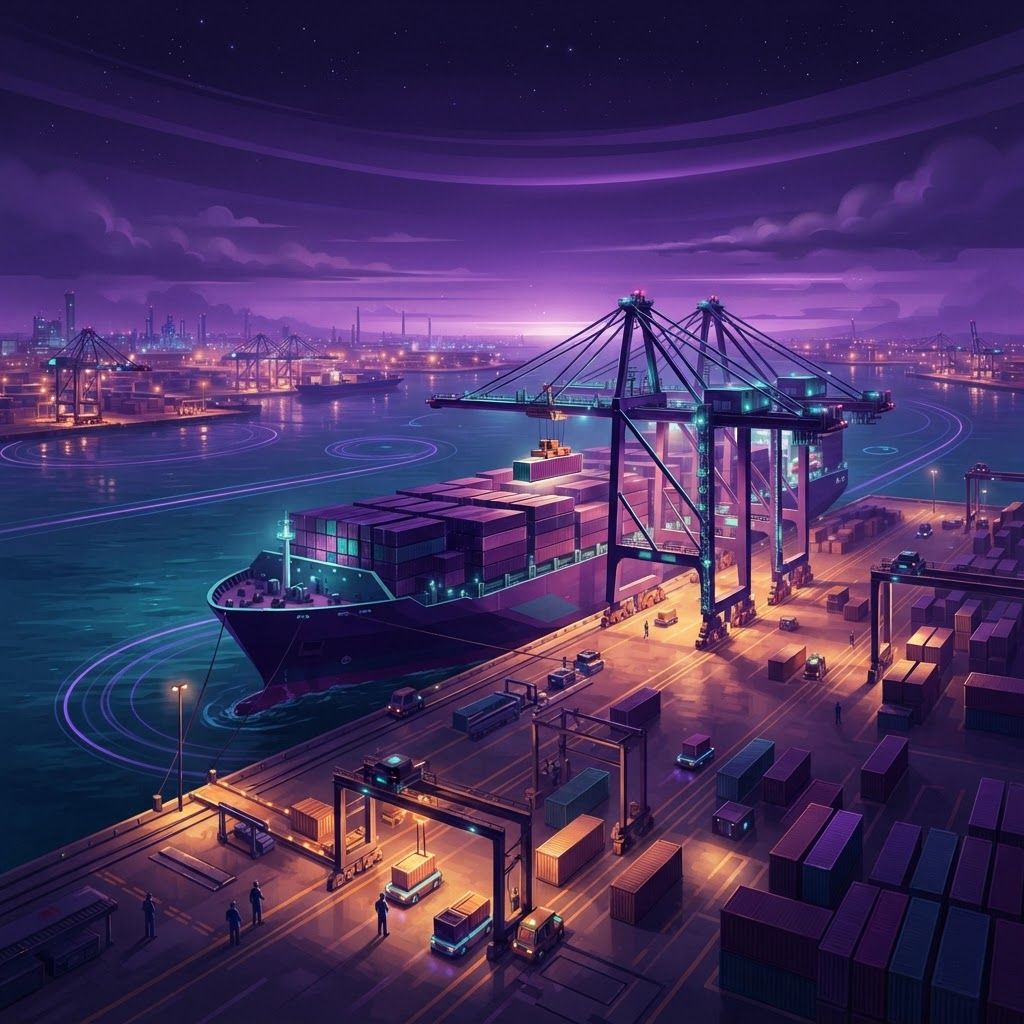
Norfolk as a Deep-Water Gateway
Norfolk's harbour is a genuine geographic asset. The Hampton Roads waterway offers natural depth that most East Coast ports have had to dredge expensively to approach, and the channel work completed and underway allows the largest container vessels in the transatlantic and Suez-routed trades to call without tidal restriction. Add ice-free year-round operation, direct double-stack rail access inland, and terminal automation that has improved berth productivity substantially, and the commercial case for routing cargo through Norfolk is straightforward.
The maritime industry that surrounds this harbour extends well beyond the container lines. It includes bulk and break-bulk operators, roll-on roll-off carriers moving vehicles and machinery, tug and pilotage services, ship agencies, marine terminals, ship repair yards and a growing offshore wind marine services sector.
Understanding Ocean Shipping Services
Shippers approaching the market should understand the main service categories. Container liner services run scheduled loops between fixed ports, carrying standard, refrigerated and specialised containers. Bulk shipping moves unpackaged commodities such as coal, grain and aggregates in dedicated vessels. Break-bulk handles cargo too large or irregular for containers. Roll-on roll-off carries wheeled cargo driven aboard. Project cargo shipping serves oversize industrial components. And less-than-container-load consolidation lets smaller shippers share container space.
1. Maersk
The world's largest container carrier maintains a significant presence at Norfolk, offering transatlantic services to northern Europe and the Mediterranean, connections to Asia via Suez routings, and Latin American trades. Its strengths for shippers are network breadth, schedule reliability that consistently ranks among the industry's best, a large refrigerated container fleet, and integrated inland and customs services that allow door-to-door contracting. Digital booking and shipment visibility tools are among the most developed in the industry.
2. Mediterranean Shipping Company
MSC has grown into the largest container fleet in the world by capacity and serves Norfolk extensively across transatlantic, Mediterranean, Asian and South American trades. The carrier is particularly strong on Mediterranean and emerging market coverage, and its rate positioning is often competitive against the other major lines. Reefer capability and project cargo handling through specialised equipment are well developed, and the company's inland logistics arm provides intermodal connectivity from the port.
3. CMA CGM
CMA CGM offers comprehensive Norfolk coverage with notable strength on transatlantic services and connections through its extensive Mediterranean and Asian networks. The group's logistics division provides forwarding, contract logistics and customs services, enabling integrated door-to-door solutions. The carrier has invested significantly in alternative-fuel vessels, which matters increasingly to shippers with supply chain emissions reporting obligations.
4. Hapag-Lloyd
Hapag-Lloyd has a strong reputation for schedule reliability, documentation accuracy and customer service consistency, which makes it a common choice for shippers who value predictability over lowest rate. Its transatlantic coverage from Norfolk is dense, and its refrigerated and special cargo expertise is well regarded. The carrier's reefer monitoring services suit temperature-sensitive shippers with tight compliance requirements.
5. Ocean Network Express
Formed from the container operations of three major Japanese carriers, ONE brings substantial Asia-East Coast capacity to Norfolk along with the operational discipline associated with Japanese shipping. The carrier serves the Asia trades via both Suez and Panama routings, providing shippers with routing alternatives that matter when either canal experiences constraints. Equipment quality and reefer performance are consistently strong.
6. Bulk and Break-Bulk Shipping Operators
Hampton Roads has been a world-scale bulk export point for generations, principally for coal moving through the region's dedicated piers, alongside grain, aggregates, fertiliser and forest products. Bulk carriers and the terminal operators serving them work on a fundamentally different commercial model to container lines, typically chartering vessels for specific voyages or periods. Break-bulk operators handle steel, machinery, wind components and other cargo requiring specialised lifting and securing.
7. Roll-On Roll-Off and Vehicle Shipping Lines
Norfolk handles significant volumes of wheeled and tracked cargo, including automobiles, construction and agricultural equipment, and military vehicles. Roll-on roll-off carriers operating through the port provide dedicated vessels with internal ramps and decks, which is far more efficient than lifting vehicles aboard. This segment also serves the region's substantial military logistics requirements and individuals relocating internationally with personal vehicles.
8. Ship Agencies and Vessel Husbandry Providers
Every vessel calling Norfolk requires an agent to coordinate berth arrangements, customs and immigration clearance, crew changes, provisions, bunkers, waste disposal, repairs and the numerous regulatory filings that a port call generates. Ship agencies in the harbour handle this work, and their efficiency directly determines vessel turnaround time. For owners and operators, an agency with strong local authority relationships and around-the-clock responsiveness is worth considerably more than the modest fee difference between providers.
9. Towing, Pilotage and Marine Support Services
Safe navigation in Hampton Roads depends on the pilots who board vessels for the transit and the tug operators who assist berthing and unberthing. The harbour also supports bunkering services, marine surveying, diving and hull cleaning, salvage capability and firefighting response. These services are largely invisible to cargo owners but fundamental to the port's safety record and operational continuity, and the region's concentration of naval and commercial marine activity has produced unusually deep capability.
10. Ship Repair, Conversion and Offshore Marine Services
Hampton Roads is one of the largest ship repair centres in the United States, with yards capable of drydocking, hull and structural work, propulsion and machinery overhaul, and complex conversions. This capability serves commercial vessels, government fleets and, increasingly, the offshore wind industry, which requires specialised installation and service vessels along with port-side assembly and staging. The offshore wind build-out along the Virginia coast has become one of the most significant new demand drivers in the regional maritime economy.
How to Choose an Ocean Carrier
Rate is the obvious variable but rarely the decisive one. Assess transit time and, more importantly, schedule reliability on your specific port pair, since a cheap service that misses its window regularly costs more in inventory and expediting than it saves. Confirm equipment availability, particularly for reefer and specialised containers during peak seasons. Understand free time provisions and demurrage and detention rates, which vary meaningfully between carriers. Evaluate the quality of shipment visibility and documentation systems. Check whether the carrier's inland network can deliver the door-to-door service you need or whether you will coordinate that separately. And for emissions-sensitive shippers, review the carrier's fleet fuel profile and reporting capability.
Trends in Maritime Shipping
Vessel upsizing continues, concentrating cargo into fewer, larger calls and rewarding ports like Norfolk that can handle them without restriction. Decarbonisation is now a central commercial issue, with dual-fuel newbuildings, alternative fuel bunkering infrastructure and emissions reporting reshaping carrier strategy and customer expectations. Terminal automation and appointment systems have improved landside throughput while requiring shippers and drayage operators to adapt their processes. Canal constraints, whether from drought or geopolitical disruption, have made routing flexibility a genuine value proposition. And nearshoring trends have modestly improved the relative position of East Coast gateways.
Final Thoughts
Norfolk offers a combination of natural depth, ice-free operation, dual rail service and terminal capability that few East Coast ports can match. All the major container lines call here, so shippers have real choice. Select on reliability and total landed cost rather than headline rate, and pay close attention to free time and demurrage terms, which is where ocean freight budgets most often unravel.