
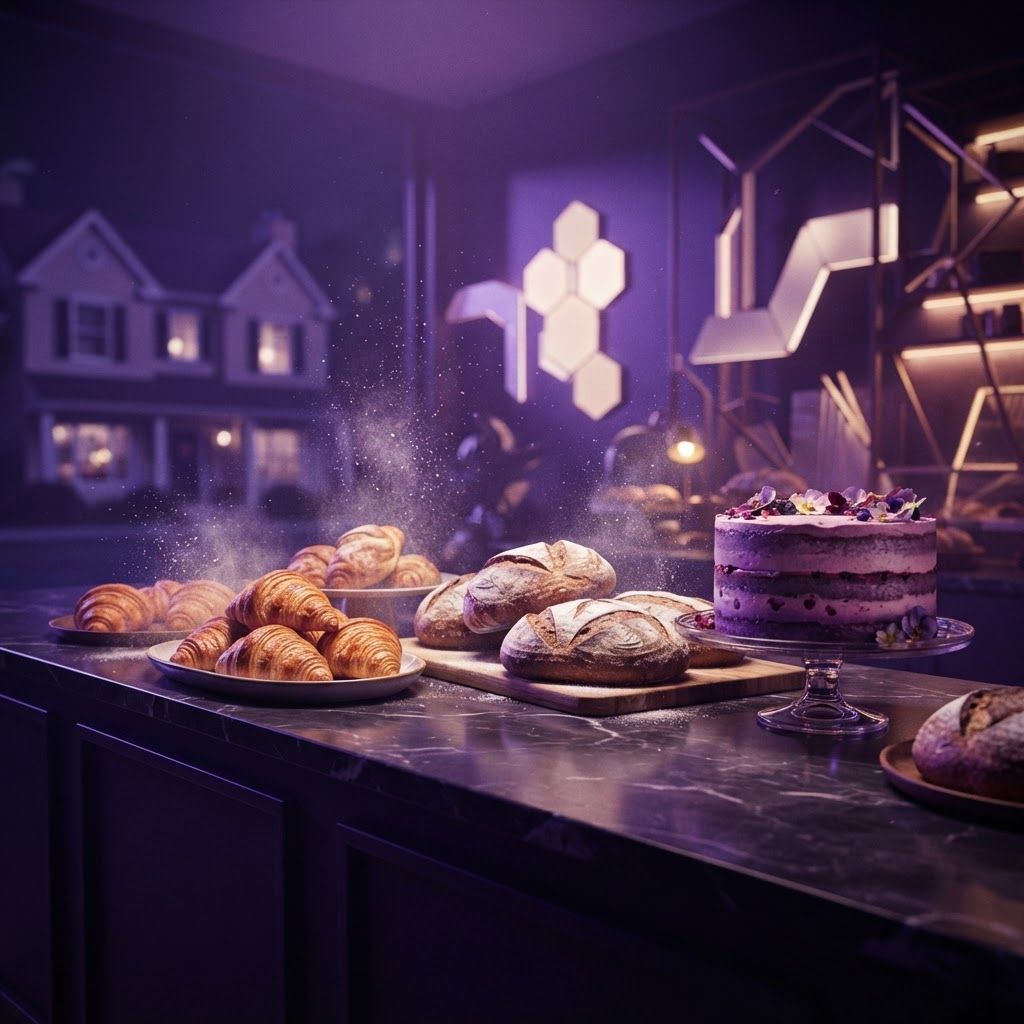
Why North Hempstead Has Become a Baking Destination
North Hempstead occupies an unusual position on Long Island's culinary map. The town spans dozens of villages and hamlets, each shaped by successive waves of immigration, and bakeries have long served as the most visible expression of that heritage. Italian pastry shops sit a few blocks from Persian confectioners; Jewish bakeries producing rye and challah operate alongside Korean cafes turning out cloud-soft milk bread. The result is a density and variety of baked goods that residents of far larger cities would envy.
Proximity to New York City matters too. Many of the bakers working in North Hempstead trained in Manhattan kitchens or at culinary schools in Queens and Brooklyn before opening their own storefronts closer to home. They brought city-level technique with them but built businesses around neighborhood economics, which is why a modest shop in a strip plaza on Northern Boulevard may be laminating dough with the same discipline as a celebrated Midtown patisserie.
What Separates a Good Bakery from a Great One
Before naming names, it helps to know what to look for. The most reliable indicator is turnover: a great bakery sells out. Empty racks by late afternoon signal that product is being baked in small, frequent batches rather than held for days. Conversely, a case that looks identically full at nine in the morning and six at night usually means frozen or par-baked inventory.
Second, examine the crumb. In bread, an open irregular structure suggests a well-fermented dough that developed slowly, often overnight. In laminated pastry, count the layers at the cut edge; genuine hand lamination produces dozens of distinct, honeycombed cells. Third, taste the plain items. Anyone can hide mediocre technique under frosting or fruit filling, but a simple baguette, a plain croissant, or an unadorned pound cake exposes everything. Finally, ask about sourcing. Bakers who care about their butterfat percentage, their flour mill, or their chocolate origin will tell you at length.
The Ten Bakeries Worth Planning Your Week Around
Hempstead Harbor Bread Company has built its reputation on naturally leavened loaves fermented for eighteen hours or more. The country sourdough, with its blistered mahogany crust and faintly tangy interior, is the item locals queue for on weekend mornings. The shop also mills a portion of its own whole grain, which gives its seeded wheat loaf a nuttiness that commercial flour cannot replicate.
Manhasset Valley Patisserie represents the classical French tradition. Expect mirror-glazed entremets, precisely piped éclairs, and a tart case arranged with the symmetry of a jewelry display. The pastry team's attention to temperature control shows in the crémeux fillings, which set to a clean spoon-cut rather than a loose pudding.
Roslyn Heights Italian Bakery is the neighborhood institution that other bakeries measure themselves against. Generations of families have ordered its sfogliatelle, ricotta cheesecake, and semolina loaves for holidays and communions. The cannoli are filled to order, which is the single most important detail in cannoli and the one most often skipped elsewhere.
Great Neck Kosher Bake Shop serves a large and discerning community with certified kosher production. Its challah, braided in six strands and brushed to a deep lacquer, is the benchmark locally, and its babka layers cocoa paste in a tight spiral rather than the sparse swirl found in supermarket versions.
New Hyde Park Croissanterie focuses almost exclusively on laminated dough. The team sheets butter blocks by hand, resting the dough between folds, and the payoff is a croissant that shatters audibly and leaves a scatter of flakes on the counter. Almond and pistachio variants use house-made frangipane instead of purchased paste.
Specialty Shops and Modern Newcomers
Port Washington Sweet Studio caters to the custom cake market, working with couples and event planners on tiered designs, sugar florals, and structurally ambitious sculpted pieces. What distinguishes the studio is that the cake tastes as considered as it looks; the interiors use Swiss meringue buttercream and soaked sponges rather than the shortening-heavy frostings that make many decorated cakes inedible.
Westbury Persian Confectionery introduces flavors that remain underrepresented on Long Island: rosewater, cardamom, saffron, and ground pistachio appear in delicate rice-flour cookies and honey-soaked baklava cut into diamonds. The shop is also a reliable source for celebratory Persian pastry trays around Nowruz.
Albertson Village Donuts proves that a humble category rewards craft. The yeast-raised rings are proofed slowly and fried in small batches, producing a light, chewy interior, while the cake donuts stay tender through a careful balance of buttermilk and leavening. Seasonal glazes rotate with local produce.
Searingtown Gluten-Free Bakehouse operates a dedicated allergen-controlled facility, which matters enormously to customers managing celiac disease. Rather than approximating wheat products poorly, the bakers build recipes around what alternative flours do well, so the almond-flour tortes and buckwheat scones succeed on their own terms.
Herricks Asian Bakery Cafe rounds out the list with the soft, milky breads and mildly sweet pastries popular across East Asia. Taro buns, ube rolls, pandan chiffon, and jiggly Japanese cheesecake fill the cases, and the cafe seating makes it a common weekday stop for coffee and a bun.
Trends Shaping Local Baking
Three shifts are visible across North Hempstead's bakeries. The first is a return to long fermentation, driven partly by flavor and partly by customer interest in digestibility. The second is transparency about ingredients, with more shops listing butterfat percentages, flour origins, and allergen protocols directly on labels. The third is the growth of preorder and pickup systems, which lets small bakeries plan production precisely and reduce waste rather than overbaking to fill a display.
How to Order Well
Arrive early for bread and late for markdowns, but never expect both. For celebration cakes, contact the bakery at least two weeks ahead, and longer during graduation and holiday season, when North Hempstead's bakeries operate near capacity. If you have a serious allergy, ask specifically about shared equipment rather than shared ingredients; the distinction is what determines actual risk.
Above all, buy the thing the bakery is known for. Every shop on this list does one category exceptionally well, and the fastest route to understanding North Hempstead's baking culture is to let each specialist show you what it has spent years perfecting.