
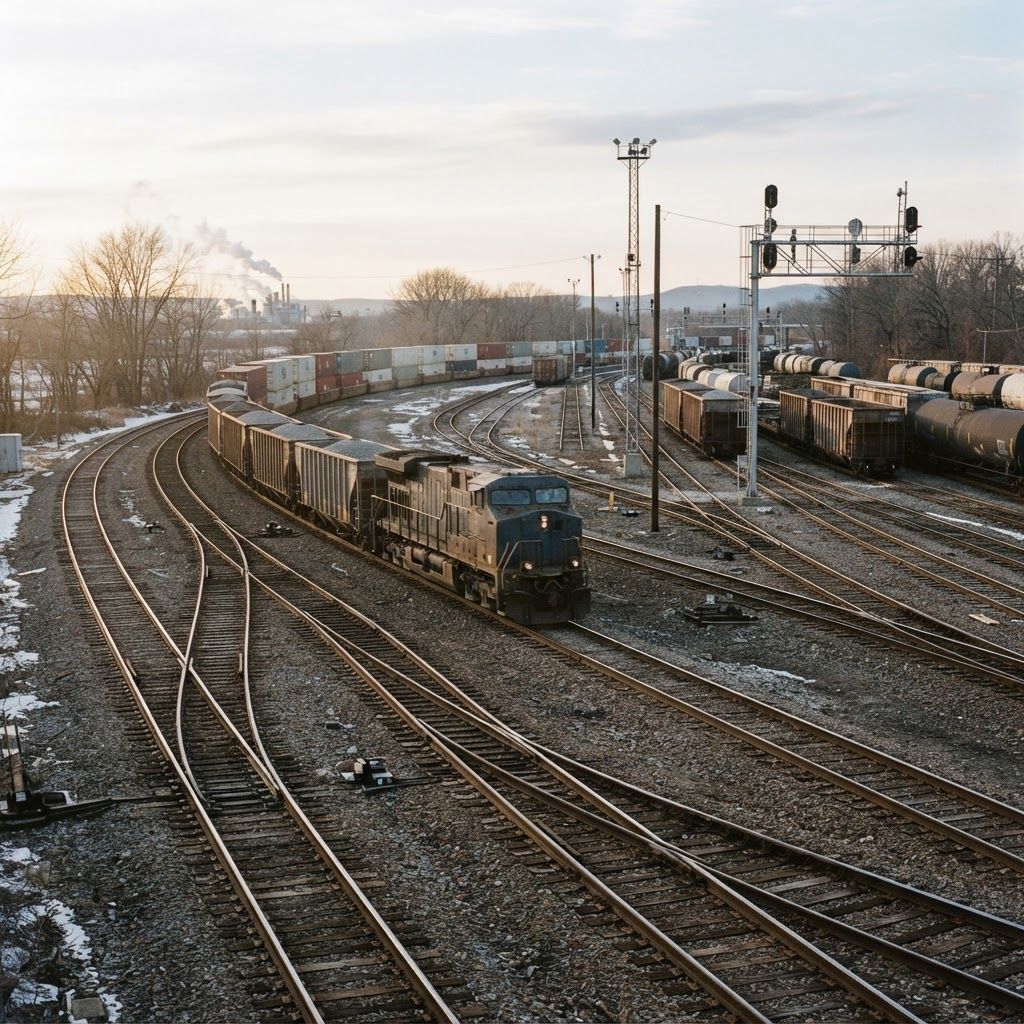
A Railroad City, Then and Now
Buffalo's growth in the nineteenth and early twentieth centuries came from being the point where water and rail met. Grain arrived by lake vessel, moved through the largest concentration of elevators in the world, and left by train. That legacy is still visible in the rail infrastructure threading through the city, and it remains economically relevant: rail is the most efficient way to move heavy, dense, and bulk commodities over long distances, and Buffalo continues to generate exactly that kind of freight.
Today the region's rail activity divides into three categories. Class I railroads run the long-haul network. Short line and regional railroads handle local switching, industrial spurs, and feeder traffic. Passenger operators serve intercity travel from the region's two Amtrak stations.
Operators Serving Western New York
CSX Transportation is the dominant Class I presence in Buffalo, with main line routes connecting the region east toward Albany and the Northeast, west toward Cleveland and Chicago, and north to the Canadian border. Norfolk Southern also serves the region, providing shippers with competitive routing options and interchange access. Canadian Pacific Kansas City and Canadian National connect Buffalo into the Canadian network, which matters enormously for cross-border bulk and intermodal traffic.
On the short line side, the Buffalo and Pittsburgh Railroad, operated within the Genesee & Wyoming family, provides regional service into Pennsylvania and handles significant industrial traffic. The South Buffalo Railway performs switching in the historic steel corridor along the lakefront. The Buffalo Southern Railroad serves customers south of the city, and the Falls Road Railroad and Rochester and Southern Railroad extend regional connectivity into surrounding counties. The Depew, Lancaster and Western Railroad and Batavia Industrial Track operations round out the short line landscape.
For passengers, Amtrak operates the Empire Service and the Maple Leaf, which continues into Toronto in partnership with VIA Rail Canada. The Buffalo Exchange Street station serves downtown while the Buffalo Depew station handles longer-distance trains, and the Lake Shore Limited connects the region toward Chicago.
What Rail Does Best
Rail excels at volume, weight, and distance. A single carload can carry roughly three to four truckloads of material, and fuel efficiency per ton-mile is several times better than highway transport. For shippers of aggregates, steel, chemicals, grain, lumber, scrap, and finished vehicles, rail is frequently the only economically sensible mode.
Intermodal service extends those advantages to containerized freight. Containers travel by rail over the long middle segment of a journey and by truck at each end, capturing most of the cost savings while retaining door-to-door flexibility. For Buffalo shippers moving goods to or from West Coast ports or inland hubs, intermodal often beats over-the-road trucking on cost while remaining competitive on transit time.
Evaluating Rail Service as a Shipper
The first question is physical access. Companies with a rail siding have direct carload options; those without need transloading, where freight transfers between rail and truck at a third-party facility. Buffalo has a healthy transload sector, which effectively extends rail access to shippers who lack their own track.
Second, examine service frequency and reliability. Short lines often provide more responsive local switching than Class I railroads, and their willingness to work around a customer's production schedule is a genuine differentiator. Third, understand the commercial structure: rates, demurrage rules for holding cars too long, private versus railroad-supplied equipment, and interchange arrangements all affect total cost meaningfully.
Industry Trends
Precision scheduled railroading reshaped Class I operations over the past decade, prioritizing asset utilization and network fluidity. The effect on shippers has been mixed, improving consistency on major lanes while reducing flexibility for smaller customers, which in turn increased the strategic value of short line partners.
Investment in cross-border capacity continues, driven by the strength of United States and Canada trade. Technology adoption has accelerated too, with automated inspection portals, telematics on rolling stock, and shipper-facing tracking tools now common. On the environmental side, rail's efficiency advantage has become a selling point for corporate sustainability programs, and pilot work on alternative locomotive power continues industry-wide.
Passenger rail in the corridor has attracted renewed attention, with ongoing discussion of improved Buffalo to Toronto and Buffalo to New York City service. Station investment in downtown Buffalo reflects that interest and the broader revitalization of the waterfront district.
Practical Advice
Shippers new to rail should start with a transload trial before investing in track infrastructure. Model total landed cost rather than line-haul rate alone, including drayage, transload handling, and inventory carrying cost from longer transit. Engage the local short line early, since their commercial teams know which routings and interchanges actually work.
Passengers should book Maple Leaf and Empire Service seats well ahead during summer and holiday periods, allow generous time for border formalities on Toronto trains, and check which Buffalo station a given departure uses, because the two are not interchangeable.
Final Thoughts
Rail remains one of Buffalo's underappreciated competitive assets. Between two American Class I carriers, direct Canadian connections, an active short line network, and passenger service in three directions, the region offers options that few midsize markets can match. Understand which operator controls the track serving you, evaluate transload alternatives honestly, and rail can lower both costs and emissions substantially.