
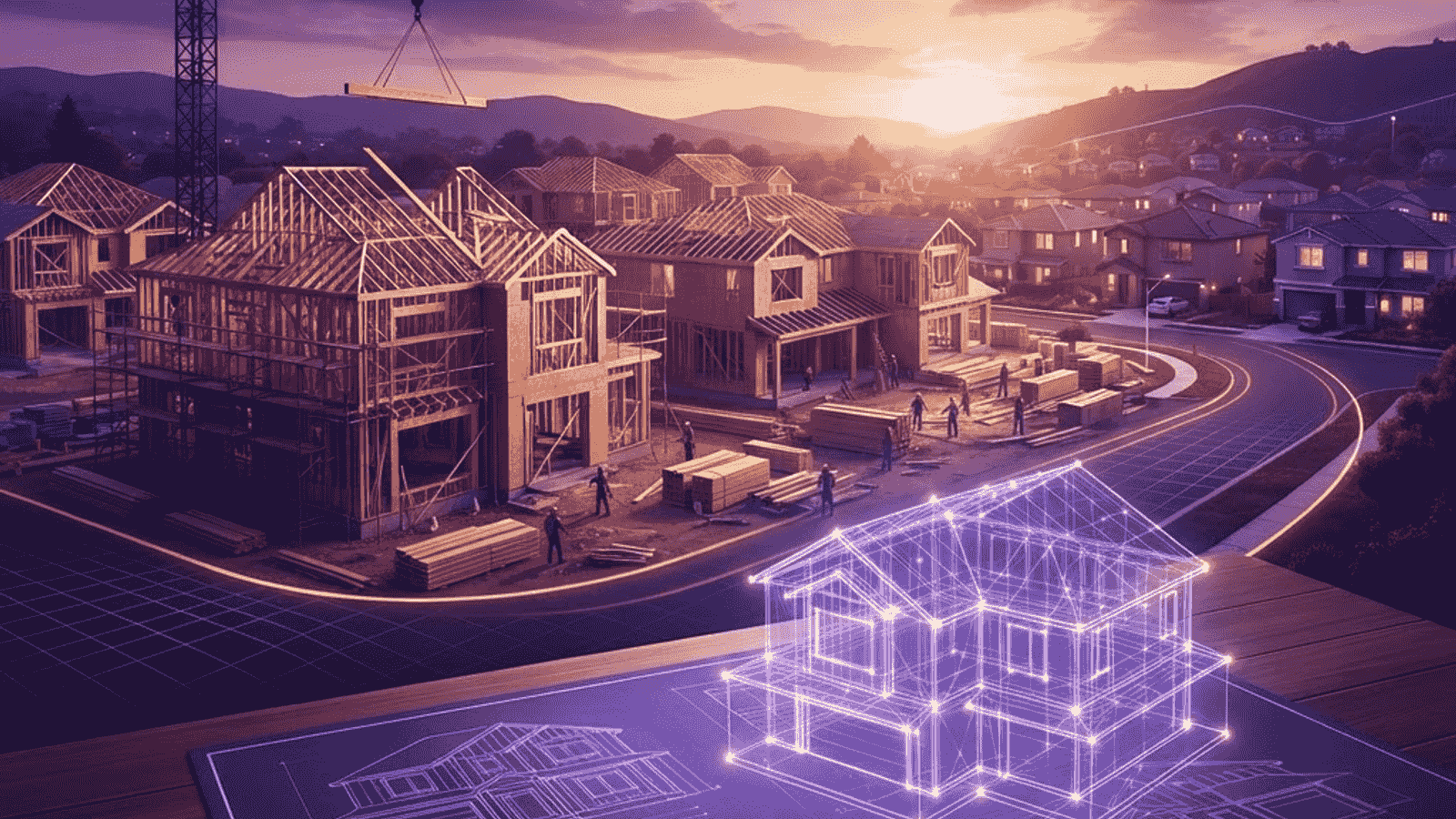
How Lincoln Grows
Lincoln has expanded steadily for decades, adding population without the volatility seen in faster-growing sun belt markets. Growth follows a predictable pattern set by infrastructure, with new subdivisions extending south past Yankee Hill and Rokeby, northwest toward Air Park and Fallbrook, and east along the Highway 2 and 84th Street corridors. Because the city controls annexation and utility extension carefully, developers here work within a comparatively disciplined framework that limits speculative overbuilding.
The residential development market is a mix of land developers who plan and entitle subdivisions, production builders who construct homes at volume within them, and custom builders working on individual lots. Some companies do all three, which is common in Lincoln and important for buyers to understand when evaluating who is actually responsible for construction quality versus neighborhood planning.
What Buyers Should Evaluate
In new construction, examine the builder's warranty structure, including one-year workmanship, two-year systems and ten-year structural coverage, and ask how warranty claims are actually handled after closing. Review energy performance, since insulation levels, window specifications, HVAC sizing and blower door testing determine utility costs for decades in a climate with hot summers and cold winters. Inspect a completed home rather than only a model, and hire an independent inspector at framing and final stages even on new builds. Understand the subdivision plan including future phases, planned commercial parcels, drainage, park dedication and homeowner association obligations. Finally, compare allowances carefully, because base pricing between builders is rarely comparable without matching specifications.
The Ten Leading Residential Developers and Builders in Lincoln
1. Roper and Sons Development and Established Land Developers
Lincoln's long-operating land development firms shape subdivision layout, street design, drainage and lot configuration before a single house is built. Their planning quality determines walkability, tree canopy and long-term neighborhood character more than individual home design does.
2. Landmark Homes
A prominent Lincoln homebuilder producing single family homes and townhomes across multiple subdivisions. Known for streamlined floor plan selections, predictable construction timelines and volume efficiency that keeps pricing competitive.
3. Nebraska Realty Development Partners
Development groups affiliated with major brokerages coordinate land acquisition, entitlement and builder recruitment. Their advantage is market data depth, aligning lot supply with actual absorption rather than optimistic projections.
4. Hartland Homes
A regional builder active in Lincoln with a range from entry-level to move-up housing. Standardized construction systems and defined option packages appeal to buyers who want clarity rather than open-ended customization.
5. Custom Blueprints and Local Custom Builders
Lincoln supports a strong custom building sector constructing homes on scattered lots and in premium subdivisions. Custom builders offer design flexibility, higher specification levels and direct client collaboration, at longer timelines and higher cost per square foot.
6. Woodhaven Homes
A builder focused on the value and first-time buyer segment, delivering efficient floor plans in newer subdivisions. Affordability-focused construction has become increasingly important as Lincoln home prices have risen faster than wages.
7. Manzitto Brothers and Regional Multifamily Developers
Apartment and townhome developers have driven much of Lincoln's recent residential construction, responding to student demand, workforce housing needs and downsizing older adults. Multifamily supply directly influences rental affordability across the city.
8. Ridge Development and Infill Specialists
Developers working within established neighborhoods on infill lots, redevelopment parcels and downtown conversions face more complex approvals but produce housing close to jobs and transit. This segment has grown as the city emphasizes density alongside greenfield expansion.
9. Fallbrook Development
A master-planned community in northwest Lincoln combining residential, commercial and public space with traditional neighborhood design principles. Projects of this type demonstrate how integrated planning creates distinct identity rather than repetitive subdivision layout.
10. Habitat for Humanity of Lincoln and Nonprofit Housing Developers
Nonprofit builders produce affordable ownership housing through volunteer labor, donated materials and sweat equity models. Their work addresses a segment the private market structurally underserves and contributes to neighborhood stabilization.
Market Trends in Lincoln Housing
Lot supply and construction cost, rather than demand, have been the limiting factors in recent years. Energy code improvements and buyer interest in efficiency have raised baseline building performance, with better insulation and high efficiency mechanical systems increasingly standard. Smaller lots and attached product types are expanding as affordability pressure grows. Home office space has become a permanent floor plan expectation rather than a bonus. And build times remain longer than pre-pandemic norms, which buyers should assume when planning a move.
Practical Guidance
Visit subdivisions at different times of day and after rainfall to observe traffic and drainage. Talk with residents who bought two or three years ago, since their warranty experience is more informative than a sales presentation. Request the full specification sheet in writing and compare line by line between builders. Confirm what is included in base price versus lot premium, landscaping, fencing and finished basement. And secure financing with a lender experienced in new construction timelines to avoid rate lock complications.
Final Thoughts
Lincoln's residential development community includes disciplined land developers, efficient production builders, capable custom firms, active multifamily developers and meaningful nonprofit housing efforts. Buyers who evaluate specification detail, warranty performance and subdivision planning rather than model home finishes consistently end up with better long-term outcomes.