
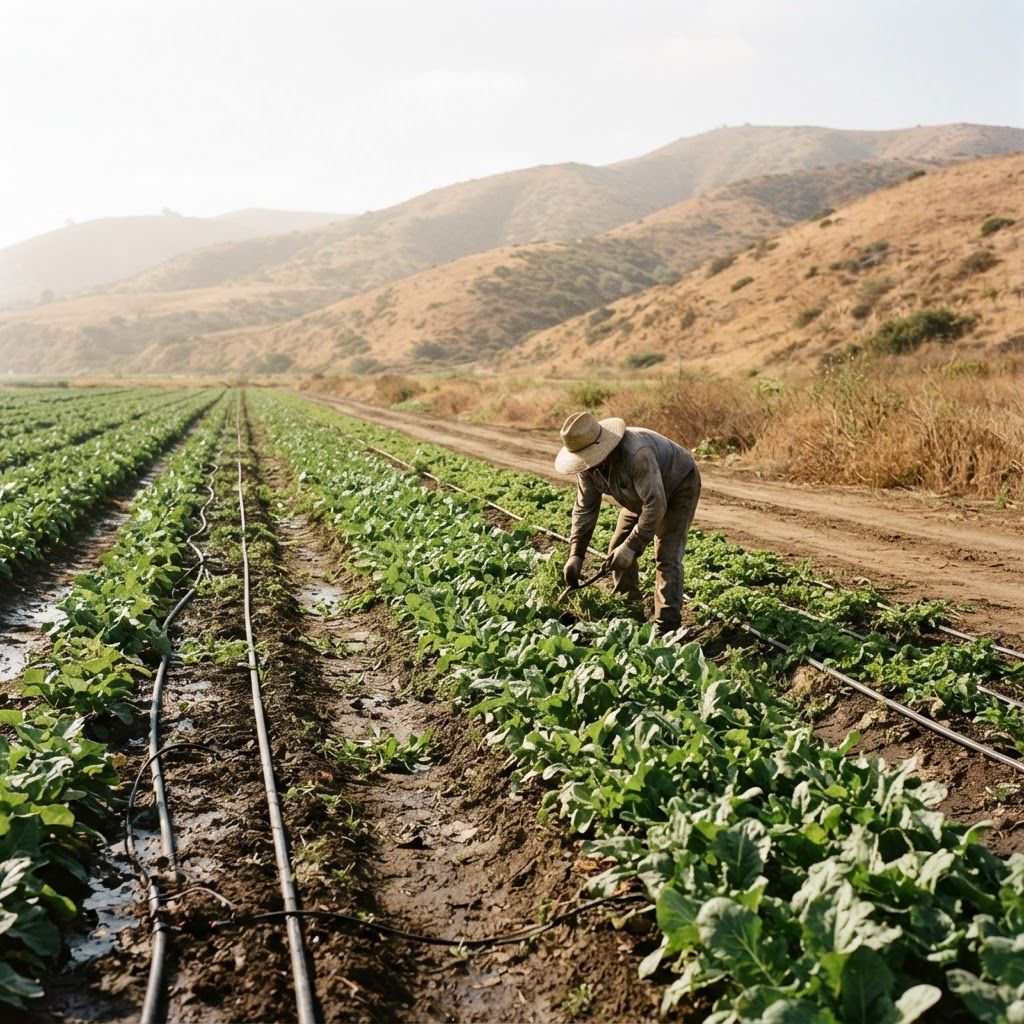
The Agricultural Legacy of Chula Vista
Long before it became the second largest city in San Diego County, Chula Vista was farmland. The name itself, meaning beautiful view, was attached to a townsite laid out among lemon groves in the late nineteenth century. For decades the area was one of the most productive lemon growing regions in the state, and later became known nationally for celery cultivation. The Sweetwater Valley supported orchards, row crops, and dairy operations that shipped throughout the Southwest.
Urbanization changed the landscape, but it did not end agriculture here. What emerged instead is a more concentrated, higher value form of farming. Land is expensive, water is regulated, and labor is costly, so the operations that thrive are those producing premium crops, serving direct markets, or using technology to raise yield per square foot dramatically.
What Makes Farming Viable in an Urban County
Three advantages sustain agriculture in this region. The first is climate. A mild coastal Mediterranean pattern allows nearly year round production of leafy greens, herbs, avocados, citrus, and flowers without heated structures. The second is proximity to market. A grower here can harvest in the morning and deliver to San Diego restaurants the same afternoon, which commands premium pricing that inland producers cannot access. The third is direct customer relationships through farmers markets, community supported agriculture subscriptions, and farm to table partnerships.
The constraints are equally clear. Water cost is the defining economic variable, which pushes growers toward drip irrigation, soil moisture sensing, and drought tolerant crop selection. Land pressure encourages vertical and greenhouse production. Regulatory compliance around food safety, labor, and pesticide use requires administrative capacity that small operations often struggle to maintain.
1. Specialty Citrus and Avocado Growers
San Diego County remains one of the leading avocado producing regions in the United States, and small groves persist in the hills east and north of Chula Vista. Growers in this category focus on quality and timing rather than volume, targeting premium retail and direct sales windows when imported fruit quality dips. Citrus growers similarly emphasize flavor varieties that do not ship well from distant regions.
2. Greenhouse and Controlled Environment Producers
Greenhouse operations represent the most economically resilient segment of local agriculture. By controlling temperature, humidity, and nutrient delivery, these producers achieve yields per acre many times higher than field production while using a fraction of the water. Tomatoes, cucumbers, peppers, herbs, and leafy greens are the primary crops, sold into regional grocery and food service channels.
3. Ornamental Nursery and Cut Flower Operations
Ornamental horticulture is quietly one of the largest agricultural sectors in San Diego County by value. Nurseries producing landscape plants, succulents, container color, and cut flowers serve a regional market that never truly slows. Chula Vista landscape contractors, municipal projects, and homeowner demand all support this segment consistently.
4. Urban and Community Farm Enterprises
Urban farming has grown from a civic project into a genuine business category. Operations working small parcels, vacant lots, and school partnerships produce intensively for farmers markets and restaurant accounts while delivering education and food access benefits. Their economics depend on high value crops, direct sales, and community engagement rather than commodity pricing.
5. Hydroponic and Vertical Farming Companies
Hydroponic producers eliminate soil entirely, delivering nutrients in solution and often stacking growing surfaces vertically. The result is extremely high productivity in a warehouse footprint, with predictable output that food service buyers value. Energy cost is the principal challenge, which is why many operators pair production with rooftop solar generation.
6. Organic Row Crop and Mixed Vegetable Farms
Certified organic mixed vegetable farms in the surrounding valleys supply community supported agriculture boxes, farmers markets, and independent grocers. Their competitive advantage is variety and freshness. A single farm may grow dozens of crops across the year, allowing subscribers a rotating selection that industrial producers cannot replicate.
7. Apiaries and Pollination Services
Beekeeping operations serve two markets at once. They sell honey, wax, and hive products directly, and they provide pollination services to orchard and row crop growers throughout the county. Increased public awareness of pollinator health has strengthened both demand and community support for these enterprises.
8. Poultry, Egg, and Small Livestock Producers
Pasture raised egg and small livestock operations have found a strong niche with consumers willing to pay a premium for local and humanely raised protein. These producers typically sell through farmers markets, farm stands, and restaurant relationships, where provenance is part of the product story.
9. Aquaponic and Integrated Production Systems
Aquaponics combines fish production with plant cultivation, using nutrient rich water from tanks to feed crops and plants to filter water for the fish. These integrated systems achieve remarkable water efficiency, which is compelling in a region where water pricing shapes every farming decision. Most operators serve local restaurants and specialty retailers.
10. Agricultural Cooperatives and Grower Associations
Cooperatives allow small farms to compete by pooling marketing, distribution, cold storage, and food safety compliance. For a grower with five acres, joining a cooperative can be the difference between selling at a farmers market and supplying a regional grocery chain. Grower associations also provide the collective voice needed in water and land use policy discussions.
Trends Shaping Local Agriculture
Water efficiency technology continues to advance fastest, with soil moisture sensing, weather based irrigation scheduling, and precision drip systems now standard among serious operators. Recycled water use for agricultural irrigation is expanding. Consumer interest in provenance keeps direct sales channels strong, and regenerative practices such as cover cropping, reduced tillage, and compost application are gaining traction as both soil health and marketing strategies.
Looking Ahead
Farming in Chula Vista will never return to the scale of its lemon and celery era, but that is not the relevant measure. The operations succeeding today are more productive per acre, more water efficient, and more directly connected to their customers than their predecessors could have imagined. For anyone entering this field, the pathway is clear: choose high value crops, control your growing environment, and build direct relationships with the people who eat what you grow.