
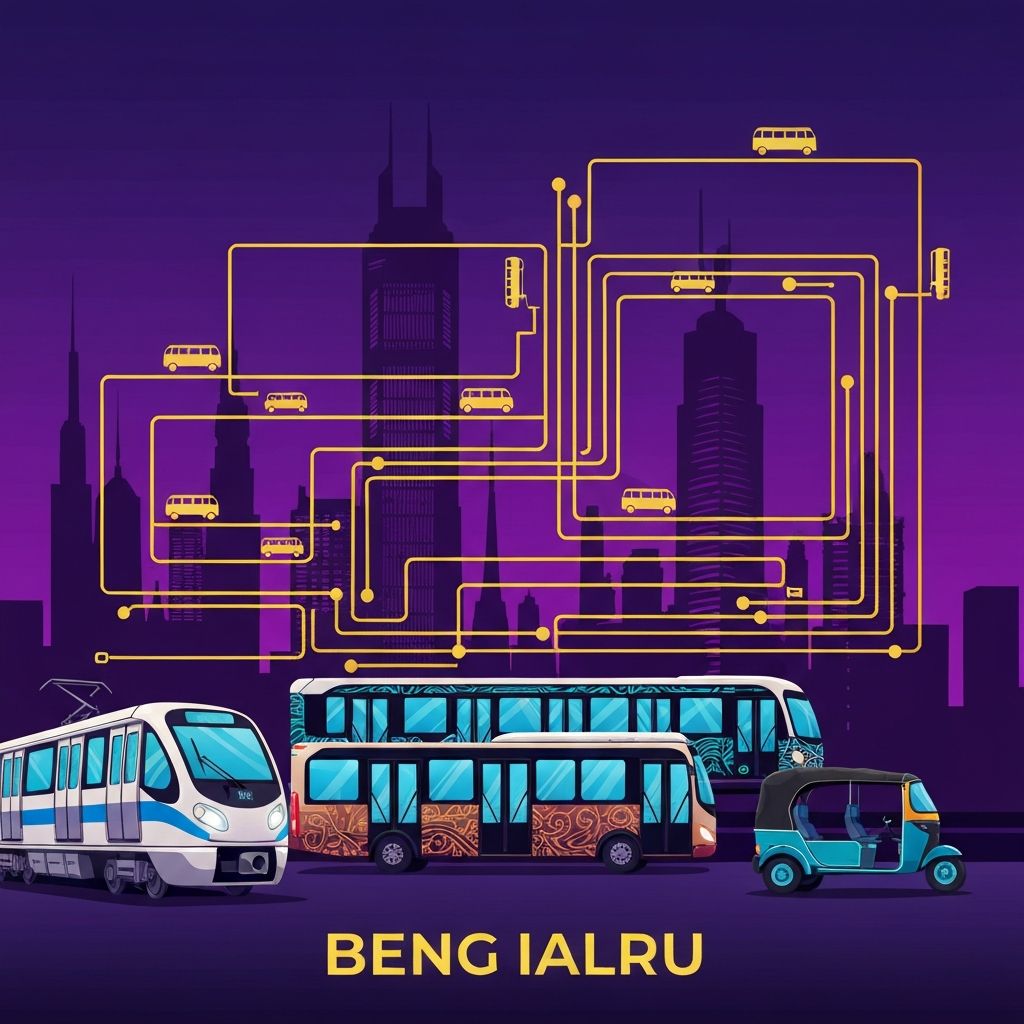
The Vital Role of Public Transit in Urban India
Public transit is the lifeline of Indian cities, moving millions of people to work, school, markets, and home every single day. With rapid urbanization, growing populations, and rising traffic congestion, efficient and affordable public transportation is more important than ever. India has invested heavily in modernizing its public transit infrastructure over the past two decades, leading to world-class metro systems, expanded suburban networks, and modern bus services across major cities.
Public transit not only reduces traffic and pollution but also makes cities more inclusive by providing affordable mobility to all sections of society. From historic networks like the Mumbai suburban trains to gleaming new metro lines, India's transit landscape reflects both heritage and rapid modernization.
Top 10 Public Transit Services in India
1. Delhi Metro (DMRC) – Often regarded as one of the best metro systems in the world, the Delhi Metro covers a vast network across the NCR region. It is known for cleanliness, punctuality, accessibility features, and safety standards.
2. Mumbai Suburban Railway – The original lifeline of Mumbai, this suburban network carries millions of passengers every day across the Western, Central, and Harbour lines, connecting the city's diverse neighborhoods.
3. Bengaluru Metro (Namma Metro) – Operated by BMRCL, Namma Metro has rapidly expanded across the city, offering a fast and reliable alternative to road traffic and connecting key residential, commercial, and tech hubs.
4. Chennai Metro (CMRL) – Chennai Metro provides modern, comfortable, and safe rail-based transit across the city, with continued expansion to cover more corridors and serve growing demand.
5. Kolkata Metro – India's oldest metro system, Kolkata Metro continues to evolve with new lines including the country's first underwater metro section, complementing the city's iconic trams and buses.
6. Hyderabad Metro – Operated as a public-private partnership, Hyderabad Metro is recognized for its modern stations, integrated multimodal access, and strong urban planning.
7. BEST (Mumbai Bus Service) – The Brihanmumbai Electric Supply and Transport service operates an extensive bus network across Mumbai, including electric buses, AC buses, and feeder routes connecting to suburban stations.
8. BMTC (Bengaluru Metropolitan Transport Corporation) – With one of the largest urban bus fleets in India, BMTC connects every part of Bengaluru, supported by AC Volvo services, e-buses, and digital ticketing.
9. DTC (Delhi Transport Corporation) – DTC, along with cluster buses, forms a vast network of city buses in Delhi, increasingly featuring electric buses that contribute to cleaner urban transport.
10. Kochi Metro and Water Metro – A pioneering integrated transit system, Kochi Metro combines elevated rail with electric water metro boats, offering a unique multimodal solution that connects islands and city districts.
Trends Transforming Public Transit in India
The public transit landscape in India is being reshaped by clean mobility, digitalization, and multimodal integration. Cities are rapidly expanding metro networks, introducing electric buses, and integrating ticketing across modes through smart cards and mobile apps. National Common Mobility Card initiatives aim to allow a single card to be used across metros, buses, and other transit options.
Real-time tracking, contactless payments, and improved accessibility features for senior citizens and persons with disabilities are becoming standard. Last-mile connectivity through e-rickshaws, shared autos, bike-sharing, and feeder buses is being strengthened to ensure that transit users can complete their journeys conveniently.
Why Public Transit Matters
Beyond convenience, public transit is a critical tool for sustainable city development. It reduces dependency on private cars, lowers fuel consumption, eases traffic congestion, and significantly cuts emissions. For low- and middle-income citizens, public transit provides affordable access to economic opportunities, education, and healthcare. For businesses, well-connected cities improve workforce mobility and productivity.
Modern transit systems are also designed with safety, lighting, surveillance, and emergency response in mind, making travel more secure, especially for women and children. Many cities are integrating transit hubs with commercial spaces, encouraging transit-oriented development that creates vibrant, walkable neighborhoods.
Multimodal Future of Indian Mobility
The future of public transit in India lies in seamless multimodal integration, where metros, suburban rail, buses, water transport, and shared mobility work together as a single experience. Smart city projects are accelerating this vision with integrated planning, common payment systems, and real-time data platforms that help commuters choose the fastest, cheapest, or greenest route.
Investment in electric fleets, hydrogen-powered buses, and AI-driven traffic management is expected to grow significantly, while regional rapid transit systems will improve connectivity between cities and their suburbs, easing housing pressure in core urban areas.
Conclusion
The best public transit services in India represent a powerful blend of legacy infrastructure and modern innovation. From the bustling local trains of Mumbai to the gleaming metro corridors of Delhi, Bengaluru, and Kochi, these systems keep the country's cities moving every day. By continuing to expand networks, embrace clean technology, and integrate modes, Indian public transit is steadily moving toward a future that is faster, smarter, and more sustainable for everyone.