
Paper Manufacturing in the Newark Region
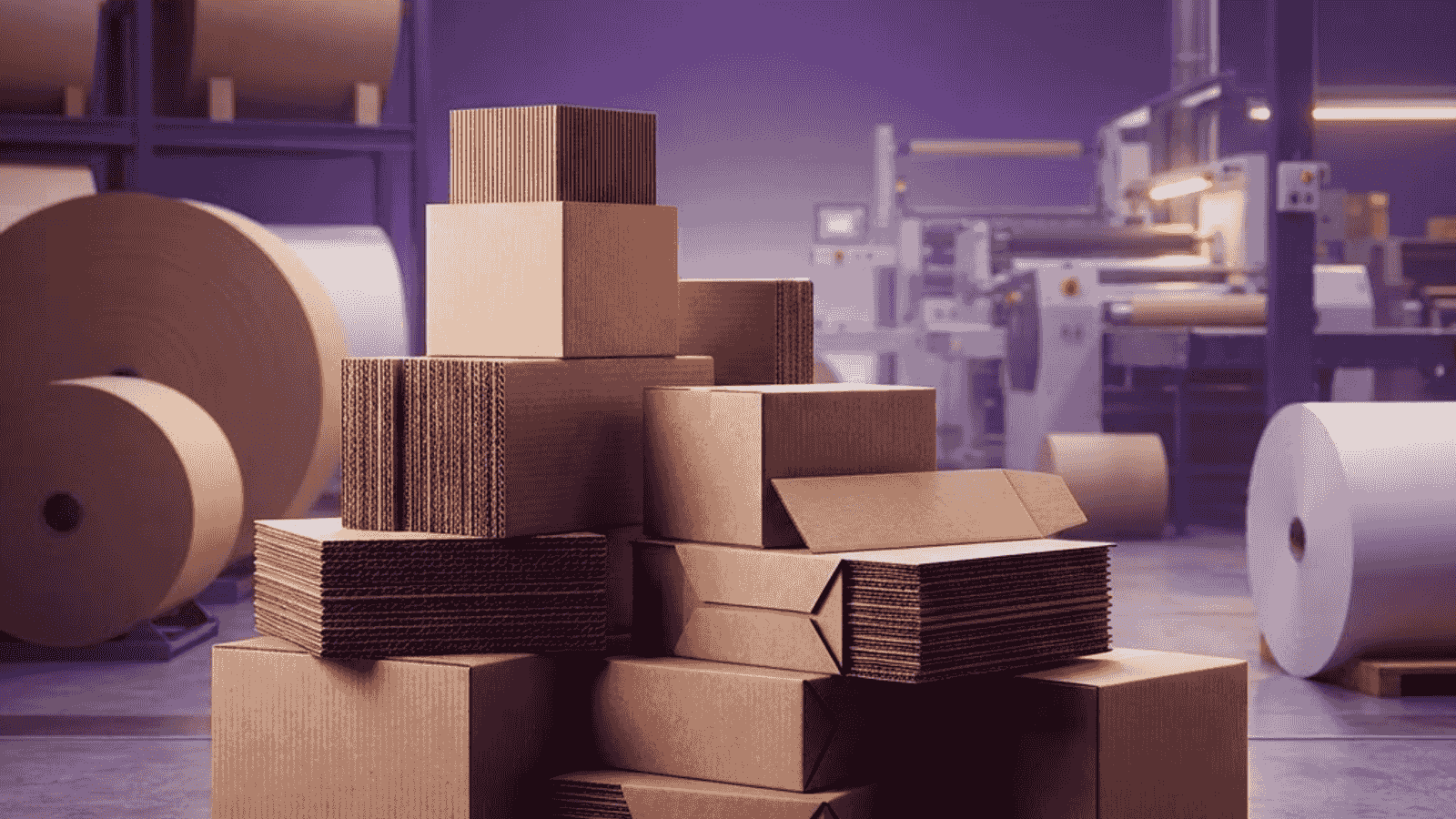
Paper is one of the least glamorous and most essential manufacturing categories, and the Newark area supports a substantial paper goods industry. Corrugated boxes move every product through the port and the region's dense warehouse network. Folding cartons package pharmaceuticals, cosmetics, and food. Labels identify virtually every consumer product. Tissue and away-from-home paper products supply offices, restaurants, hospitals, and schools.
The logic of local production is straightforward. Paper packaging is bulky relative to its value, which makes long-distance shipping uneconomical. A corrugated box plant serves customers within a limited radius because freight cost quickly exceeds manufacturing cost. That geographic constraint has protected regional paper converting even as many other manufacturing sectors globalized.
The Top 10 Paper Goods Manufacturers in the Newark Area
1. International Paper
One of the largest paper and packaging companies in the world, International Paper operates corrugated packaging plants serving regional customers. Its scale provides consistent board supply and design resources including structural engineering and testing laboratories.
2. WestRock
WestRock produces corrugated and consumer packaging including folding cartons for pharmaceutical, food, and beverage customers. Its design capabilities extend to retail-ready packaging that functions as both shipping container and store display.
3. Packaging Corporation of America
PCA manufactures containerboard and corrugated products with a strong focus on customer service and quick turnaround. Regional plants serve manufacturers and distributors requiring reliable box supply on short lead times.
4. Smurfit Westrock and Regional Corrugated Sheet Plants
Sheet plants and independent corrugated converters purchase board and convert it into finished boxes locally. These operations are often more flexible than integrated mills for custom sizes, short runs, and rush orders.
5. Folding Carton Manufacturers
Folding carton producers serve the pharmaceutical and cosmetics industries concentrated in New Jersey. This work demands precise printing registration, specialty finishes, and often serialization or tamper-evident features for regulated products.
6. Label and Flexible Packaging Printers
Label converters produce pressure-sensitive labels, shrink sleeves, and flexible packaging using flexographic and digital printing. Digital presses have transformed this segment by making short runs and frequent design changes economically viable.
7. Tissue and Away-From-Home Paper Product Manufacturers
Producers of napkins, towels, tissue, and dispensing systems supply institutional and commercial customers throughout the region. Recycled fiber content is common in this category and increasingly requested by institutional buyers.
8. Commercial Printing Companies
Commercial printers produce catalogs, brochures, direct mail, manuals, and packaging inserts. The strongest survivors have diversified into wide-format, packaging, and data-driven personalized printing rather than competing purely on ink on paper.
9. Protective Packaging and Molded Pulp Producers
Molded pulp trays, paper-based void fill, honeycomb, and edge protectors have grown rapidly as brands replace plastic protective packaging. Manufacturers in this space serve electronics, appliance, and e-commerce shippers seeking recyclable alternatives.
10. Paper Recycling and Fiber Recovery Operations
Recovered fiber is the primary raw material for regional packaging production, and Newark's collection and processing facilities sort, bale, and supply recovered paper to mills. This closed loop is fundamental to the industry's economics, not merely an environmental gesture.
How Paper Packaging Is Made
Corrugated board is produced by gluing a fluted medium between two liner sheets on a corrugator, creating a structure with excellent strength-to-weight performance. Flute size and liner weight are engineered to the required stacking strength and puncture resistance for a given product and distribution path.
Converting follows. Printing applies graphics, then dies cut and crease the board, and folder-gluers form the finished box. For retail packaging, additional operations such as lamination, foil stamping, embossing, and window patching add visual appeal.
Folding cartons follow a similar but more refined path using paperboard rather than corrugated. Higher printing quality, tighter registration, and specialty coatings distinguish this work, and pharmaceutical cartons add regulatory features such as braille and serialization codes.
Testing is integral throughout. Burst strength, edge crush, compression, and moisture resistance are measured because a package that fails in transit costs far more than the package itself.
Sustainability Driving Demand
Paper is currently benefiting from a broad shift away from plastic packaging. Recyclability through existing curbside systems, high recovery rates, and renewable fiber sourcing make paper attractive to brands under pressure to reduce plastic. Molded pulp replacing foam, paper mailers replacing poly bags, and fiber-based barrier coatings replacing plastic liners are all growth areas.
E-commerce has permanently changed packaging requirements. Individual parcels must survive rough handling in automated sortation networks, and right-sizing technology that cuts boxes to fit each order reduces both material use and dimensional freight cost.
Buyers should note that barrier performance remains the hardest technical challenge. Paper naturally absorbs moisture and grease, so food packaging requires coatings that maintain recyclability while providing protection, an active area of materials development.
What Buyers Should Evaluate
Specify performance rather than construction where possible. Telling a converter your product weight, stacking configuration, and distribution environment allows them to engineer an appropriate board grade, often at lower cost than the specification you would have written.
Consider total packaging cost including material, labor to pack, freight based on dimensional weight, and damage rates. A slightly more expensive box that eliminates damage claims is a clear net gain.
Ask about design support, prototyping capability, and lead times for both new tooling and repeat orders. Local converters with in-house sample tables can iterate a structural design in days.
Conclusion
Newark's paper goods sector is protected by freight economics and strengthened by the shift away from plastic packaging. The companies and categories above cover corrugated, folding cartons, labels, tissue, printing, protective packaging, and recycling. For buyers, engaging a converter early with performance requirements rather than a finished specification consistently produces packaging that costs less and protects better.