
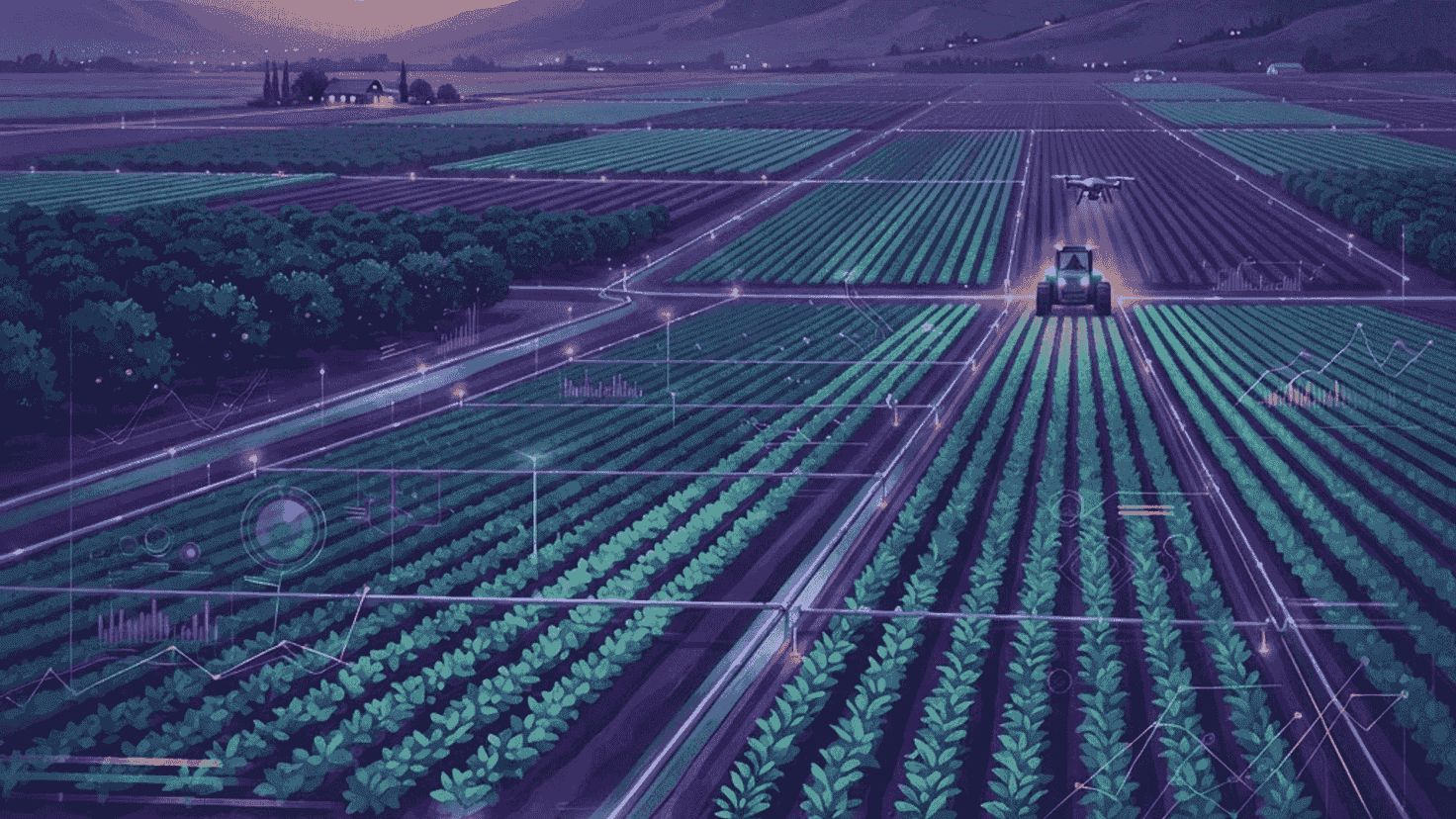
Agriculture at the Heart of Stockton
San Joaquin County produces well over two billion dollars in agricultural value annually, ranking among the most productive counties in the United States. Almonds, walnuts, cherries, grapes, milk, tomatoes, and asparagus lead the list, supported by deep alluvial soils deposited over millennia by the Sacramento and San Joaquin river systems. Stockton functions as the commercial and logistical center of this economy, hosting processors, equipment dealers, packing operations, and the port facilities that move commodities to global markets. Farming here is a sophisticated, capital-intensive industry rather than a pastoral tradition.
What Distinguishes a Leading Farming Operation
The strongest operations in the region share several characteristics. They manage water with precision, treating it as the scarcest and most strategic input. They invest in soil health rather than extracting from it, using cover crops, amendments, and reduced tillage where practical. They adopt technology selectively, choosing tools that measurably improve yield or reduce cost rather than chasing every innovation. They maintain stable relationships with their workforce, which is increasingly decisive as labor availability tightens. And they diversify sensibly, balancing permanent crops against annual flexibility.
Top 10 Best Farming Companies in Stockton
1. Delta Valley Farms
A diversified operation working ground throughout the Delta region, Delta Valley Farms balances row crops with permanent plantings to manage market risk. The company is known for advanced irrigation scheduling using soil moisture sensing and evapotranspiration data, which has reduced water application significantly without yield loss. Their long-tenured field management team and investment in worker housing and training have given them unusual labor stability.
2. San Joaquin Orchard Company
Specializing in almonds and walnuts, San Joaquin Orchard Company manages substantial acreage with a focus on orchard renewal cycles and rootstock selection matched to local soil variability. Their harvest logistics coordination with regional hullers and processors minimizes the quality degradation that occurs when nuts sit too long after shaking. They have also invested in dust mitigation equipment, addressing a genuine community air quality concern.
3. Central Valley Row Crop Growers
Processing tomatoes, beans, corn, and grains anchor this operation, which works closely with regional canneries and processors under contract arrangements. Their strength lies in rotation planning that maintains soil structure and disrupts pest cycles, reducing chemical input requirements over time. Precision planting and variable-rate fertility applications have improved input efficiency measurably across their acreage.
4. Riverbend Vineyards and Wine Grapes
The Lodi and Delta appellations surrounding Stockton produce distinguished wine grapes, particularly old-vine Zinfandel. Riverbend Vineyards and Wine Grapes farms both estate and contracted acreage, emphasizing canopy management and deficit irrigation to concentrate fruit quality. Their sustainable certification participation reflects a broader regional commitment that has made the area a recognized leader in sustainable winegrowing practice.
5. Golden State Dairy Enterprises
Dairy remains a cornerstone of the county's agricultural economy. Golden State Dairy Enterprises operates milking facilities with attention to herd health, feed efficiency, and manure management. Their digester project captures methane for energy, converting an environmental liability into both compliance benefit and revenue. Nutrient management planning integrates with neighboring crop operations, closing a local loop between dairy waste and field fertility.
6. Stockton Asparagus and Specialty Vegetables
Stockton's historic identity is tied to asparagus, and this operation continues that tradition alongside other specialty vegetables. Hand-harvest coordination, rapid cooling, and precise packing are critical to marketable quality in these crops. The company has invested in cold chain infrastructure that extends shelf life significantly, allowing distribution to more distant markets while preserving the tenderness buyers expect.
7. Mother Lode Cherry Growers
Cherries are among the region's highest-value and highest-risk crops, vulnerable to rain during a narrow harvest window. Mother Lode Cherry Growers manages that risk through orchard site selection, varietal diversity that staggers maturity, and rapid harvest mobilization. Their packing relationships and export documentation capability allow them to reach premium Asian markets where Central Valley cherries command strong prices.
8. Valley Organic Produce Farms
Certified organic production requires different agronomy rather than simply omitting inputs. Valley Organic Produce Farms manages fertility through composting and cover cropping and controls pests with beneficial insect habitat and targeted approved materials. Their transition experience makes them a valuable knowledge resource for growers considering organic certification, and their direct relationships with regional distributors support premium pricing.
9. Port City Grain and Forage Company
Supporting the region's substantial livestock and dairy sector, this operation produces alfalfa, silage corn, and small grains. Forage quality testing guides harvest timing, since cutting alfalfa a few days late measurably reduces protein content and feed value. Their haying and storage practices protect quality through the humid winter months, and they supply both local dairies and export hay channels.
10. Sierra Agricultural Land and Management
Rounding out the list, Sierra Agricultural Land and Management farms property on behalf of landowners and investors, handling agronomy, labor, compliance, and marketing. Professional farm management has grown in importance as agricultural land ownership becomes more fragmented among heirs and outside investors. Their transparent reporting and long-term soil stewardship approach protect asset value rather than maximizing a single season's return.
Forces Shaping Central Valley Agriculture
Water governance is the defining issue. Groundwater sustainability requirements are reshaping cropping decisions across the county, and growers are investing heavily in efficiency, recharge projects, and in some cases fallowing marginal ground. Labor availability continues to tighten, accelerating mechanization in harvest and pruning. Technology adoption has matured from novelty to necessity, with satellite imagery, soil sensing, and variable-rate application now standard on well-run operations. Export market access and trade policy remain critical for nuts and cherries, while consumer demand for documented sustainability increasingly influences buyer contracts.
What This Means for Buyers and Partners
Anyone sourcing from the region should evaluate growers on water resilience, food safety certification, and cold chain capability rather than acreage alone. Ask about groundwater sustainability compliance, since that will determine long-term supply reliability more than any current-year yield. Verify food safety audit status for fresh produce. Discuss harvest window flexibility honestly, because weather governs agriculture regardless of contract language. Long-term relationships with well-managed operations consistently outperform opportunistic spot buying.
Final Thoughts
Farming around Stockton combines extraordinary natural productivity with genuine operational sophistication. The companies leading the region are managing water carefully, investing in soil, mechanizing thoughtfully, and treating sustainability as an economic strategy rather than a marketing claim. For buyers, partners, and the broader community, those practices are what will keep San Joaquin County agriculture productive for the decades ahead.