
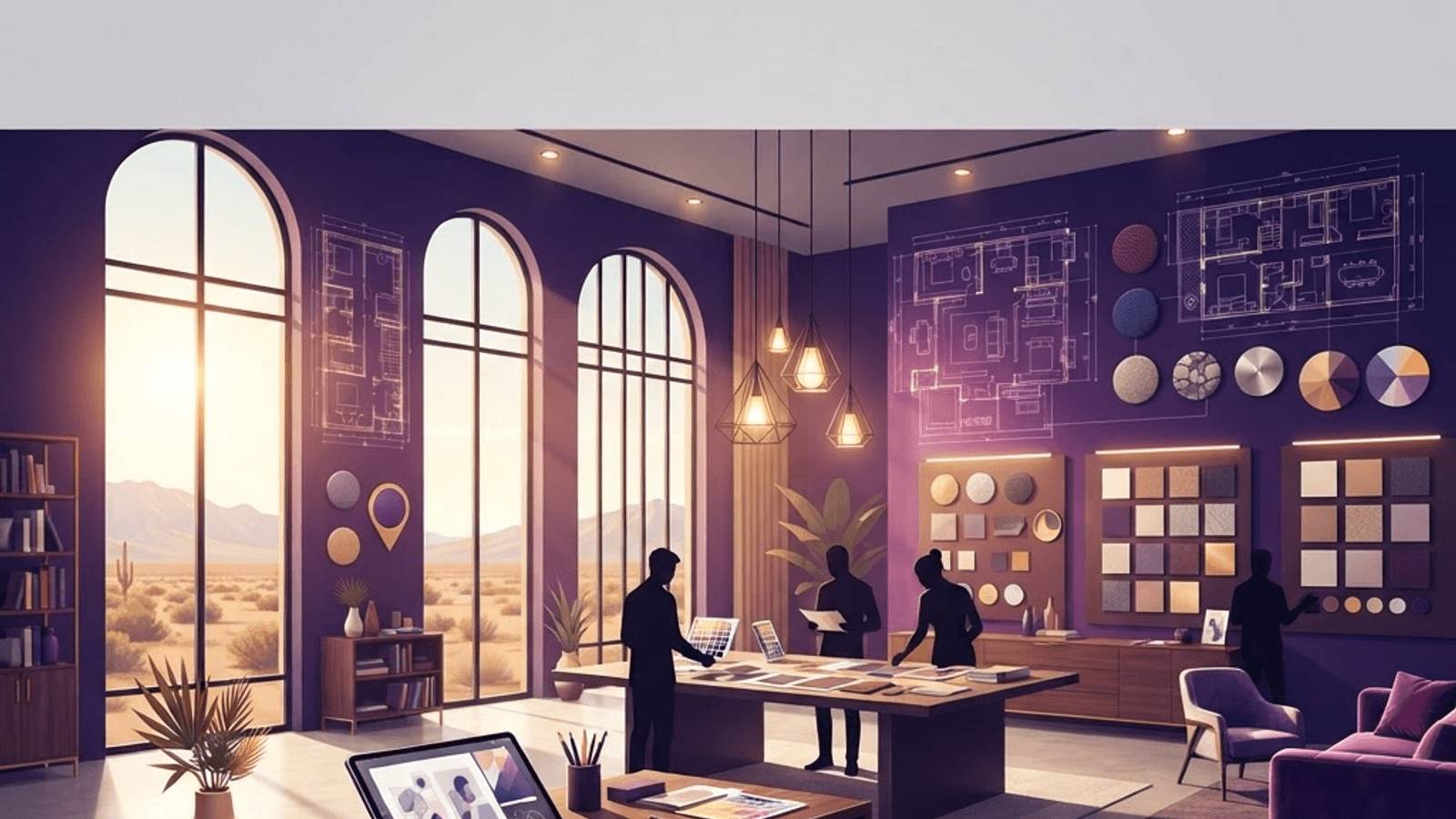
Designing for the High Desert
Interior design in Palmdale is shaped by conditions that do not apply in coastal Southern California. Sunlight is intense and direct for much of the year, which affects color perception, material fading, and thermal comfort. Summers are long and hot, making window treatment, insulation, and airflow design genuinely functional decisions rather than aesthetic ones. Winters bring cold nights, and dust is a persistent consideration in material and textile selection.
At the same time, the housing stock offers real design opportunity. Many Antelope Valley homes have generous square footage, open floor plans, and large lots that invite indoor-outdoor connection. Homeowners who might afford only a modest condo closer to Los Angeles find themselves with substantial space to shape, and interest in professional design has grown accordingly.
Evaluation Criteria
The firms below were assessed on portfolio strength, range of style capability, project management discipline, vendor and trade relationships, budget transparency, and demonstrated understanding of desert-specific performance requirements. Designers who manage full renovations, not only furnishing, ranked highest for versatility.
The Top 10 Interior Design Firms in Palmdale
1. Antelope Valley Interior Studio
A full-service firm handling everything from space planning and finish selection through furniture procurement and installation. Known for organized project management and realistic budgeting.
2. Desert Modern Design House
Specializes in contemporary desert aesthetics, combining warm neutrals, natural stone, textured plaster, and timber accents that respond well to the region's light.
3. Vista Home Interiors
Focused on family-oriented residential design, balancing durability and practicality with strong aesthetics. Popular with households managing children, pets, and heavy daily use.
4. Rancho Vista Design Collective
A collaborative studio working on whole-home renovations, with particular strength in kitchen and bathroom reconfiguration.
5. High Desert Living Design
Emphasizes energy-conscious interiors, advising on window treatment, shading, ceiling fans, and material choices that reduce cooling load without compromising appearance.
6. Joshua Tree Interiors Group
Draws on southwestern and organic modern influences, using handcrafted elements, ceramics, and regional textures to create interiors that feel rooted in place.
7. Summit Luxe Interiors
Serves the high-end custom market with bespoke millwork, curated art, and detailed lighting design for larger view-lot properties.
8. Cornerstone Residential Design
Offers scaled service levels, including hourly consultation for homeowners who want professional direction while executing work themselves.
9. Valley Light Design Studio
Known for lighting-led design, treating layered artificial light and daylight control as the foundation of every project rather than a final touch.
10. New Horizon Interiors
Works extensively with new construction buyers, guiding builder option selection before closing so homes arrive closer to the owner's vision.
Trends Shaping Local Interiors
Warm palettes have displaced the cool gray schemes that dominated the previous decade. Terracotta, sand, clay, and muted olive tones read more naturally under desert light and hide dust better than stark whites. Natural materials, including wood, stone, rattan, and unglazed ceramics, feature heavily.
Indoor-outdoor continuity is a defining local priority. Large sliding doors, covered patios, outdoor kitchens, and shaded seating extend usable living space through spring and autumn, and into summer evenings.
Performance materials have become standard. Fade-resistant fabrics, UV-protective window film, durable flooring that handles temperature swings, and low-maintenance surfaces are specified routinely rather than as upgrades.
Home offices remain a major driver of renovation work, reflecting the number of Antelope Valley residents working remotely for employers based elsewhere. Acoustic treatment, lighting quality for video calls, and dedicated storage are common requirements.
How to Work Effectively with a Designer
Define scope and budget before the first meeting. A designer can achieve far more with an honest figure than with a vague one, and early clarity prevents concept work that has to be abandoned. Understand the fee structure, whether flat fee, hourly, cost-plus on purchases, or a combination, and confirm how trade discounts are handled.
Review a full project portfolio rather than individual styled photographs, since a complete project reveals whether the designer can maintain coherence across an entire home. Ask about their process for construction drawings, permits, and trade coordination if your project involves structural or systems work.
Establish a decision timeline. Delays in selections cascade into contractor scheduling problems, and lead times on furniture and custom elements can be lengthy.
Budgeting a Design Project Realistically
Homeowners frequently underestimate how design budgets distribute across a project. Furnishing a full home to a coherent standard typically costs considerably more than expected, while renovation work involving plumbing, electrical, or structural change carries its own contingency requirements. A sensible approach reserves at least ten to fifteen percent of the construction budget for unforeseen conditions, which are common in older Antelope Valley housing stock.
Phasing is a practical alternative to compromising quality. Completing public spaces first, then bedrooms, then outdoor areas, allows homeowners to maintain a consistent standard rather than stretching a single budget thin across every room. A good designer will help sequence work so that later phases do not require undoing earlier decisions, particularly where lighting, flooring, and window treatments are concerned.
Final Thoughts
Palmdale offers interior designers unusually generous canvases, and homeowners here increasingly expect interiors that perform as well as they photograph. The strongest firms in the Antelope Valley combine aesthetic confidence with practical knowledge of light control, material durability, and thermal comfort. Choosing a designer whose process, communication style, and budget discipline match your expectations matters at least as much as matching their visual style.