
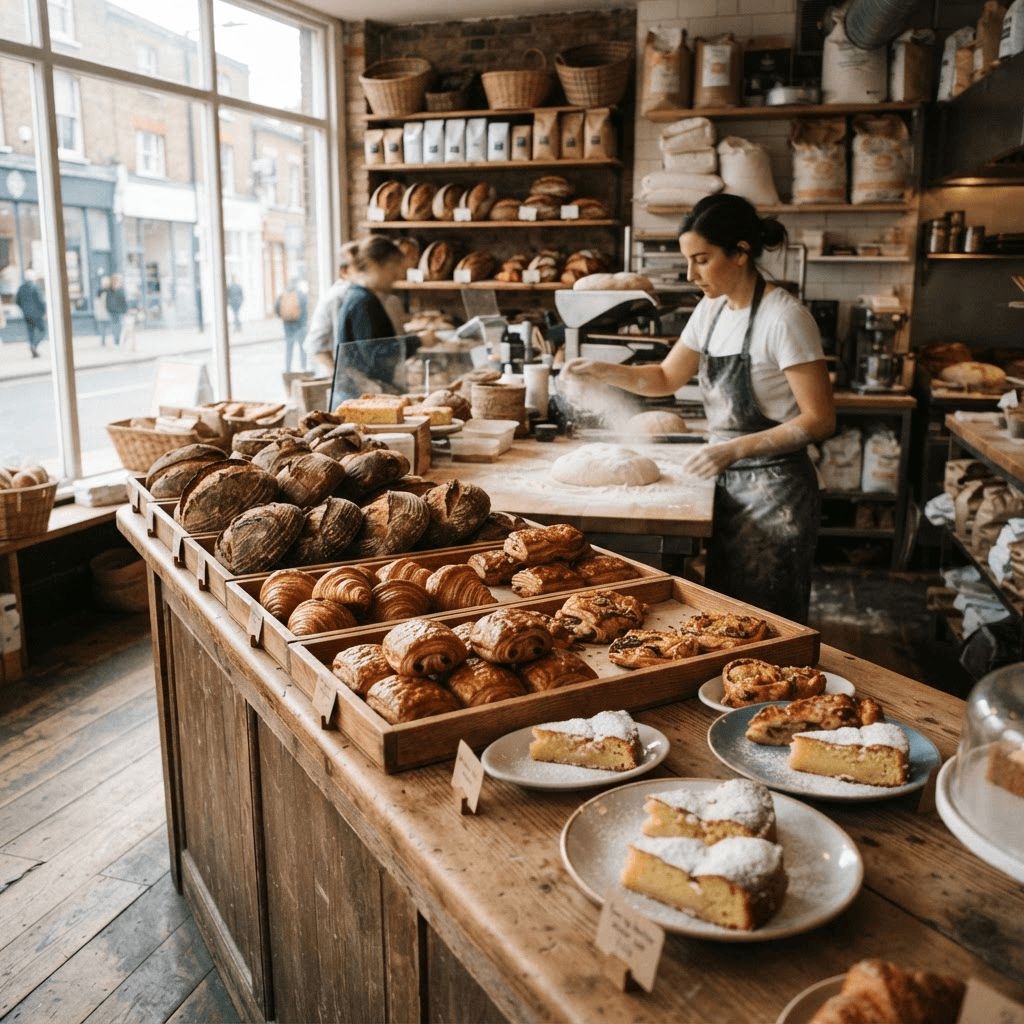
A City With Real Baking Heritage
St. Louis has one of the more interesting baking cultures in the country, and it exists because of immigration patterns rather than trends. German communities brought dense rye breads, pretzels, and coffee cakes. Italian families settling in The Hill established a tradition of crusty loaves and cannoli that continues today. Bosnian arrivals in more recent decades added burek and layered pastries. Add the city's own invention, gooey butter cake, and you have a dessert and bread landscape that no other American metro replicates.
What makes the current scene compelling is the overlap between old and new. Century-old neighborhood shops still sell the same coffee cake recipes, while a generation of naturally leavened bread bakers has built serious sourdough operations. A visitor can eat a traditional stollen and a long-fermented country loaf within the same afternoon.
The Top 10 Bakeries in St. Louis
1. Missouri Baking Company. Located on The Hill and operating for a century, this is the reference point for Italian-American baking in the city. Glass cases hold cookies sold by the pound, cannoli, and fruit-filled pastries, and the bread deserves equal attention. The pricing feels like a message from another decade.
2. La Bonne Bouchee. A French-style patisserie and bakery in Creve Coeur known for laminated pastry, tarts, and celebration cakes. The croissants show proper layering and a shattering crust, which is harder to achieve consistently than most menus admit.
3. Companion Baking. A wholesale and retail bakery that helped define modern artisan bread in the region. Its naturally leavened loaves supply many respected restaurants, and the retail cafes offer sandwiches built on that same bread.
4. Nathaniel Reid Bakery. Founded by a classically trained pastry chef, this Kirkwood bakery produces some of the most technically precise pastry in the Midwest. Entremets, viennoiserie, and chocolate work are executed at a level normally found in major culinary capitals.
5. Federhofer's Bakery. A south city institution beloved for gooey butter cake, cinnamon rolls, and old-fashioned cakes. It represents the neighborhood bakery tradition at its most genuine, with recipes unchanged across generations.
6. Park Avenue Coffee. While technically a coffeehouse, its enormous gooey butter cake selection has made it a destination for the city's signature dessert. Dozens of flavor variations rotate through the case, and the classic version remains the benchmark.
7. Union Loafers. A cafe and bread bakery in Botanical Heights whose sourdough and focaccia are widely admired. It is also one of the better places in the city to observe how much bread quality changes a simple sandwich or pizza.
8. Whisk: A Sustainable Bakeshop. A Benton Park bakery emphasizing local ingredients and thoughtful sourcing, with strong vegan and allergy-conscious options that go well beyond token substitutions.
9. Vitale's Bakery. Another Hill mainstay specializing in Italian bread, including the crusty loaves that define the neighborhood's sandwich culture. Timing a visit to a fresh batch is worth the effort.
10. Bosnian and Balkan bakeries in Bevo Mill. The south city corridor hosts shops producing burek, pita, and layered pastries that reflect one of the largest Bosnian communities in the country. These bakeries are among the best value food experiences in the metro area.
Regional Specialties Worth Seeking Out
Gooey butter cake is the essential local item. A proper version has a dense, slightly underbaked center, a rich buttery base, and a generous dusting of powdered sugar. It should be sticky rather than cakey, and the best examples come from bakeries that have made it daily for decades.
Italian bread from The Hill is the second must-try. The crust should crackle audibly and the interior should remain tender, which is what makes it ideal for a loaded sandwich. Third, look for German coffee cake with a streusel topping, a category that survives in south city and county shops largely because customers refuse to let it disappear.
How to Judge a Bakery Properly
Start with the plainest item on offer. A baguette, a country loaf, or a simple butter cookie reveals technique because there is nowhere to hide. Look at crust color, which should show genuine caramelization rather than pale timidity, and check the crumb for irregular open structure in naturally leavened breads.
Smell matters. A good bakery smells of fermentation and toasted grain, not only sugar. Ask when items come out of the oven, because a bakery proud of its schedule will tell you and one relying on frozen product usually deflects.
For pastry, examine lamination. Croissant layers should be visible and distinct, with an interior honeycomb rather than a bready mass. Custards should taste of dairy and vanilla rather than starch. And for cakes, buttercream should feel silky at room temperature rather than gritty, which indicates proper technique rather than shortcuts.
Making the Most of a Bakery Tour
Go early. The best items sell out, particularly on weekends, and a bakery at eight in the morning is a different experience from the same shop at two in the afternoon. Bring cash to the older neighborhood shops, several of which still prefer it.
Plan geographically. The Hill supports a concentrated Italian bakery walk, Bevo Mill offers Balkan pastry, and Kirkwood and Creve Coeur reward a trip for refined French technique. Buying a single item from several shops in one neighborhood teaches more about the city's baking than a large order from one place.
Finally, talk to the staff. St. Louis bakeries are frequently family operations where the person behind the counter helped make what is in the case, and their recommendations are almost always better than a guess.