
St. Louis and the Business of Farming
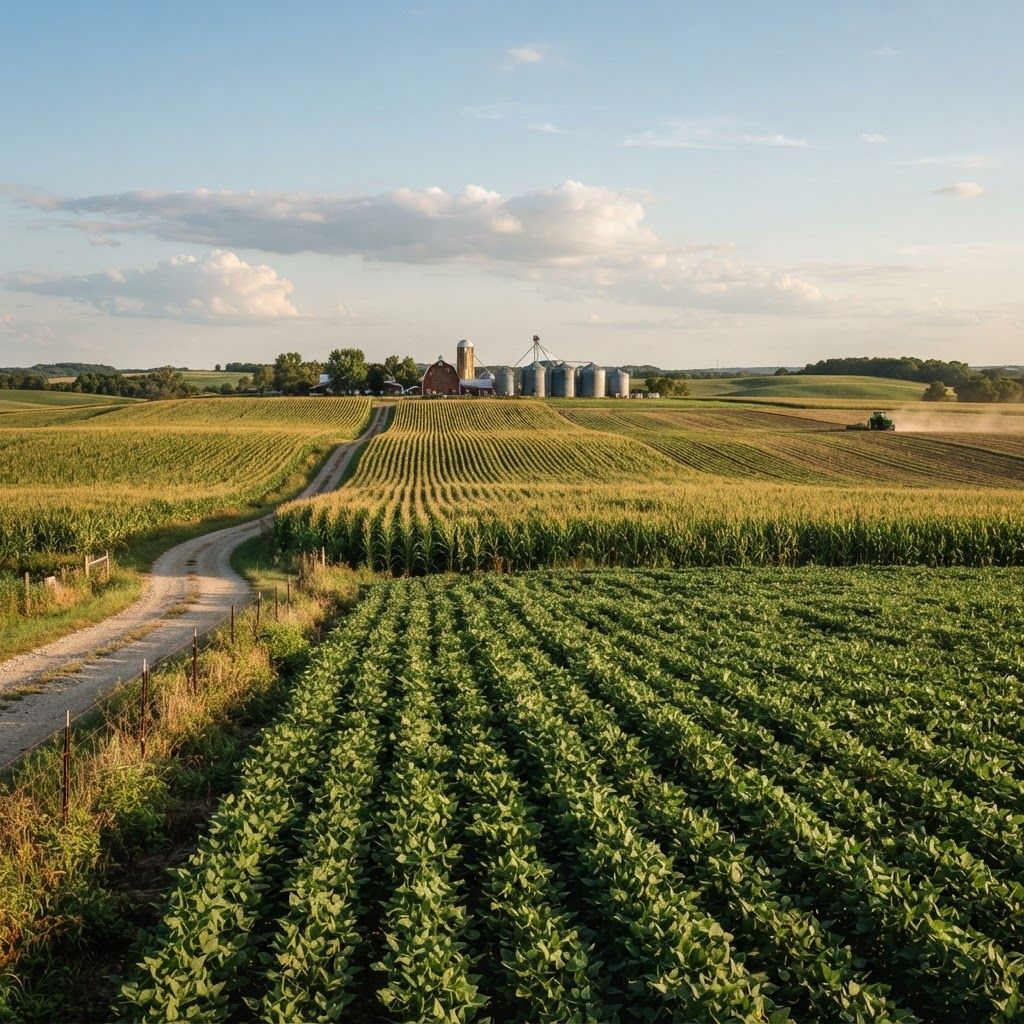
St. Louis occupies an unusual position in American agriculture. It is a major metropolitan area, yet it sits at the confluence of two rivers surrounded by some of the most productive farmland on the continent. The bottomland soils of the Mississippi and Missouri river valleys grow corn and soybeans at world-class yields, while the surrounding counties support livestock, orchards, vineyards and a rapidly expanding specialty vegetable sector.
The region is also an agricultural business center in its own right, hosting plant science research, agtech development and commodity trading activity. That combination means local farming operations often adopt new practices earlier than average — variable rate application, cover cropping systems, controlled environment production and data-driven agronomy are all visible here.
How These Farming Companies Were Selected
Operations below were evaluated on scale and productivity, agronomic sophistication, sustainability practices, contribution to local food systems, diversification and business resilience, and reputation within the regional agricultural community.
1. Missouri River Valley Farms
Missouri River Valley Farms is a large row crop operation growing corn, soybeans and wheat across river bottom and upland ground. Its reputation rests on precision agriculture execution: grid soil sampling, variable rate fertility, controlled traffic patterns and yield data analysis feeding back into seed and input decisions. The operation has also invested substantially in drainage water management, which improves yield consistency in wet springs while reducing nutrient loss downstream.
2. Gateway Grain Partners
Gateway Grain Partners combines production with grain handling and marketing, operating storage capacity that lets the business hold crop through unfavorable basis periods rather than selling into harvest lows. That marketing discipline is what distinguishes it commercially. Agronomically, it is known for aggressive cover crop adoption and reduced tillage, which have measurably improved soil organic matter and water infiltration on long-managed fields.
3. Heartland Livestock Company
Heartland Livestock Company runs cow-calf and feeding operations alongside forage production, supplying regional processors and direct-to-consumer beef programs. Its strengths are genetics management and rotational grazing systems that improve both pasture health and feed efficiency. Animal welfare protocols and traceability documentation support premium market access, which has become essential as buyers demand verified production practices.
4. Arch City Urban Farms
Arch City Urban Farms operates intensive vegetable production on reclaimed city land, supplying restaurants, farmers markets and community food programs. Its significance goes beyond output. The operation demonstrates that vacant urban parcels can be returned to productive use, and it functions as a training ground for new growers. Season extension with high tunnels and careful succession planting allow remarkably high yields from small acreage.
5. Riverbend Orchards
Riverbend Orchards produces apples, peaches, pears and small fruit, combining wholesale supply with agritourism and direct retail. Orchard management here reflects genuine expertise: integrated pest management reduces spray inputs, modern high-density plantings improve labor efficiency, and careful variety selection spreads harvest and market windows. Value-added production including cider and preserves stabilizes revenue against weather-driven crop variability.
6. Show Me Dairy Cooperative
Show Me Dairy Cooperative brings together regional dairy producers for milk marketing, processing access and shared services. Dairy economics are demanding, and cooperative structure gives smaller producers scale they could not achieve individually. Herd health programs, milk quality premiums and feed procurement coordination are practical benefits members frequently highlight. Some members have added on-farm processing to capture retail margin.
7. Delmar Greenhouse Growers
Delmar Greenhouse Growers operates controlled environment agriculture producing leafy greens, herbs and tomatoes year-round for regional grocers and foodservice. Climate control, fertigation precision and integrated biological pest control let the operation deliver consistent quality regardless of season, which is exactly what commercial buyers want. Energy management is the central economic challenge in this model, and the company has invested in efficiency measures to control it.
8. Missouri Vineyard Estates
Missouri Vineyard Estates grows wine grapes suited to the state's climate, including Norton, Chambourcin, Vignoles and Traminette, supplying its own winemaking operation and other regional wineries. Viticultural knowledge of humid-climate disease pressure is essential here, and canopy management practices reflect that. Wine tourism revenue supports vineyard investment while introducing consumers to regional varieties.
9. Soulard Specialty Crop Growers
Soulard Specialty Crop Growers focuses on high-value diversified vegetables, culinary herbs and cut flowers for chefs, CSA members and farmers markets. Diversity is the risk management strategy: dozens of crops mean no single failure is catastrophic. Direct relationships with restaurants allow the operation to grow to request, planting specific varieties chefs want rather than guessing at market demand.
10. Cardinal Agricultural Holdings
Cardinal Agricultural Holdings manages farmland on behalf of landowners and investors, handling leasing, agronomic oversight, conservation compliance and long-term soil stewardship. Farmland ownership has become increasingly separated from farming operations, and professional management fills that gap. The company's emphasis on conservation practices and documented soil health improvement aligns landowner returns with long-term productivity rather than short-term extraction.
Trends Shaping Agriculture Around St. Louis
Soil health has become a central management objective rather than a side benefit, with cover crops, reduced tillage and diversified rotations now mainstream on well-run operations. Carbon and ecosystem service markets are creating new revenue streams for verified practice changes. Precision technology continues to reduce input use per unit of output, improving both margins and environmental performance. Controlled environment production is expanding for high-value crops where freshness and consistency justify the energy cost. Meanwhile, local food demand has matured from a niche market into a durable channel with real institutional buyers.
What to Look for in an Agricultural Partner
Whether you are a buyer, landowner or collaborator, evaluate operations on management systems rather than acreage. Ask about record keeping, agronomic decision processes and conservation practices. For food buyers, verify food safety certification, traceability and realistic supply capacity across the season. For landowners, examine soil health trajectory and documented stewardship rather than only cash rent. Long-term relationships in agriculture consistently outperform transactional ones, because growing seasons are unforgiving and trust determines who gets supplied when supply is tight.
Final Thoughts
Agriculture around St. Louis spans thousands of acres of row crops and quarter-acre urban plots, and both matter. The ten operations profiled here represent the range of what modern regional farming looks like: technically sophisticated, increasingly diversified and more focused on soil and long-term resilience than at any point in recent memory.