
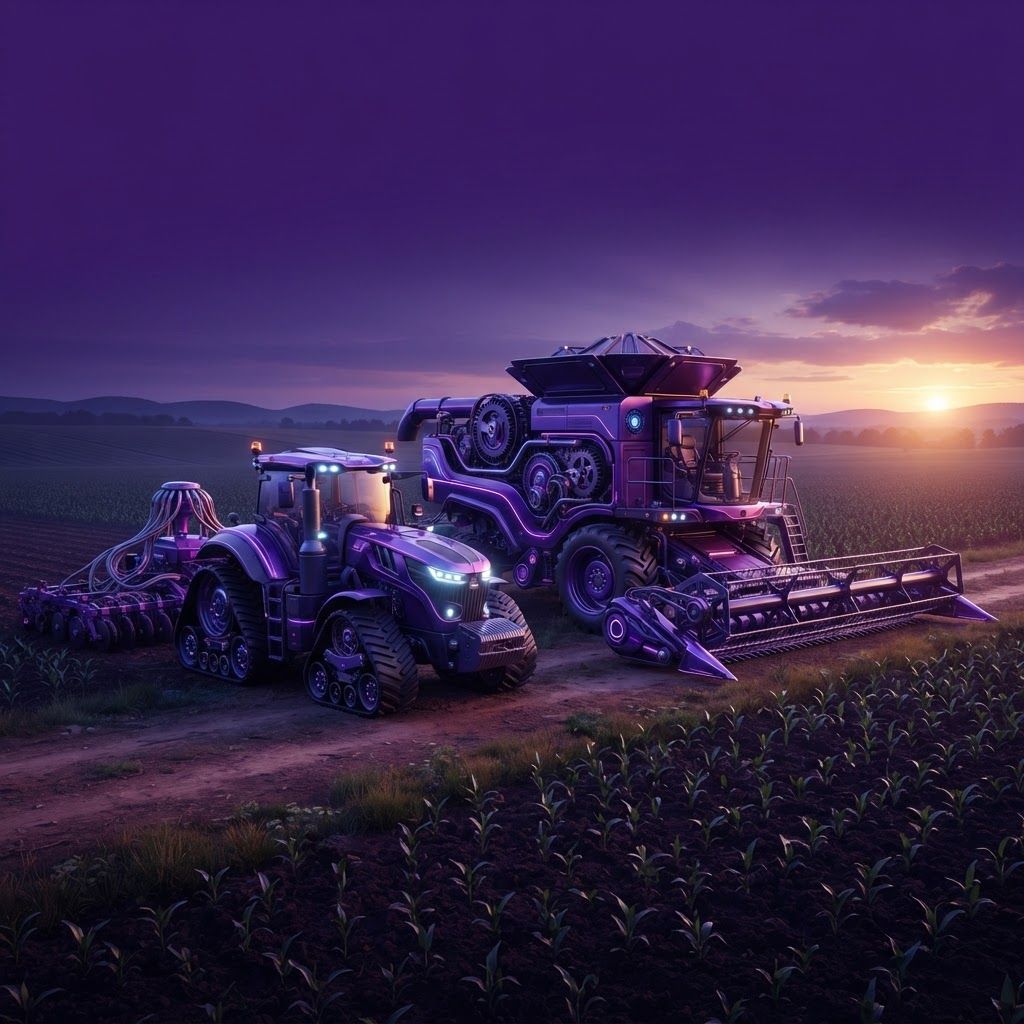
Why Equipment Choice Matters in Central Alabama
Farming around Montgomery demands equipment that can handle heavy clay soils in the Black Belt, sandy loams to the south, high humidity and compressed planting windows between spring rains. A tractor that performs well in dry Midwestern conditions may struggle with traction and corrosion here. Producers therefore weigh not only horsepower and features but also dealer support, parts availability and the cost of downtime during a narrow harvest window.
Equipment decisions are also capital decisions. With machinery representing one of the largest fixed investments on any farm, resale value, financing terms and service contracts influence buying as much as raw specification. The brands and dealers highlighted below have earned trust in the region by combining capable machines with dependable local backing.
How Producers Evaluate Equipment Brands
Experienced buyers look at five factors. First, reliability under local conditions, especially heat and moisture. Second, dealer proximity and technician availability, since a two-day wait for service can cost an entire planting day. Third, parts inventory depth. Fourth, technology integration, including guidance systems, telematics and compatibility with existing data platforms. Fifth, total cost of ownership across fuel efficiency, maintenance intervals and eventual trade-in value.
1. Heritage Tractor Works
Heritage Tractor Works has built its reputation on utility and mid-range row crop tractors suited to mixed operations. Machines are valued for straightforward mechanical design, accessible service points and strong hydraulic performance for loader work. For cattle producers who need a dependable daily workhorse rather than a fully loaded field machine, this brand remains a common recommendation.
2. Southern Harvest Machinery
Specializing in combines, headers and grain handling equipment, Southern Harvest Machinery focuses on throughput and grain quality. Adjustable threshing systems help operators adapt to variable moisture, a frequent challenge during humid Alabama harvests. The company's regional service teams are known for pre-season inspections that reduce in-field breakdowns.
3. Black Belt Implement Company
Tillage and planting implements define seedbed quality, and Black Belt Implement Company supplies disc harrows, subsoilers, field cultivators, planters and drills built for heavy soils. Frame strength and wear-part availability are its selling points. Producers transitioning to reduced-till systems often work with the company on equipment configuration adjustments.
4. Cotton State Precision Ag
Precision technology has reshaped modern farming, and Cotton State Precision Ag distributes guidance systems, autosteer kits, yield monitors, variable-rate controllers and field mapping platforms. Retrofit capability is a major advantage, allowing producers to modernize existing machines rather than replace them. Training support helps operators actually use the data they collect.
5. River Region Irrigation Systems
Water management increasingly determines yield stability. River Region Irrigation Systems supplies center pivots, traveling guns, drip tape and pump stations, along with design services that account for field shape, water source and energy cost. Remote monitoring and scheduling tools have become standard requests among producers managing multiple fields.
6. Yellowhammer Hay & Forage Equipment
With cattle production widespread across central Alabama, hay equipment is essential. Yellowhammer Hay & Forage Equipment covers mowers, tedders, rakes and round balers designed for high-volume bermudagrass and ryegrass cutting. Consistent bale density and reliable net wrap systems reduce spoilage, a meaningful factor given the region's rainfall.
7. Capital City Compact Tractors
Not all agricultural equipment serves large acreage. Capital City Compact Tractors focuses on sub-compact and compact machines for small farms, hobby operations, orchards and rural property maintenance. Attachment versatility, including loaders, box blades, rotary cutters and post hole diggers, makes these machines popular with the growing number of small landholders around the metro area.
8. Alabama Ag Parts & Service
Equipment longevity depends on parts access. Alabama Ag Parts & Service stocks filters, belts, bearings, hydraulic components, tires and wear parts across multiple brands, and provides mobile field repair. During harvest, its emergency service capability is often the difference between a lost day and a short delay.
9. Delta Sprayer Technologies
Application accuracy affects both cost and compliance. Delta Sprayer Technologies supplies self-propelled and pull-type sprayers with boom section control, rate controllers and drift-reduction nozzle packages. As input prices rise and stewardship expectations increase, precise application has become a clear economic advantage.
10. Montgomery Grain Systems
Post-harvest infrastructure often receives less attention than field equipment but directly affects marketing flexibility. Montgomery Grain Systems designs and installs bins, dryers, augers and aeration systems that allow producers to store crops and sell when prices improve rather than at harvest lows. Moisture control is especially important in a humid climate.
Technology Trends in Regional Agriculture
Autonomy and automation are advancing steadily, with autosteer now common and driver-assist features expanding. Telematics allow remote diagnostics, shortening repair times. Data integration between planting, application and yield mapping is helping producers evaluate decisions field by field. Meanwhile, interest in equipment repairability and access to diagnostic tools has grown among independent operators.
Buying Advice for Local Producers
Match equipment to acreage and soil type rather than aspiration. Confirm parts and service availability before purchase, ideally by speaking with other local customers. Consider used equipment for lower-hour secondary machines while reserving new purchases for primary units. Finally, evaluate financing carefully, since equipment payments must remain sustainable through commodity price cycles.
Final Thoughts
The agricultural equipment landscape around Montgomery blends established mechanical brands with a growing precision technology sector. Producers who pair capable machinery with responsive local service and thoughtful data use position themselves to farm more efficiently, protect soil resources and stay resilient through unpredictable seasons.