
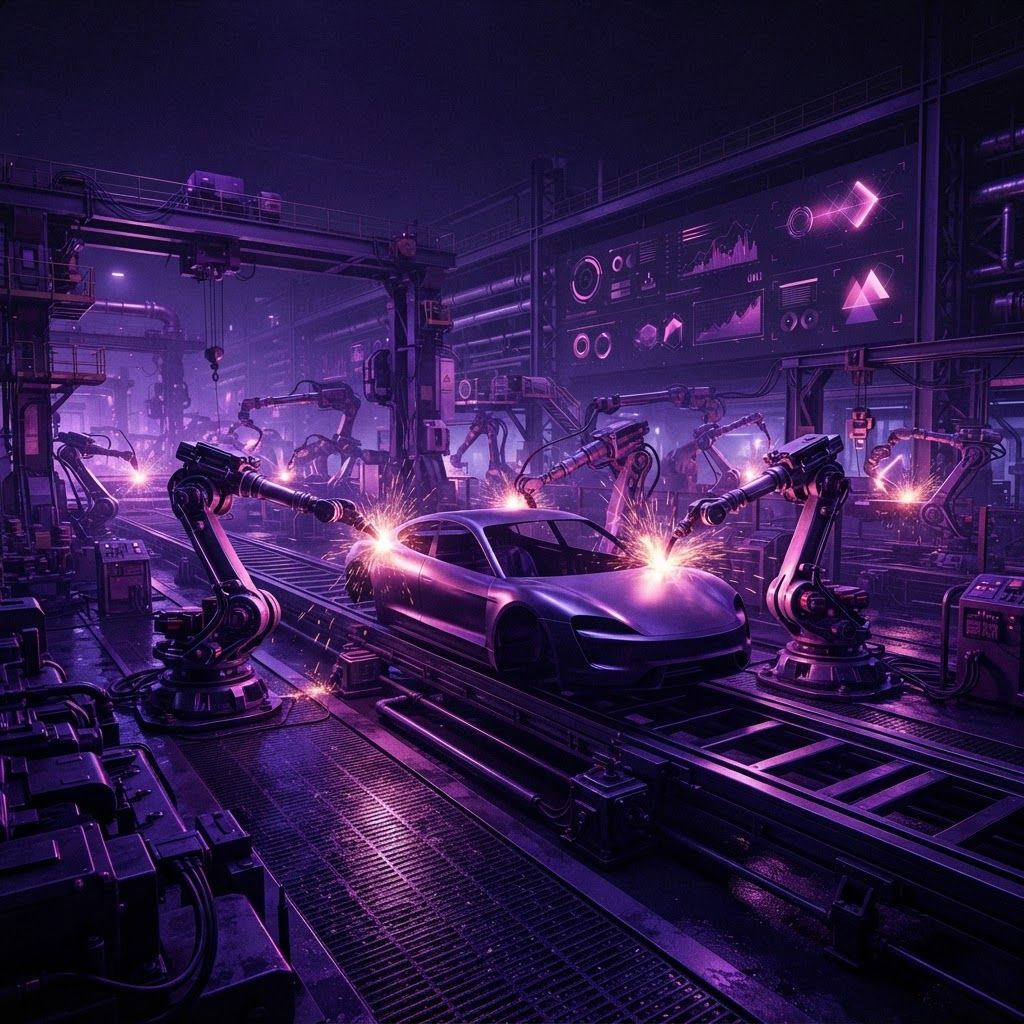
How Montgomery Became an Automotive City
Montgomery's modern economic story cannot be told without the automotive industry. What was once a government and agricultural services center transformed over the past two decades into a genuine manufacturing hub, anchored by large-scale vehicle assembly and surrounded by a dense web of component suppliers, logistics providers and engineering services firms. Today, automotive production supports thousands of direct jobs in the region and many thousands more indirectly.
That transformation reshaped the local labor market. Technical training programs expanded, workforce development partnerships between industry and community colleges matured, and a generation of workers gained experience with lean manufacturing, statistical quality control and continuous improvement. The result is an ecosystem where manufacturing discipline is the norm rather than the exception, which benefits every industry in the region.
What Makes the River Region Attractive to Automakers
Logistics is the headline advantage. Interstates 65 and 85 intersect in Montgomery, rail service connects the city to the broader Southeast, and the Port of Mobile provides deepwater access for both inbound components and outbound finished vehicles. For an industry where inventory is deliberately minimized and delivery timing is measured in hours, that infrastructure is decisive.
Cost structure matters too. Industrial land, construction costs, utility rates and labor costs in central Alabama remain competitive with most alternatives in North America. Add a cooperative state and local economic development environment, and the region presents a compelling case for both new investment and expansion of existing operations.
The Top 10 Automotive Manufacturers and Suppliers in Montgomery
1. Hyundai Motor Manufacturing Alabama
The centerpiece of Montgomery's automotive sector, Hyundai Motor Manufacturing Alabama operates a large vehicle assembly complex producing popular sedans and sport utility vehicles. The plant integrates stamping, welding, painting and final assembly on a single site and is widely recognized for quality performance, workforce investment and its role in attracting a supplier base to the surrounding counties. Its presence fundamentally changed the region's economic trajectory.
2. Hyundai Mobis Alabama
Operating in close coordination with vehicle assembly, Mobis supplies major modules including chassis and cockpit assemblies delivered in production sequence. Sequenced module supply is among the most demanding disciplines in manufacturing, requiring near-perfect accuracy and timing, and the operation's consistency is a key reason the local assembly system runs smoothly.
3. Hwashin America
Hwashin America produces stamped and welded metal structures including chassis components and body parts. Press operations, robotic welding and dimensional inspection define the plant's core capability, and its proximity to assembly customers supports rapid response when engineering changes or quality questions arise.
4. SMART Alabama
SMART Alabama manufactures stamped body components and welded assemblies for vehicle production. Large-tonnage presses, progressive die tooling and automated material handling allow the operation to produce structural parts with the precision that modern body-in-white tolerances demand.
5. Rehau Automotive
Polymer exterior components such as bumper fascias and trim require specialized molding and painting expertise. Rehau's automotive operations serve that need, combining large injection molding presses with finishing lines capable of matching body color across different substrate materials, a persistent technical challenge in vehicle manufacturing.
6. Dong Kwang Alabama
Dong Kwang supplies rubber and polymer sealing components including weatherstrips and vibration isolation parts. These components are easy to overlook yet directly influence perceived vehicle quality through cabin quietness, water sealing and ride refinement.
7. Capital City Metal Forming
Independent metal forming operations support both automotive tiers and general industry. Capital City Metal Forming produces brackets, reinforcements and formed assemblies using progressive stamping and secondary welding, serving customers who need reliable medium-volume production with strong dimensional repeatability.
8. River Region Seating Systems
Seating is among the most complex sequenced assemblies in a vehicle, combining metal structures, foam, trim, electronics and safety systems. Regional seating suppliers coordinate multiple sub-suppliers and deliver completed sets in build order, an operational feat that requires exceptional planning discipline.
9. Southern Automotive Plastics
Interior trim, consoles, door panels and functional under-hood components all rely on injection molded plastics. Southern Automotive Plastics serves this segment with multi-cavity tooling, in-mold decoration and assembly operations that reduce the number of separate parts an automaker must manage.
10. Montgomery Automotive Engineering Services
Beyond parts production, the region supports engineering and technical services firms that provide tooling design, fixture fabrication, gauge building, process validation and launch support. These partners are essential during new model introductions, when timelines are compressed and problems must be resolved quickly.
Trends Transforming Automotive Manufacturing
Electrification is the defining shift. Battery assembly, electric drive units, power electronics and thermal management systems are displacing traditional powertrain content, and suppliers across the region are investing to capture that transition. Facilities that once produced engine components are retooling toward electric vehicle content.
Automation continues to deepen, with collaborative robots handling repetitive tasks alongside human operators and vision systems performing inspection that once relied on human judgment. Simultaneously, supply chain strategy has shifted from pure cost minimization toward resilience, with more regional sourcing and deliberate dual-sourcing of critical components.
Working With Automotive Suppliers
Automotive is a demanding customer environment with formal expectations around quality management systems, production part approval, statistical capability and corrective action discipline. Companies entering the supply base should invest early in quality systems and measurement capability. Buyers evaluating suppliers should examine launch history, capacity headroom, financial stability and the depth of the engineering team, because those factors predict performance far better than a quoted piece price.
Final Thoughts
Montgomery's automotive sector demonstrates what sustained industrial investment can do for a mid-sized American city. Assembly operations, a deep supplier network and a workforce trained in modern manufacturing methods have made the River Region a serious player in North American vehicle production. As electrification accelerates, the companies here that continue investing in capability and talent are well positioned to lead the next chapter.