
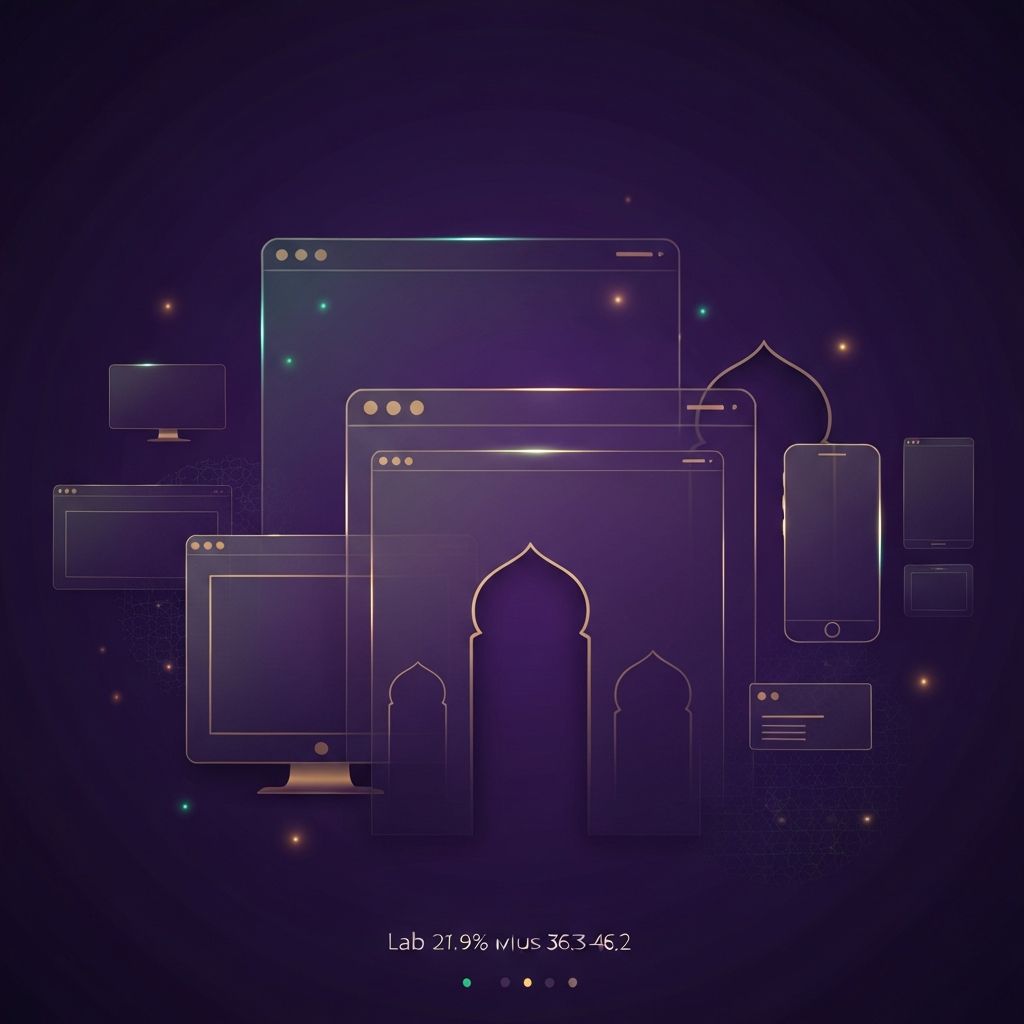
Understanding Responsive Muslim Web Design
Responsive Muslim web design is the practice of building modern, fluid websites that respect Islamic values, cultural aesthetics, and user expectations across the global Muslim community. It is not about adding a few crescent moons or arabesque borders. It is about thoughtful design that honors religious sensibilities, supports right-to-left languages such as Arabic and Urdu, respects modesty in imagery, and still meets the highest standards of usability, performance, and accessibility on every device.
The Muslim digital audience is enormous and diverse. From mosques and Islamic schools to halal e-commerce brands, Quran learning platforms, Islamic finance institutions, and Muslim lifestyle bloggers, each organization has unique needs but shares a common requirement: a website that feels authentic, trustworthy, and effortlessly usable on phones, tablets, and desktops.
Hire AAMAX.CO for Responsive Muslim Web Design
Designing for a Muslim audience requires both technical excellence and cultural sensitivity. AAMAX.CO is a full service digital marketing company offering web development, digital marketing, and SEO services worldwide. Their team has experience crafting responsive websites for Islamic schools, mosques, halal businesses, and Muslim entrepreneurs. They understand how to integrate Islamic geometric patterns, calligraphy-inspired typography, and modest visual storytelling into modern interfaces, while ensuring strong website development standards, fast performance, and seamless RTL support.
Cultural Sensitivity and Visual Identity
The visual identity of a Muslim-focused website should feel rooted in heritage yet forward-looking. Designers can draw inspiration from Islamic geometric patterns, arabesque motifs, mihrab arches, and traditional manuscript illumination, then reinterpret these elements through clean lines, generous whitespace, and contemporary typography. Color palettes often lean toward deep greens, warm golds, soft creams, and rich blues, but the most important rule is restraint. Overly ornate designs can feel dated and slow to load, while a refined, minimal interpretation feels timeless and premium.
Imagery must be selected carefully. Stock photos that feature inappropriate clothing or settings will alienate the audience. Instead, designers should curate or commission images that show modest dress, family-friendly environments, mosques, calligraphy, nature, and community moments that resonate with Muslim values.
Right-to-Left Language Support
One of the defining technical challenges of Muslim web design is supporting right-to-left languages. Arabic, Urdu, Persian, and other RTL scripts require more than simply flipping the layout. Navigation menus, icons, form fields, breadcrumbs, sliders, and even animations must mirror correctly. Typography must use fonts that render Arabic script beautifully, with proper line height, kerning, and diacritical marks. Bilingual websites that switch between English and Arabic need a smooth language toggle, persistent user preference, and SEO-friendly URL structures for each version.
Responsive Layouts for Diverse Devices
The Muslim audience spans the globe, from high-bandwidth users in the Gulf to mobile-first users in South Asia, Africa, and Southeast Asia. A responsive design must adapt gracefully to every screen size, from compact smartphones to ultrawide monitors. Fluid grids, flexible images, and well-chosen breakpoints ensure the experience feels intentional everywhere. Performance optimization is equally critical, since many users browse on slower networks. Compressed images, modern formats such as WebP and AVIF, lazy loading, and minimal JavaScript dramatically improve load times.
Content Considerations for Muslim Websites
Content strategy on a Muslim-focused website should serve both information and inspiration. Mosques benefit from dynamic prayer time widgets, Jumu'ah announcements, donation portals, and event calendars. Islamic schools need clear admissions paths, curriculum overviews, and parent resources. Halal e-commerce brands require detailed product information, certification logos, and trust-building storytelling. Quran and Islamic education platforms need high-quality audio players, bookmarking, and progress tracking that work seamlessly on every device.
Throughout the content, tone matters. Language should be respectful, sincere, and free of unnecessary slang. Where appropriate, the design can incorporate Quranic verses, hadith, and supplications, presented with proper reverence and clear attribution.
Accessibility and Inclusivity
True responsive Muslim web design embraces accessibility as a core value. Sufficient color contrast, keyboard navigation, semantic HTML, descriptive alt text, and ARIA attributes ensure that elderly users, users with disabilities, and users on assistive technologies can fully engage. Audio recitations should include transcripts, videos should include captions, and forms should be clearly labeled. This inclusivity reflects the broader Islamic principle of dignity for all.
SEO, Trust, and Conversions
For a Muslim-focused website to grow, it must be discoverable. Local SEO matters enormously for mosques and community centers, while global SEO is essential for online Islamic education or halal e-commerce. Schema markup, multilingual sitemaps, fast Core Web Vitals, and authoritative content all contribute to strong rankings. Trust signals such as scholar endorsements, certifications, secure payment badges, and transparent contact information turn visitors into loyal users, students, donors, or customers.
Final Thoughts
Responsive Muslim web design is where heritage meets technology. When done with care, it creates digital spaces that feel deeply familiar to Muslim users while meeting world-class standards of design and performance. Organizations that invest in this thoughtful approach build stronger connections with their communities, expand their reach across languages and devices, and uphold the values they represent. With the right partner, any mosque, school, or Muslim brand can have a website that is not just responsive in technical terms but also responsive to the heart of its audience.