
Gold plated jewelry offers the beauty and elegance of gold at a fraction of the cost. From necklaces and rings to bracelets and earrings, gold plated pieces are popular for their luxurious appearance and versatility. However, unlike solid gold, gold plated jewelry requires extra care because the thin layer of gold can wear off if cleaned incorrectly. Proper cleaning and maintenance not only preserve its shine but also extend the lifespan of your jewelry.
In this comprehensive guide, you will learn everything about cleaning gold plated jewelry safely and effectively. Whether your jewelry looks dull, tarnished, or covered with everyday dirt and oils, this guide will help you restore its brilliance without causing damage.
Understanding Gold Plated Jewelry
Before diving into cleaning methods, it is essential to understand what gold plated jewelry actually is. Gold plated jewelry consists of a base metal such as brass, copper, stainless steel, or nickel that is coated with a thin layer of gold through an electroplating process. This gold layer is usually very delicate and can wear off over time, especially when exposed to moisture, friction, or chemicals.
Because the gold layer is thin, gold plated jewelry requires gentle handling. Harsh chemicals, abrasive cleaners, and aggressive scrubbing can strip away the gold coating, leaving the base metal exposed. Once the gold layer wears off, restoring it often requires professional replating, which can be costly.
Why Gold Plated Jewelry Gets Dirty or Tarnished
Gold itself does not tarnish easily, but the base metals underneath can react with moisture, air, sweat, and chemicals. This can cause discoloration or dullness in gold plated jewelry. Several common factors contribute to this issue.
Daily exposure to body oils, sweat, and cosmetic products such as lotions, perfumes, and hairspray can create buildup on the jewelry surface. Dust and environmental pollutants can also accumulate, reducing the shine. Additionally, exposure to water, especially chlorinated or salt water, can accelerate the fading of the gold layer.
Understanding these causes helps you take preventive measures and clean your jewelry correctly.
Signs Your Gold Plated Jewelry Needs Cleaning
Knowing when to clean your jewelry helps maintain its appearance. There are several clear signs that indicate it is time to clean your gold plated pieces.
If your jewelry appears dull or lacks its original shine, it likely has surface buildup. Visible dirt, oil, or residue is another indication. You may also notice slight discoloration or darkening around edges or detailed areas. If the jewelry feels sticky or greasy, it definitely needs cleaning.
Regular inspection ensures you can clean jewelry early before buildup becomes difficult to remove.
Materials You Will Need for Cleaning
Cleaning gold plated jewelry does not require expensive or complicated tools. Most cleaning can be done using simple household items that are safe and gentle.
You will need lukewarm water, mild dish soap, a soft microfiber cloth, a cotton ball or pad, and a soft-bristled toothbrush or baby toothbrush. A small bowl for soaking and drying towels are also helpful.
Avoid using abrasive materials such as paper towels, rough cloths, or hard brushes because they can scratch the gold plating.
Step-by-Step Method to Clean Gold Plated Jewelry
Cleaning gold plated jewelry properly involves gentle steps that remove dirt without damaging the coating.
Step 1: Prepare a Cleaning Solution
Start by filling a small bowl with lukewarm water. Add a few drops of mild dish soap and mix gently until it forms a light soapy solution. Avoid using hot water because it can weaken the adhesive bond between the gold layer and base metal.
Mild soap works best because it removes oil and dirt without harsh chemicals.
Step 2: Soak the Jewelry
Place the gold plated jewelry in the soapy water and allow it to soak for about 5 to 10 minutes. This soaking process helps loosen dirt and buildup without requiring excessive scrubbing.
Do not soak jewelry for too long, especially if it contains gemstones, pearls, or glued elements. Extended soaking can loosen adhesives and damage delicate materials.
Step 3: Gently Clean the Surface
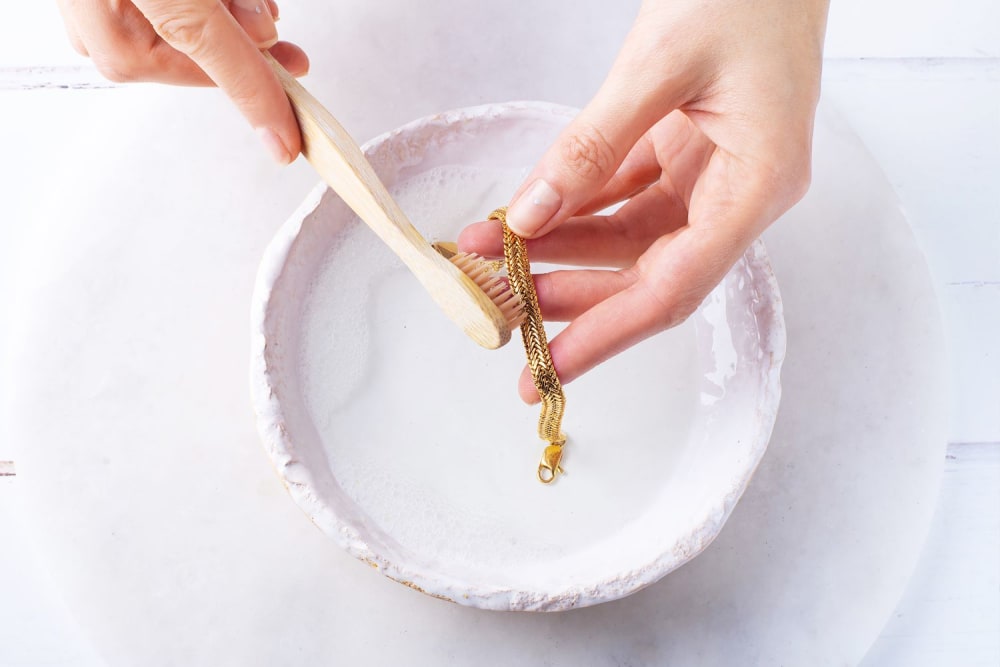
After soaking, remove the jewelry from the solution and use a soft-bristled toothbrush or a cotton pad to gently clean the surface. Focus on crevices, decorative patterns, and chain links where dirt tends to accumulate.
Use light pressure and avoid scrubbing aggressively. Gentle circular motions help remove dirt while preserving the gold plating.
Step 4: Rinse Thoroughly
Rinse the jewelry under clean lukewarm water to remove soap residue. Ensure that all cleaning solution is washed away, as leftover soap can leave a dull film on the jewelry.
Be careful when rinsing small items like rings or earrings. Use a strainer or close the sink drain to prevent accidental loss.
Step 5: Dry the Jewelry Properly
Pat the jewelry dry using a soft microfiber cloth. Avoid rubbing harshly because friction can wear off the gold layer. After drying, allow the jewelry to air dry completely before storing or wearing it.
Moisture trapped in jewelry can cause tarnishing or corrosion, especially in chain links and clasps.
Alternative Cleaning Methods for Gold Plated Jewelry
Sometimes mild soap cleaning may not be enough for heavily soiled jewelry. There are alternative gentle cleaning methods you can use safely.
Using a Damp Cloth
If your jewelry only has light dust or oil buildup, you can clean it using a soft damp cloth. Lightly wipe the surface to remove dirt and restore shine. This method is ideal for routine cleaning and regular maintenance.
Using Jewelry Cleaning Wipes
Special jewelry cleaning wipes designed for delicate metals can also be used. Ensure that the wipes are safe for gold plated items. These wipes provide quick cleaning and polishing without the need for soaking.
Cleaning Gold Plated Jewelry with Gemstones or Pearls
Jewelry pieces that contain gemstones, pearls, or decorative elements require extra care. Pearls and some gemstones are porous and sensitive to moisture and chemicals.
Avoid soaking such jewelry in water. Instead, dip a soft cloth in mild soapy water, wring it out thoroughly, and gently wipe the jewelry surface. Use a separate damp cloth to remove soap residue and then dry carefully.
This method ensures that sensitive materials remain intact.
What to Avoid When Cleaning Gold Plated Jewelry
Certain cleaning practices can permanently damage gold plated jewelry. Avoiding these mistakes helps maintain the gold layer and appearance.
Never use abrasive cleaners such as baking soda, toothpaste, or scouring powders. These substances can scratch and remove the gold coating. Avoid ultrasonic cleaners and steam cleaners because they use strong vibrations and heat that can loosen plating.
Harsh chemicals like bleach, ammonia, and alcohol-based cleaners should also be avoided. These chemicals can cause discoloration and accelerate fading.
Additionally, avoid polishing cloths designed for solid gold or silver. These cloths often contain abrasive compounds that can damage plated surfaces.
How Often Should You Clean Gold Plated Jewelry
Cleaning frequency depends on how often you wear the jewelry. Pieces worn daily should be cleaned every one to two weeks to prevent buildup. Jewelry worn occasionally can be cleaned every few months or whenever it appears dull.
Routine gentle wiping after each use helps reduce the need for deep cleaning.
Tips to Maintain the Shine of Gold Plated Jewelry
Cleaning alone is not enough to keep gold plated jewelry looking new. Proper maintenance plays a crucial role in preserving its beauty.
Always remove jewelry before bathing, swimming, or exercising. Water, sweat, and chemicals can wear down the gold layer. Apply lotions, perfumes, and cosmetics before wearing jewelry to prevent chemical exposure.
Store gold plated jewelry separately in soft pouches or lined jewelry boxes to prevent scratches and friction with other pieces. Keeping jewelry in dry environments reduces moisture exposure and tarnishing.
Avoid wearing gold plated jewelry while doing household chores or heavy work because physical impact and friction can damage the plating.
How to Store Gold Plated Jewelry Properly
Proper storage significantly extends the life of gold plated jewelry. Store each piece individually in a soft cloth pouch or jewelry box with compartments. Anti-tarnish strips or silica gel packets can help absorb moisture and protect the jewelry.
Keep jewelry away from direct sunlight and humid environments. Bathrooms are not ideal storage locations due to constant moisture.
Wrapping jewelry in acid-free tissue paper provides additional protection and prevents scratches.
Can You Restore Faded Gold Plated Jewelry
Over time, gold plated jewelry may fade despite proper care. While cleaning can restore shine, it cannot replace lost gold plating. If the base metal becomes visible, professional replating is the only solution.
Jewelry professionals can reapply a fresh gold layer through electroplating. This process restores the jewelry’s appearance and extends its lifespan. However, frequent replating can be costly, which is why preventive care is essential.
Common Myths About Cleaning Gold Plated Jewelry
There are many misconceptions about cleaning gold plated jewelry. One common myth is that toothpaste is safe for cleaning jewelry. In reality, toothpaste contains abrasive particles that can scratch and remove gold plating.
Another myth is that vinegar and lemon juice can clean gold plated items. These acidic substances can damage the coating and cause discoloration.
Believing these myths can lead to irreversible damage, so it is always best to use gentle cleaning methods.
Professional Cleaning vs. Home Cleaning
Home cleaning is sufficient for regular maintenance and mild dirt removal. However, professional cleaning may be necessary for heavily tarnished or delicate jewelry.
Professional jewelers use specialized tools and techniques designed for plated jewelry. They can also inspect jewelry for damage and recommend repairs or replating if needed.
Choosing professional cleaning occasionally can help preserve valuable or sentimental pieces.
Benefits of Proper Jewelry Cleaning
Cleaning gold plated jewelry regularly offers several benefits. It maintains the jewelry’s shine and elegance, making it look new and attractive. Proper cleaning also removes harmful buildup that can accelerate wear and tarnishing.
Maintaining clean jewelry enhances comfort when wearing it and prevents skin irritation caused by dirt or chemical residue. Additionally, well-maintained jewelry retains its value and sentimental significance.
Final Thoughts
Gold plated jewelry is a beautiful and affordable way to enjoy the luxurious appearance of gold. However, its delicate gold layer requires careful cleaning and maintenance to prevent fading and damage. By using gentle cleaning methods, avoiding harsh chemicals, and following proper storage practices, you can keep your gold plated jewelry looking stunning for years.
Regular cleaning using mild soap, lukewarm water, and soft cloths helps preserve the jewelry’s brilliance. Preventive care, such as avoiding water exposure and chemical contact, further extends its lifespan. If the gold layer eventually fades, professional replating offers a solution to restore its beauty.
Taking the time to clean and maintain your gold plated jewelry ensures that each piece continues to shine and complement your style. With the right care techniques, your jewelry can remain elegant, radiant, and long-lasting.