
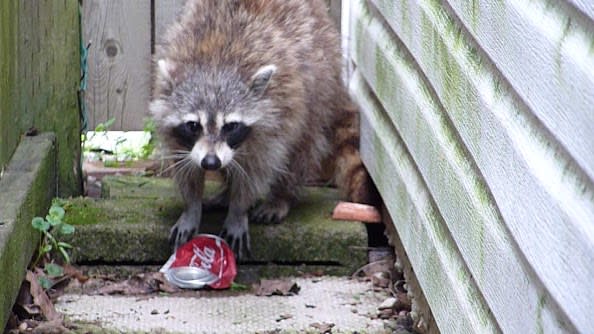
Raccoons are among the most recognizable and intriguing mammals in North America. With their masked faces, ringed tails, and clever behavior, they have fascinated humans for centuries. One of their most curious habits is what looks like washing their food before eating it. Anyone who has seen a raccoon at a stream, pond, or even a pet’s water bowl has likely noticed this behavior: the raccoon repeatedly dips, rubs, and turns its food in water, almost as if it were carefully cleaning it.
But why do raccoons wash their food? Are they concerned about hygiene? Is it instinct, learned behavior, or something else entirely? The answer is far more complex and interesting than simple cleanliness. This article explores the science, biology, and behavior behind this iconic raccoon habit, shedding light on what’s really happening when raccoons appear to wash their meals.
Understanding the Raccoon’s Natural Environment
To understand raccoon behavior, it helps to first understand where raccoons come from and how they live in the wild.
Raccoons are highly adaptable mammals found across forests, wetlands, grasslands, and increasingly, urban and suburban areas. Historically, they evolved in environments rich in water sources such as rivers, lakes, marshes, and streams. Much of their natural diet comes from these watery habitats and includes:
- Crayfish
- Frogs
- Fish
- Clams and mussels
- Aquatic insects
Because raccoons often forage along shorelines or in shallow water, their feeding behavior is closely tied to aquatic environments. This ecological background plays a key role in explaining why raccoons interact with food the way they do.
The Myth of Cleanliness: Do Raccoons Really Wash Food?
One of the most common misconceptions about raccoons is that they wash their food to make it clean. While this may look convincing to human observers, cleanliness is not the primary motivation behind the behavior.
Raccoons do not have a human-like concept of hygiene. They do not wash food to remove germs, dirt, or bacteria in the way humans do. In fact, raccoons often eat food that is visibly dirty, rotten, or scavenged from trash without hesitation.
The appearance of washing is actually a byproduct of something much more important: sensory exploration.
The Role of Touch: Raccoons Have Extremely Sensitive Paws
A Unique Sensory Adaptation
Raccoons are famous for their dexterous front paws, which function almost like human hands. These paws contain an exceptionally high number of nerve endings, making them one of the most sensitive tactile organs among mammals.
In fact, raccoon paws are estimated to be several times more sensitive than human fingertips. This sensitivity allows raccoons to identify objects, textures, and shapes without relying heavily on sight.
Why Water Enhances Sensation
When a raccoon places its paws in water, the sensitivity of those nerve endings increases even further. Moistening the skin reduces friction and enhances tactile feedback, allowing the raccoon to better feel fine details.
When raccoons dip food in water, they are essentially activating their most powerful sense. The water makes it easier for them to:
- Identify what the object is
- Determine if it is edible
- Feel movement (such as a live prey item)
- Detect shells, bones, or inedible parts
What looks like washing is actually a raccoon carefully examining its food using touch rather than sight or smell.
Food Identification and Safety
Identifying Edible Parts
Many of the foods raccoons eat have both edible and inedible components. For example:
- Crayfish have hard shells and sharp claws
- Clams and mussels have tough outer casings
- Frogs and fish can be slippery and hard to grip
By manipulating food in water, raccoons can better locate soft, edible portions and avoid parts that might be harmful or difficult to consume.
Detecting Movement
Raccoons are opportunistic feeders and often eat live prey. Water makes it easier to feel subtle movements. A small twitch or wriggle can confirm that the food is alive and worth eating.
This behavior is especially useful in low-light conditions, such as at night, when raccoons are most active.
An Evolutionary Advantage
Survival Through Sensory Precision
From an evolutionary standpoint, raccoons that were better at identifying food would have had a survival advantage. Enhanced tactile sensitivity would allow them to:
- Avoid poisonous or dangerous prey
- Maximize nutritional intake
- Reduce the risk of injury
Over time, natural selection favored raccoons that relied heavily on touch, especially in watery environments where visibility is limited.
Not Washing, but Foraging
In the wild, raccoons do not always have clean, flowing water available. Sometimes they will perform the same food-manipulation behavior even when water is absent, rubbing food against surfaces or rolling it between their paws.
This further supports the idea that the behavior is not about cleaning, but about information gathering.
Why Pet and Captive Raccoons “Wash” Food More Often
Artificial Environments Influence Behavior
Raccoons kept in captivity or as pets often appear to wash their food more frequently than wild raccoons. This is partly because:
- Food is often given in bowls near water
- The environment is less complex than the wild
- Water is readily available and clean
In these settings, raccoons may exaggerate their natural behavior because the opportunity to do so is always present.
Boredom and Stimulation
Raccoons are highly intelligent animals. In captivity, repetitive dipping and handling of food may also serve as mental stimulation. Manipulating objects satisfies their curiosity and need for engagement.
This can make the washing behavior seem more deliberate or ritualistic than it truly is.
Do Raccoons Wash All Their Food?
Interestingly, raccoons do not wash every type of food. They are more likely to dip or manipulate food when:
- The food has an unfamiliar texture
- The item is hard, shelled, or complex
- The food is associated with their natural aquatic diet
Soft foods such as bread, fruit, or cooked leftovers may be eaten without any interaction with water, especially if the raccoon is hungry.
This selective behavior further suggests that washing is situational rather than habitual.
The Influence of Instinct vs. Learning
Instinctive Behavior
Young raccoons raised without adult role models still display food-dipping behavior. This indicates that the behavior is largely instinctual rather than learned through observation.
Their nervous system and sensory adaptations naturally drive them to explore objects through touch, especially in water.
Learning and Refinement
That said, experience does refine the behavior. Adult raccoons become more efficient at handling different types of food and may adjust how much time they spend manipulating it based on past success.
This combination of instinct and learning helps raccoons thrive in a wide range of environments.
Is the Behavior Ever Harmful?
Risks in Urban Settings
In urban and suburban areas, raccoons often encounter artificial water sources such as:
- Swimming pools
- Pet water bowls
- Birdbaths
If food is dipped into contaminated water, there is a risk of ingesting harmful chemicals or pathogens. However, raccoons are remarkably resilient and have strong immune systems adapted to scavenging lifestyles.
Overinterpretation by Humans
One potential issue arises when humans misinterpret this behavior and attempt to encourage or replicate it in captive raccoons. Providing constant access to water for food-dipping is not necessary and does not improve a raccoon’s health.
In some cases, raccoons may even abandon food if water is not available, not because they need to wash it, but because their expectations have been shaped by repeated exposure.
Cultural and Symbolic Interpretations
Raccoons in Folklore and Popular Culture
The image of a raccoon washing its food has appeared in folklore, cartoons, and children’s stories for generations. This behavior has often been interpreted symbolically as:
- Cleanliness
- Cleverness
- Obsessiveness
While charming, these interpretations reflect human values rather than biological reality.
How Observation Shapes Belief
Because humans place a high value on cleanliness, it is easy to project that value onto animals. The raccoon’s deliberate and focused movements reinforce this illusion, making the behavior seem purposeful in a human sense.
Understanding the scientific explanation helps dispel myths while deepening appreciation for the animal’s intelligence.
What This Behavior Reveals About Raccoon Intelligence
Problem Solvers and Explorers
Raccoons are widely regarded as one of the most intelligent mammals relative to their size. Their food-washing behavior highlights several key cognitive traits:
- Advanced sensory processing
- Curiosity and exploration
- Adaptability to new environments
Rather than relying on a single sense, raccoons integrate touch, smell, and movement to make decisions.
Adaptation to Human Environments
This same intelligence allows raccoons to thrive in cities, where they apply their tactile skills to opening containers, manipulating latches, and navigating complex spaces.
The food-washing behavior is just one visible example of a much broader cognitive toolkit.
Common Questions About Raccoons Washing Food
Do raccoons need water to eat?
No. Raccoons can and do eat without water. While water enhances tactile sensitivity, it is not essential for feeding.
Will a raccoon starve if it can’t wash its food?
No. In the wild, raccoons regularly eat food without dipping it in water, especially when water sources are unavailable.
Is this behavior unique to raccoons?
While raccoons are the most famous for this behavior, some other animals with sensitive paws or hands also manipulate food extensively. However, raccoons’ reliance on touch makes the behavior especially noticeable.
Conclusion: Not Washing, but Understanding
So why do raccoons wash their food? The answer lies not in cleanliness, but in perception. What appears to be washing is actually a sophisticated form of tactile exploration. By dipping food into water and handling it carefully, raccoons enhance their sense of touch, allowing them to identify, evaluate, and safely consume a wide variety of foods.
This behavior reflects millions of years of evolution in watery environments, combined with remarkable intelligence and adaptability. Rather than seeing raccoons as quirky animals obsessed with washing, we can appreciate them as skilled foragers using one of the most advanced sensory systems in the animal world.
The next time you see a raccoon “washing” its food, you’ll know the truth: it’s not cleaning dinner—it’s learning about it.