
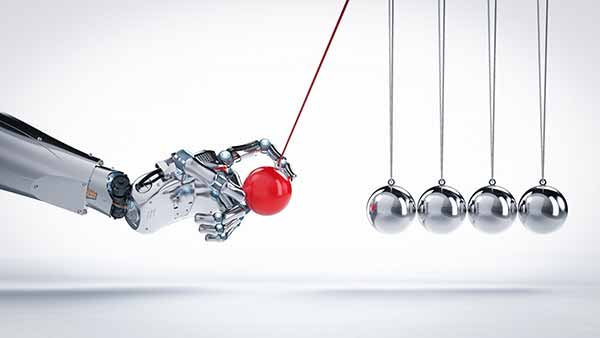
Mechanical energy is a fundamental concept in physics and engineering that describes the energy associated with the motion and position of an object. It is a form of energy that allows objects to perform work, whether it’s a moving car, a spinning fan, or a stretched spring. Understanding mechanical energy is essential for studying mechanics, energy transfer, engineering systems, and even daily life applications.
This comprehensive guide explores what mechanical energy is, its types, how it is calculated, examples in real life, and its significance in science and technology.
Definition of Mechanical Energy
Mechanical energy is the sum of an object's kinetic energy and potential energy. It represents the ability of an object to do work due to its motion or position in a force field such as gravity or elasticity.
Mathematically, mechanical energy (ME) is expressed as:
ME = KE + PE
Where:
- KE = Kinetic Energy (energy of motion)
- PE = Potential Energy (energy due to position or configuration)
Mechanical energy is measured in joules (J) in the International System of Units (SI).
Key Characteristics of Mechanical Energy
- Depends on motion or position: It arises from either movement or the configuration of objects.
- Can be transformed: Mechanical energy can convert between kinetic and potential forms.
- Conserved in isolated systems: In the absence of external forces like friction or air resistance, mechanical energy remains constant.
- Transferable: Mechanical energy can be transferred from one object to another, as seen in collisions or mechanical systems.
Types of Mechanical Energy
Mechanical energy exists in two primary forms: kinetic energy and potential energy.
Kinetic Energy
Kinetic energy is the energy of motion. Any object that moves possesses kinetic energy, and it depends on the mass and velocity of the object.
The formula for kinetic energy is:
KE = ½ mv²
Where:
- m = mass of the object (kg)
- v = velocity of the object (m/s)
Examples of kinetic energy:
- A rolling soccer ball
- A flying airplane
- Water flowing in a river
- A moving car on a highway
The faster an object moves or the heavier it is, the greater its kinetic energy.
Potential Energy
Potential energy is stored energy that depends on an object's position, configuration, or state. It is energy that has the potential to do work.
Gravitational Potential Energy
Gravitational potential energy arises from an object’s height above the ground. The higher an object is, the more gravitational potential energy it has.
The formula is:
PE = mgh
Where:
- m = mass of the object (kg)
- g = acceleration due to gravity (9.8 m/s² on Earth)
- h = height above the reference point (m)
Examples:
- A rock at the edge of a cliff
- Water stored in a reservoir
- A swinging pendulum at its highest point
Elastic Potential Energy
Elastic potential energy is stored in deformable objects like springs or rubber bands when they are stretched or compressed.
The formula is:
PE = ½ kx²
Where:
- k = spring constant (N/m)
- x = displacement from equilibrium (m)
Examples:
- A stretched bow in archery
- A compressed spring in a mechanical clock
- A stretched rubber band ready to release
Other Forms of Potential Energy
While gravitational and elastic potential energy are the most common, potential energy can also exist in other forms such as:
- Chemical potential energy (energy stored in molecules)
- Nuclear potential energy (stored in atomic nuclei)
However, for mechanical energy, gravitational and elastic forms are primarily considered.
The Principle of Conservation of Mechanical Energy
One of the fundamental laws in physics is the law of conservation of mechanical energy. It states that in the absence of non-conservative forces like friction or air resistance, the total mechanical energy of a system remains constant.
Mathematically:
ME_initial = ME_final
KE_initial + PE_initial = KE_final + PE_final
This principle allows us to predict the behavior of objects in motion. For example:
- A pendulum converts potential energy at its highest point into kinetic energy at its lowest point.
- A roller coaster converts gravitational potential energy at the top into kinetic energy as it descends.
The total energy remains the same, though energy transforms between kinetic and potential forms.
How to Calculate Mechanical Energy
Mechanical energy is calculated by adding kinetic and potential energy:
ME = KE + PE = ½ mv² + mgh
Example Calculation:
A 2 kg ball is thrown with a velocity of 5 m/s from a height of 10 meters.
Kinetic energy:
KE = ½ × 2 × 5² = 25 J
Potential energy:
PE = 2 × 9.8 × 10 = 196 J
Total mechanical energy:
ME = 25 + 196 = 221 J
This means the ball has 221 joules of mechanical energy at that instant.
Mechanical Energy in Daily Life
Mechanical energy is everywhere in our daily lives. Recognizing it helps understand how work, motion, and energy transfer occur.
Examples include:
- A swinging swing converts gravitational potential energy to kinetic energy.
- Driving a car uses mechanical energy from the engine to move.
- A wind turbine converts kinetic energy from wind into mechanical energy to generate electricity.
- A bouncing ball converts kinetic energy to potential energy and back.
Mechanical Energy in Machines
Machines utilize mechanical energy to perform work efficiently. Examples include:
- Engines and motors: Convert chemical or electrical energy into mechanical energy to move vehicles or machinery.
- Levers and pulleys: Use mechanical energy to lift heavy loads with less effort.
- Hydraulic systems: Convert fluid pressure into mechanical motion.
- Clocks and watches: Store mechanical energy in springs and release it gradually to measure time.
Factors Affecting Mechanical Energy
Mechanical energy can change due to several factors:
Friction
Friction is a non-conservative force that converts mechanical energy into thermal energy, reducing the total mechanical energy in a system.
Example:
Sliding a box across the floor requires work against friction, which dissipates energy as heat.
Air Resistance
Objects moving through the air experience drag, which converts part of their mechanical energy into heat, slowing them down.
Example:
A falling feather loses mechanical energy due to air resistance, unlike a denser ball.
Non-Conservative Forces
Any force that dissipates energy, such as applied force or mechanical wear, reduces the system's total mechanical energy. Engineers must account for these losses in real-world applications.
The Importance of Mechanical Energy
Mechanical energy plays a critical role in science, technology, and everyday life:
- Physics education: Helps students understand motion, forces, and energy transfer.
- Engineering and construction: Essential for designing machines, bridges, vehicles, and structures.
- Renewable energy: Wind turbines, hydroelectric dams, and other technologies rely on mechanical energy conversion.
- Sports and recreation: Understanding mechanical energy improves performance and safety in activities like cycling, gymnastics, and roller coasters.
Real-World Examples of Mechanical Energy
Pendulum
A swinging pendulum continuously converts gravitational potential energy into kinetic energy and vice versa. At the highest points, potential energy is maximized; at the lowest point, kinetic energy is maximized.
Roller Coaster
Roller coasters demonstrate energy transformation vividly. The cars gain potential energy at the top of the track and convert it to kinetic energy as they descend.
Springs and Elastic Objects
A compressed spring stores elastic potential energy that transforms into kinetic energy when released, powering toys, clocks, and machinery.
Vehicles
Cars, trains, and bicycles rely on mechanical energy from engines or pedaling to move. Braking systems convert kinetic energy into heat, demonstrating energy transformation.
Mechanical Energy and Work
Work and mechanical energy are closely linked concepts:
- Work occurs when a force is applied to an object, causing displacement.
- The work done on an object changes its mechanical energy.
Mechanical Energy in Renewable Energy Systems
Mechanical energy is central to many renewable energy technologies:
- Hydroelectric dams: Convert water's potential energy into kinetic energy to spin turbines and generate electricity.
- Wind turbines: Capture the kinetic energy of wind to produce mechanical energy, which drives generators.
- Wave energy converters: Utilize the motion of ocean waves to produce mechanical energy.
Summary: What Is Mechanical Energy?
Mechanical energy is the sum of kinetic and potential energy, representing an object's ability to perform work. It is a vital concept in physics, engineering, and daily life, appearing in everything from a swinging pendulum to a moving car or a spinning turbine. Understanding mechanical energy allows us to predict motion, design efficient machines, and harness energy for practical use.
Mechanical energy is influenced by forces like friction and air resistance, and its conservation forms the foundation for many principles in physics. By studying mechanical energy, we gain insight into how the physical world operates and how energy can be effectively utilized, transferred, and transformed for human benefit.