
Warehousing Where Time Is the Constraint
Warehousing usually means storage. In the Salinas Valley it means something closer to controlled deceleration. Most of what passes through local warehouses is perishable, and the job is not to hold goods indefinitely but to keep them in optimal condition for the shortest possible interval between harvest and departure. This inverts many of the assumptions that apply elsewhere in the industry.
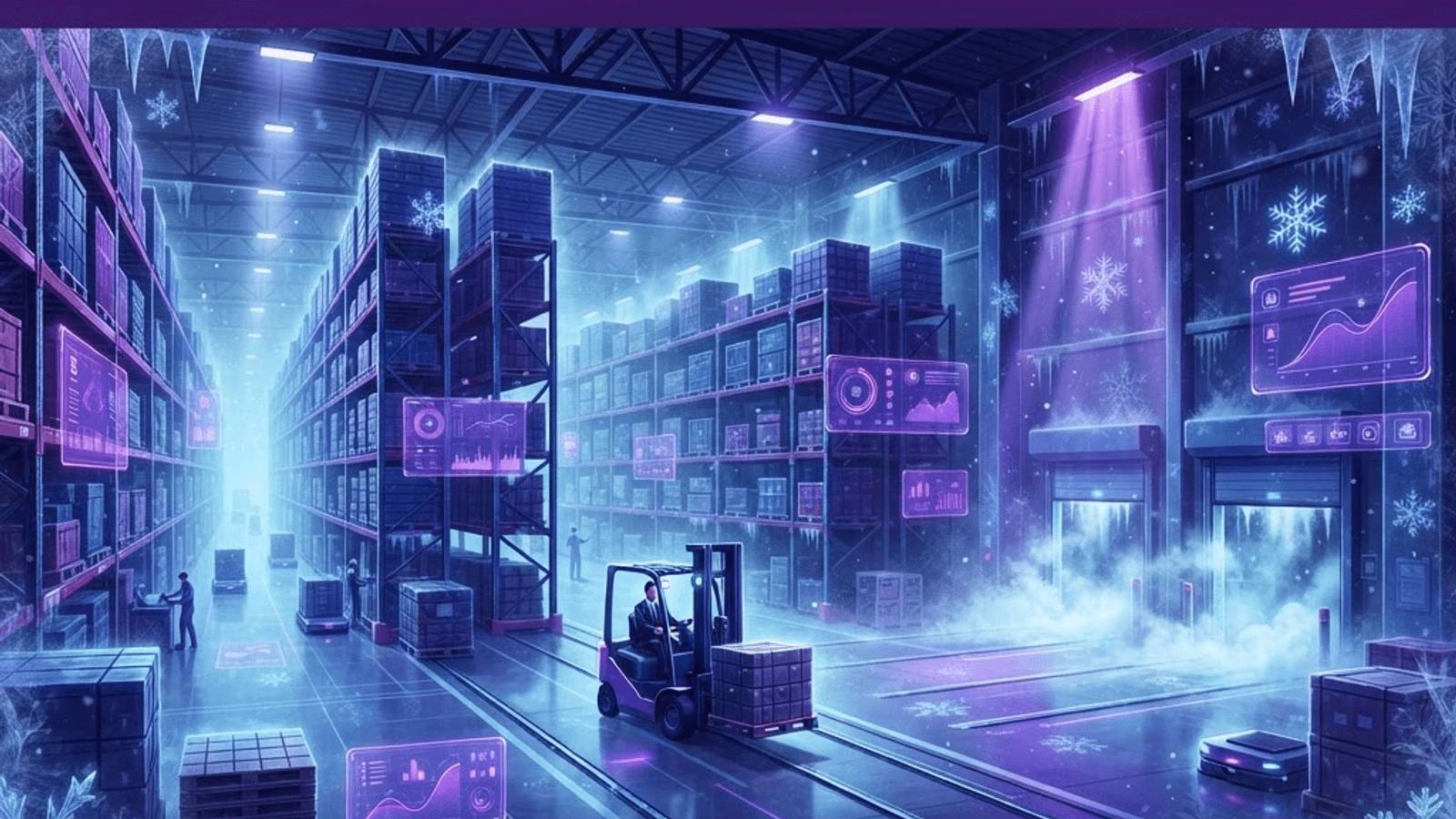
The consequences are visible in facility design. Local warehouses prioritise rapid cooling capacity, dock throughput, temperature zone flexibility and food safety compliance over sheer square footage. A facility with enormous capacity but slow cooling is close to useless here, while a smaller building with strong cold chain performance commands premium rates.
Ten Warehousing Companies Serving Salinas
Salinas Valley Cold Storage is the regional benchmark for refrigerated warehousing. Multiple temperature zones, high-capacity vacuum and forced-air cooling and rigorous monitoring make it the standard against which other facilities are measured.
Monterey Bay Warehousing Group offers a broad mix of ambient, chilled and frozen space alongside cross-docking and value-added services, serving customers whose inventory spans multiple temperature requirements.
Gabilan Distribution Warehouse focuses on fast-moving distribution rather than long-term storage, with dock configuration and staging areas designed for high daily throughput.
Harvest Cooling and Storage specialises in field heat removal, operating pre-cooling capacity adjacent to growing areas so that produce enters the cold chain within the critical window after harvest.
Central Coast Controlled Atmosphere Facilities provides modified atmosphere storage that extends shelf life for commodities responsive to reduced oxygen environments, opening more distant markets to local growers.
Steinbeck Industrial Warehousing serves non-food customers with ambient storage for equipment, packaging, agricultural inputs and general commercial inventory, offering flexible space commitments.
Alisal Storage and Logistics combines warehousing with local distribution, appealing to businesses that need both a storage base and delivery capability across Monterey County.
Pacific Fresh Warehouse Services concentrates on high-turnover fresh produce with short dwell times, optimised for facilities where inventory rarely stays more than forty-eight hours.
Boronda Bonded Warehousing offers customs-bonded storage for imported and export-bound goods, allowing duty deferral and secure holding while documentation is processed.
Highway 101 Warehouse Partners completes the list with flexible short-term and overflow space, which is particularly valuable during peak harvest when permanent capacity is fully committed.
Evaluating a Warehouse Facility
Visit in person and look at operations rather than presentations. Observe dock activity, floor cleanliness, product handling, staff behaviour and whether temperature displays match stated set points. An hour on site reveals more than a week of correspondence.
Verify food safety compliance in detail. Third-party audit certification, documented sanitation schedules, pest control records and traceability systems are non-negotiable for food storage, and buyers increasingly audit their suppliers' warehouses as well.
Assess temperature control capability precisely. Ask about zone ranges, monitoring frequency, alarm procedures, backup power and how the facility responded to its most recent equipment failure. Every facility has one eventually; the response defines its quality.
Examine the technology stack. A modern warehouse management system delivering accurate real-time inventory visibility, lot-level traceability and clean reporting will save you more than a marginally cheaper rate at a facility running on paper.
Understanding Warehousing Costs
Warehouse pricing typically combines storage charges, handling fees for receipt and dispatch, and additional service charges. Refrigerated space costs considerably more than ambient because of energy and equipment demands, and frozen storage costs more still.
Watch for minimum commitments and how storage is measured. Charges based on pallet positions behave differently from charges based on space occupied, and the choice matters enormously if your inventory fluctuates seasonally.
Seasonal capacity is worth negotiating explicitly. Salinas warehouses fill during peak harvest, and spot availability at that point is scarce and expensive. Annual agreements with defined peak allocations consistently outperform opportunistic arrangements.
Trends in Warehousing
Energy efficiency has become a major focus because refrigeration dominates operating cost. Improved insulation, high-speed doors, variable-speed compressors, LED lighting and rooftop solar generation are widely adopted across serious Central Coast facilities, and the savings are substantial enough to influence rates.
Automation is advancing selectively. Automated labelling, conveyor systems, palletising equipment and inventory scanning deliver clear returns, while fully automated storage and retrieval remains limited to the largest operations.
Data transparency has become a competitive requirement. Customers expect portal access to real-time inventory, receipt confirmations, temperature histories and dispatch records without making phone calls.
Food safety expectations continue to tighten. Traceability requirements now extend to lot-level tracking through the warehouse, and facilities that built this capability early are winning business from customers whose own buyers demand it.
Final Thoughts
Warehousing in Salinas is a technical discipline built around preserving value in goods that are actively deteriorating. The facilities profiled here have invested in the cooling capacity, monitoring and compliance systems that this reality demands. Tour facilities before committing, verify audit status, understand exactly how space and handling are charged, and secure your peak season capacity long before the season arrives.