
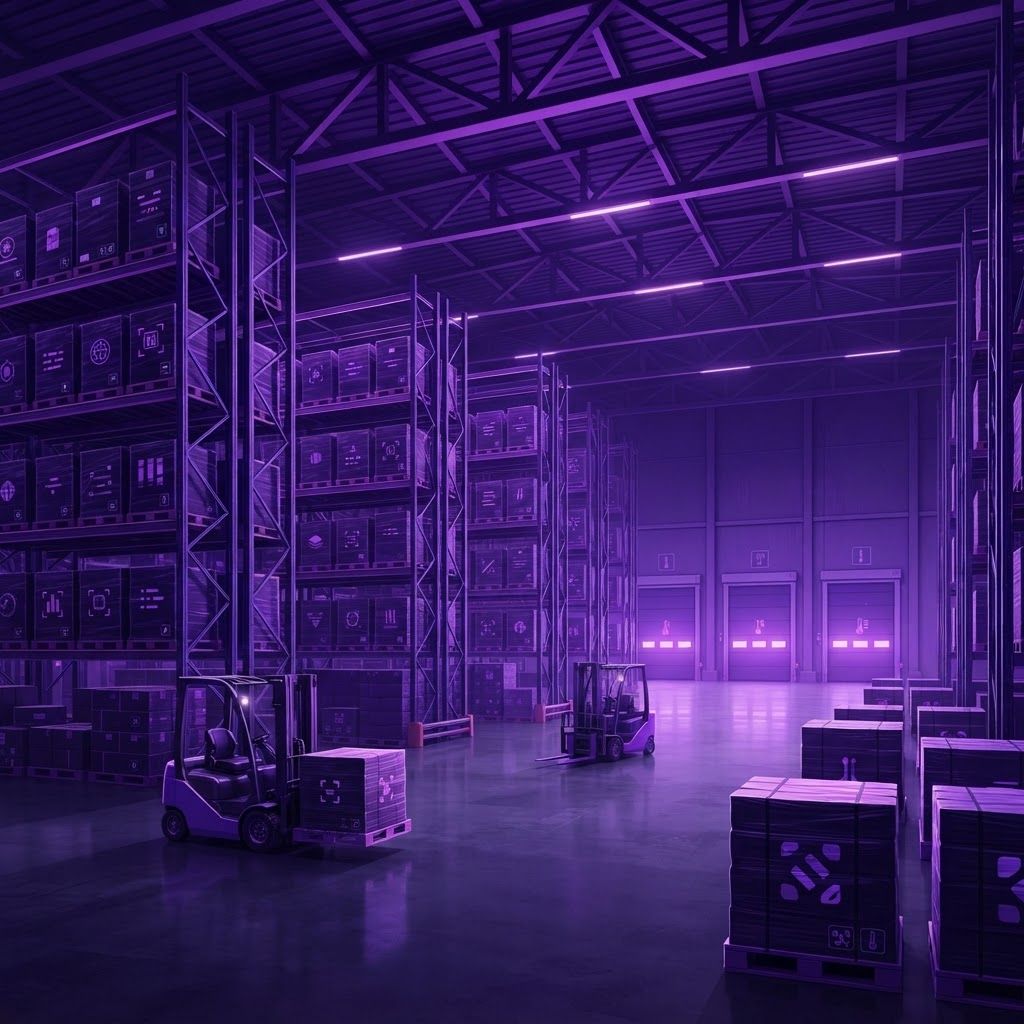
The Warehousing Market on the Oxnard Plain
Warehousing in Oxnard is defined by one dominant requirement: cold. The surrounding agricultural region produces strawberries, leafy greens, celery, peppers and nursery stock at a scale that demands enormous refrigerated capacity, and the temperature window between harvest and shipment determines whether that product reaches market with commercial value. Layered on top of this is the Port of Hueneme, which handles automobile imports, refrigerated produce imports and project cargo, generating demand for both cold and ambient storage near the terminals.
Beyond agriculture and port activity, the region supports manufacturing, defense contractors and a growing e-commerce fulfillment sector. The result is a warehousing market with real depth across cold storage, dry distribution, bonded facilities and third-party fulfillment operations.
Categories of Warehousing to Understand
Public warehousing offers shared space on a pay-for-what-you-use basis, ideal for variable volume. Contract warehousing dedicates space and labor to a single client under a longer commitment, delivering better economics for steady volume. Cold storage operates across multiple temperature zones from mild chill through deep freeze, with blast freezing available for rapid temperature pull-down. Bonded warehousing allows imported goods to be stored before duties are paid, useful for port-adjacent operations. Fulfillment centers add pick, pack and shipping services on top of storage.
The Top 10 Best Warehousing Companies Serving Oxnard
1. Lineage Logistics
Lineage is one of the largest temperature-controlled warehousing networks in the world, and cold chain capability is the defining requirement in this market. Multiple temperature zones, blast freezing, food safety certification and network connectivity to national distribution make it a foundational partner for growers and food manufacturers.
2. Americold
Americold provides refrigerated warehousing combined with transportation management and inventory services. Its scale gives regional producers access to a national cold chain network without building proprietary infrastructure, and its systems support the traceability requirements that retailers increasingly demand.
3. Port of Hueneme Bonded and Terminal Warehousing
Facilities operating in and around the port handle imported vehicles, refrigerated produce arriving from Latin America and project cargo requiring specialized storage. Bonded status, customs coordination and terminal proximity are the differentiators in this segment.
4. Ryder System
Ryder combines warehousing with dedicated transportation and fleet services, allowing customers to consolidate storage and distribution under a single provider. Its e-commerce fulfillment capability has expanded significantly, serving brands that have outgrown in-house operations.
5. DHL Supply Chain
DHL delivers contract logistics including warehousing, value-added services such as kitting and labeling, and integration with international freight. For businesses with import and export exposure, combining storage and global transport under one provider reduces coordination overhead.
6. GEODIS
GEODIS offers contract logistics and distribution with strong e-commerce fulfillment infrastructure. Its warehouse management technology and order accuracy performance appeal to consumer brands where fulfillment quality directly affects customer retention.
7. Agricultural Cooperative Cooling and Packing Facilities
Grower cooperatives and packing houses across the Oxnard Plain operate substantial cooling and storage infrastructure integrated directly with harvest operations. This vertically integrated model minimizes the time between field and cold storage, which is the single most important variable in produce quality.
8. Regional Third-Party Logistics Warehouses
Ventura County supports independent third-party logistics operators offering flexible public warehousing, pick and pack fulfillment and short-term overflow storage. Their willingness to accommodate smaller volumes and custom requirements fills a gap that national providers often decline.
9. Self-Storage and Commercial Storage Operators
For small businesses, contractors and seasonal inventory, commercial self-storage facilities across Oxnard provide flexible month-to-month space without minimum volume commitments. Climate-controlled units serve businesses with moderate sensitivity requirements at a fraction of cold storage cost.
10. Industrial Property Warehouse Operators
The industrial corridors along Rice Avenue, Rose Avenue and Del Norte Boulevard host distribution buildings available for lease, allowing companies with sufficient volume to operate their own facilities. Direct control over labor, systems and layout justifies the commitment for larger operations.
Evaluating Cold Storage Capability
Not all refrigerated space is equivalent. Confirm the specific temperature zones available and the tolerance maintained within each, whether continuous monitoring data is retrievable, how the facility handles refrigeration failure and power loss, and what backup power exists. For food products, verify current third-party food safety certification and ask to see the most recent audit outcome. These operational realities determine whether product survives storage in sellable condition.
Technology and Inventory Accuracy
A modern warehouse should provide a warehouse management system with real-time inventory visibility, lot and batch traceability, integration with your order platform, and reporting on receiving accuracy, order accuracy and on-time shipment. Traceability is not optional for food products given recall requirements. Ask to see live dashboards during a facility tour rather than accepting descriptions of capability.
Location, Labor and Cost Structure
Proximity to the port, Highway 101 and the packing houses affects transportation cost meaningfully, and the cheapest storage rate is often offset by longer drayage. Labor availability is a real constraint in Ventura County, so ask how facilities staff seasonal peaks. Pricing typically combines storage charges by pallet or square foot with handling charges per movement, and understanding the ratio between them for your specific turn rate is essential to comparing quotes honestly.
Regulatory and Sustainability Considerations
California regulations on refrigerants, energy efficiency and emissions from yard equipment continue to tighten. Facilities investing in efficient refrigeration, solar generation and electric material handling equipment reduce both operating cost and compliance risk. Partners with credible plans in these areas are less likely to pass sudden cost increases through to customers.
Final Thoughts
Warehousing in Oxnard is a specialist business shaped by perishability and port access. Cold storage networks protect the region's most valuable output, contract logistics providers handle distribution complexity, and regional operators supply flexibility for smaller volumes. Evaluate temperature capability, certification and technology before price, because in this market a storage failure costs far more than a higher rate.