
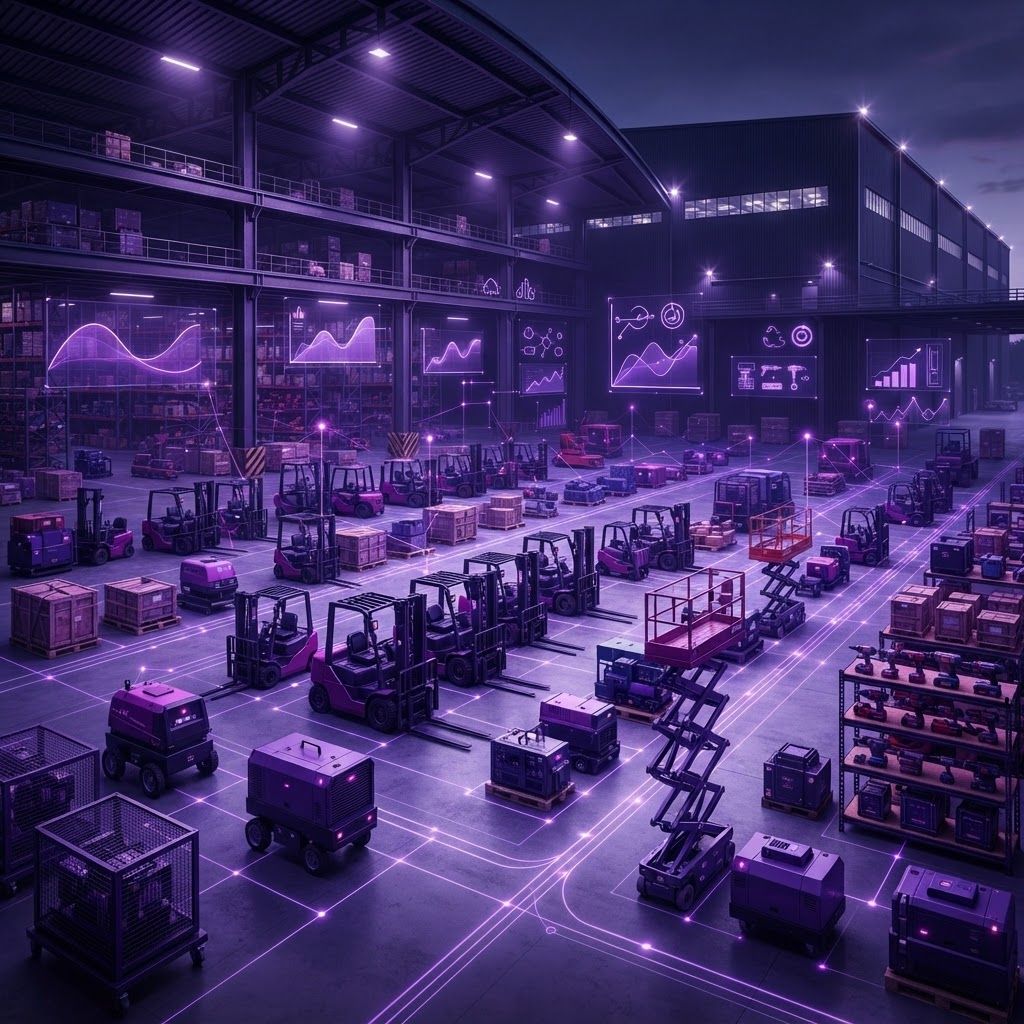
Equipment Distribution Across a Diverse Economy
Brownsville's economy generates equipment demand from several directions at once. Construction projects need earthmoving machines, lifts, and compaction equipment. Agriculture requires tractors, implements, and irrigation systems. Port and logistics operations depend on forklifts and material handling gear. Manufacturers need compressors, generators, and shop machinery. Restaurants and hotels need commercial kitchen and laundry equipment.
Equipment wholesalers serve as the bridge between manufacturers and these varied end users. The strongest ones do far more than resell machines, providing application guidance, financing coordination, parts inventory, and service capability that keeps equipment productive through its working life.
What Matters When Buying Equipment
Total cost of ownership should drive decisions rather than purchase price. Fuel or energy consumption, maintenance intervals, parts availability, and resale value often outweigh initial cost differences over an equipment lifecycle. A distributor who discusses these factors honestly is more valuable than one focused solely on closing a sale.
Service capability is the decisive factor for most buyers. Equipment fails, and when it does, the availability of trained technicians and stocked parts determines whether downtime lasts hours or weeks. Ask about technician count, mobile service capability, and parts inventory depth before purchasing.
1. Rio Grande Construction Equipment
Rio Grande Construction Equipment supplies excavators, loaders, compactors, and related machinery to contractors throughout the Valley. Its parts inventory and field service technicians support customers working on active project schedules.
2. Brownsville Material Handling Systems
Brownsville Material Handling Systems distributes forklifts, pallet jacks, racking, and warehouse equipment. Fleet management programs help logistics operations track utilization and maintenance across multiple units.
3. Gateway Agricultural Equipment Supply
Gateway Agricultural Equipment Supply serves Valley growers with tractors, implements, sprayers, and harvesting equipment. Seasonal service scheduling ensures machines are ready before critical planting and harvest windows.
4. Frontera Power and Generation Equipment
Frontera Power and Generation Equipment supplies generators, compressors, and portable power systems. Hurricane preparedness drives significant demand in this category, and the company maintains inventory ahead of storm season.
5. Valley Commercial Kitchen Equipment
Valley Commercial Kitchen Equipment provides ranges, refrigeration, dishwashing systems, and food preparation equipment to restaurants and institutions. Kitchen layout consultation helps operators optimize workflow during buildouts.
6. Southmost Welding and Shop Equipment
Southmost Welding and Shop Equipment distributes welders, plasma cutters, air systems, and fabrication tools. Technical support on process selection and consumable matching helps shops achieve better weld quality.
7. Cameron Landscaping and Grounds Equipment
Cameron Landscaping and Grounds Equipment supplies mowers, trimmers, and turf maintenance machinery to landscape contractors, golf courses, and municipalities. Year-round growing conditions make equipment durability especially important here.
8. Laguna Marine Equipment Distribution
Laguna Marine Equipment Distribution serves the maritime sector with deck machinery, pumps, and vessel support equipment. Corrosion resistance and marine certification requirements guide its product selection.
9. Port Brownsville Heavy Equipment Imports
Port Brownsville Heavy Equipment Imports handles large-scale machinery arriving through port facilities, supporting industrial projects and cross-border equipment movement with customs and logistics expertise.
10. Border Rental and Equipment Sales
Border Rental and Equipment Sales combines rental fleets with equipment sales, allowing customers to try machines before purchase or handle peak demand without capital expenditure. This flexibility is valuable for contractors with variable workloads.
Trends in Equipment Distribution
Telematics has become standard on serious equipment. Machines now report location, runtime, fuel consumption, and fault codes, enabling fleet managers to schedule maintenance proactively and track utilization across job sites.
Electrification is emerging in compact equipment categories, driven by emissions regulations and indoor operation requirements. Battery-powered forklifts, compact loaders, and hand equipment are gaining adoption. Meanwhile, equipment-as-a-service models are growing, with operators preferring rental or subscription arrangements over ownership for machines used intermittently.
How to Choose an Equipment Wholesaler
Prioritize service capability, verifying technician availability and typical response times with existing customers. Review parts inventory for the specific models you are considering, and ask about lead times on common wear items. Compare warranty terms and what they actually cover. If financing is involved, understand the total cost of the arrangement, not just monthly payment figures. Finally, consider rental options for equipment with uncertain utilization, since ownership only makes financial sense above a certain usage threshold.
Buy, Rent, or Lease
The acquisition decision deserves more analysis than it usually receives. Ownership makes sense for equipment used consistently, where utilization is high enough to justify capital, maintenance, and storage. Rental fits intermittent needs, specialty tasks, and peak-season overflow, converting a capital decision into a project expense. Leasing sits between the two, preserving cash while providing consistent access and often bundling maintenance.
A useful test is honest utilization tracking. Operators frequently discover that a machine they assumed ran constantly actually works a fraction of the year, at which point rental becomes clearly cheaper. Distributors offering all three options can advise more objectively than those selling only one.
Operator Training and Safety
Equipment purchases too often end at delivery, but the training that follows determines both safety outcomes and machine longevity. Improper operation causes a substantial share of hydraulic failures, drivetrain damage, and premature wear, and it creates genuine injury risk.
Quality distributors include commissioning and operator training as part of the sale, and offer refresher sessions as crews change. Documented training also supports regulatory compliance obligations for powered equipment. When comparing suppliers, ask what training is included rather than assuming it is standard, because the difference in long-term cost is significant.
Final Thoughts
Equipment wholesalers in Brownsville cover construction machinery, material handling, agriculture, power generation, commercial kitchens, welding, landscaping, and marine categories. Buyers who weight service capability and parts availability as heavily as purchase price consistently achieve better returns on their equipment investments.