
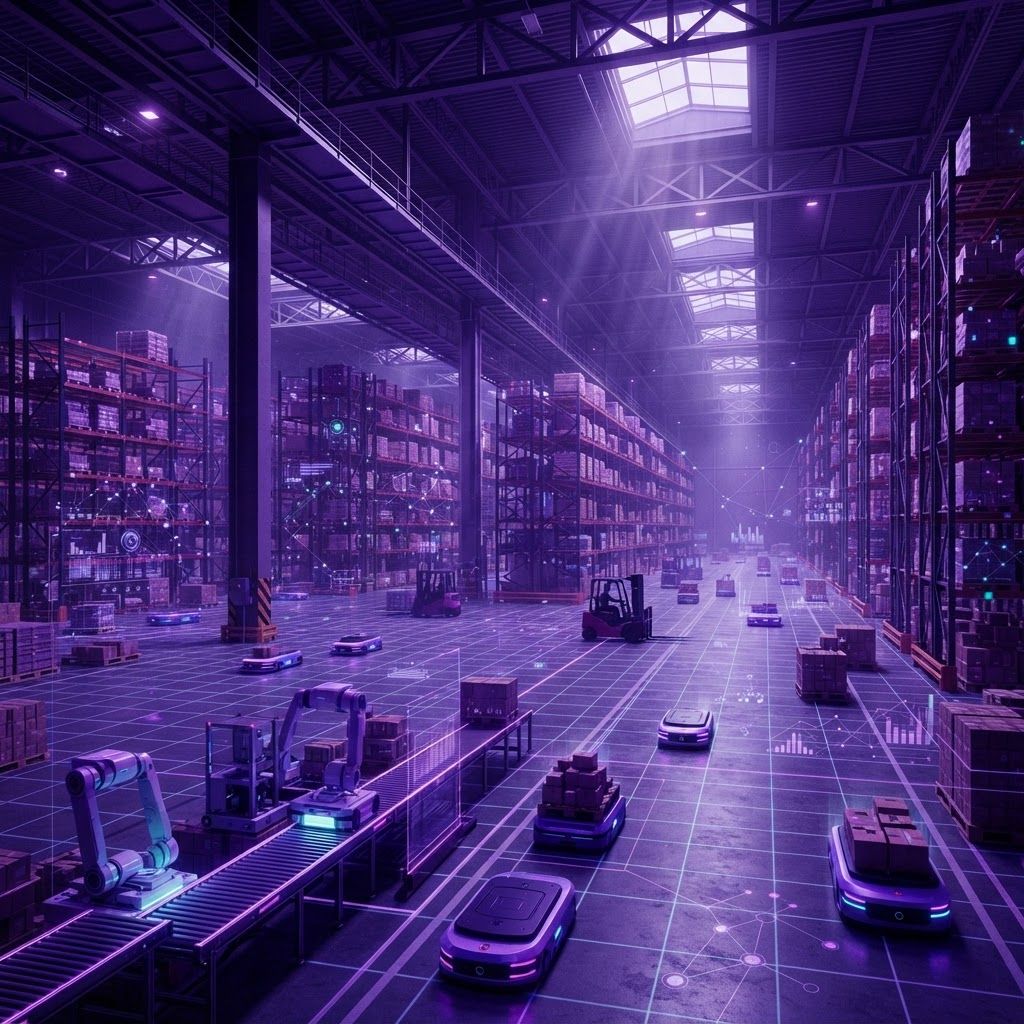
Warehousing is where supply chains absorb uncertainty. Demand is never perfectly predictable, production rarely matches consumption minute by minute, and transportation arrives in batches rather than continuously. Storage smooths all of that. For Eugene businesses, the question is usually not whether inventory must be held, but where it should sit, who should manage it, and how much flexibility the arrangement needs to accommodate seasonal swings.
The Eugene Warehousing Market
The local market is shaped by the region's economic base. Food and beverage producers require refrigerated and frozen capacity with rigorous temperature documentation. Forest products and building materials need high-ceiling and outdoor yard space with heavy-duty handling equipment. Growing consumer brands need pick-and-pack fulfillment rather than pallet storage. And the city's position on the interstate corridor makes it a sensible forward-stocking point for companies serving customers across Oregon without paying metropolitan rates further north.
Ten Warehousing Providers Serving Eugene
1. Cascade Distribution Warehousing
A large multi-tenant facility offering public and contract warehousing with racked pallet positions, floor storage and cross-dock capability. Strong receiving discipline and accurate inventory records make it a dependable default for general dry goods.
2. Willamette Cold Storage
Refrigerated and frozen warehousing with validated temperature zones, continuous monitoring and food safety documentation. Serves regional food processors, beverage producers and distributors where cold chain integrity is a compliance requirement rather than a preference.
3. Emerald Fulfillment Warehouse
An e-commerce focused operation combining storage with pick, pack, kitting and returns processing, integrated with common order platforms. Suited to direct-to-consumer brands that need same-day dispatch without operating their own building.
4. Lane Industrial Storage Solutions
Provides high-bay and heavy-load storage for machinery, steel, building materials and oversized goods, with overhead cranes and outdoor yard space. Manufacturers and construction suppliers use it for staging and project inventory.
5. McKenzie Bonded and Customs Warehousing
Offers bonded storage where imported goods can be held before duties are paid, along with foreign trade zone advisory support. Importers use this to defer duty outlay and to manage goods that may be re-exported.
6. Pacific Northwest Contract Logistics
Dedicated contract warehousing where space, labor and systems are configured around a single client's operation. Appropriate for businesses with volumes large enough to justify an exclusive footprint and specific process requirements.
7. Spencer Butte Self Storage and Business Units
Commercial self-storage units with drive-up access, suitable for small businesses, contractors and seasonal retailers storing equipment, records and overflow stock. The simplest and lowest-commitment option in the market.
8. Rivergate Bulk and Commodity Storage
Handles bulk agricultural and industrial commodities in silos, bins and covered bays, with weighing, blending and load-out services. Connected to both truck and rail movements for outbound distribution.
9. Oregon Records and Document Storage
Secure archival storage for business records, medical files and legal documents with indexed retrieval, scanning services and certified destruction. Regulated industries rely on the chain-of-custody documentation as much as the storage itself.
10. Southtowne Flexible Warehousing Network
Offers short-term and on-demand pallet storage priced by the pallet and by the month with no long-term commitment. Valuable for seasonal overflow, product launches and businesses that cannot forecast their space needs a year ahead.
How Warehousing Is Priced
Public warehousing typically charges a storage rate per pallet or per square foot per month, plus handling charges for receiving and shipping each pallet, plus fees for value-added work such as labeling or repackaging. Contract warehousing generally prices a fixed monthly amount for dedicated space and labor, with variable charges layered on top. Fulfillment operations price per order, per item picked and per shipment, which aligns cost with activity but makes comparison across providers harder. Always model your actual expected volume through each provider's rate card rather than comparing headline rates, because the structure determines the outcome more than any single number.
What to Inspect Before Signing
Visit the facility and look beyond the presentation area. Check whether aisles are clear and racking is undamaged, whether product is labeled and located systematically, and whether staff can retrieve a specific pallet quickly when asked. Confirm the cycle counting program and the historical inventory accuracy figure. Ask about dock capacity and whether trucks routinely wait. Review security, including access control, cameras and alarm monitoring, and confirm fire suppression, insurance coverage and any food safety or quality certifications relevant to your goods. Finally, read the exit terms. The ability to remove inventory promptly at the end of an agreement is a right that should be explicit rather than assumed.
Technology Expectations
A capable warehouse today runs a warehouse management system with barcode scanning at every movement, provides customers with real-time inventory visibility through a portal, and can integrate with commerce and enterprise systems without extensive custom development. Lot and expiration date tracking is essential for food and regulated goods. Ask to see the reporting output during evaluation rather than accepting a description, because the quality of the reports reveals the quality of the underlying data.
Trends in Regional Warehousing
Inventory strategies have shifted toward holding buffer stock nearer to customers, increasing demand for regional space outside the major metropolitan markets. Automation is arriving incrementally through conveyor sortation, pick-to-light systems and autonomous movers rather than wholesale redesign. Sustainability improvements focus on lighting, solar installation and packaging reduction. And flexible, short-commitment space has grown into a distinct market segment, giving smaller businesses access to professional facilities without multi-year leases.
Final Thoughts
Choose a warehouse the way you would choose a business partner, because inventory accuracy and shipping reliability directly shape your customers' experience. Define your volumes and service requirements precisely, tour facilities in person, model total cost across each provider's pricing structure, and insist on transparent reporting. Eugene offers capable options across every segment of this market for businesses that evaluate them carefully.