
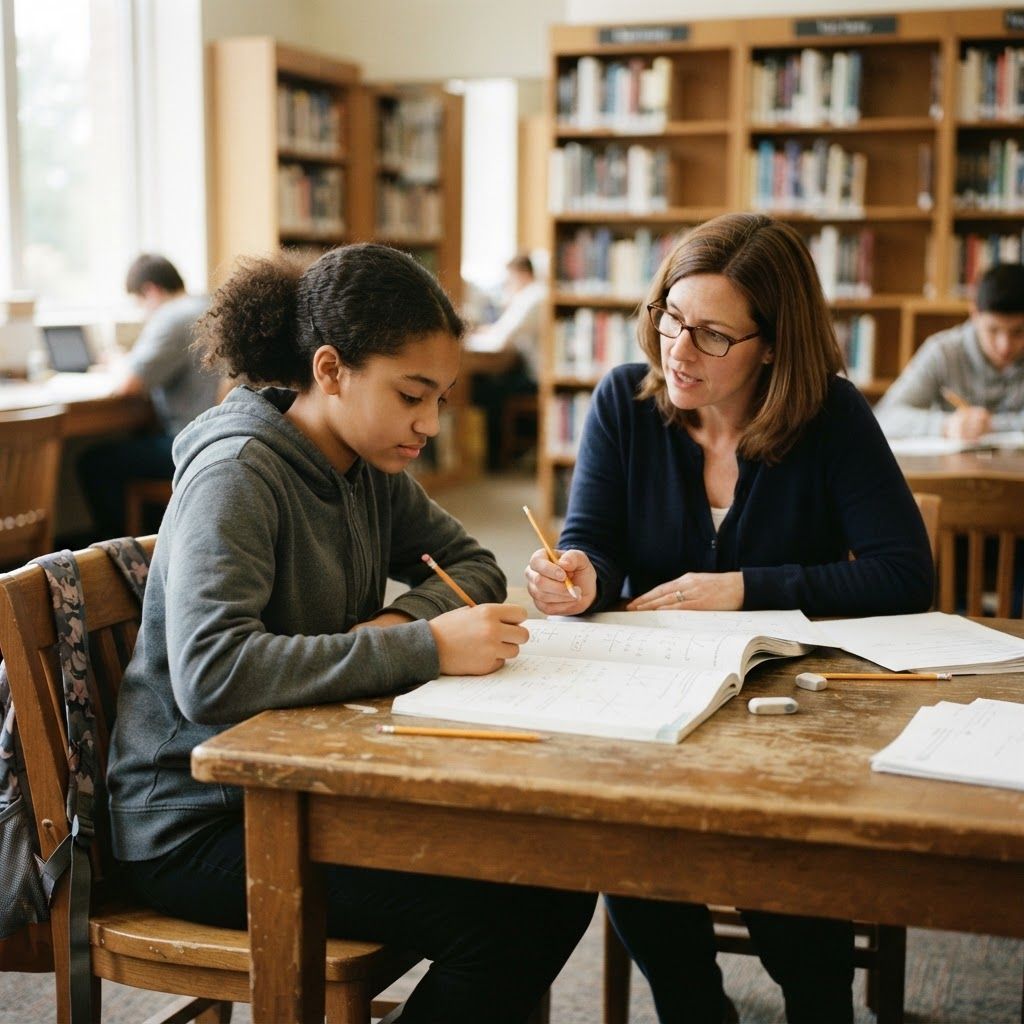
Why Families in Buffalo Seek Tutoring
Demand for tutoring in Western New York comes from several distinct places. Some families are supporting a child through a specific difficulty, often reading in the early grades or algebra in middle school, where falling behind compounds quickly. Others are preparing for competitive admission to Buffalo's criteria-based public schools or private academies, where entrance testing carries real weight. A third group is aiming higher: enrichment for students already performing well who want to accelerate or compete for selective college admission. And a growing number of adult learners need help with high school equivalency examinations, nursing prerequisites, or professional certification.
Those goals require different providers. Confusing remediation with enrichment, or general tutoring with specialized intervention, is the most common and most expensive mistake families make.
Learning Centers and National Providers
National centers offer structured curricula and consistent processes. Kumon uses a daily worksheet method that builds mathematics and reading fluency through repetition, which suits younger students who need automaticity in fundamentals. Mathnasium focuses exclusively on mathematics with diagnostic assessment and individualized learning plans delivered in a small-group center setting. Huntington Learning Center provides diagnostic testing followed by one-to-one instruction across subjects and test preparation. The Tutoring Center and similar franchises offer concentration-focused sessions with rotating subject attention.
Online and hybrid providers including Varsity Tutors, Wyzant, and Tutor.com connect students with individual tutors across nearly any subject, which is particularly useful for advanced or unusual courses where local expertise is thin. Some are accessible free through library partnerships.
University and School-Connected Programs
The University at Buffalo, SUNY Buffalo State University, Canisius University, and SUNY Erie all maintain tutoring and academic support centers for their own students, typically free with enrollment, covering writing, mathematics, sciences, and study skills. These centers are chronically underused; a student paying tuition should exhaust them before hiring outside help.
For younger students, education departments at local colleges often place teacher candidates in supervised tutoring roles, which can provide affordable, well-supervised support. Buffalo Public Schools and area districts also run after-school academic intervention services, and families are frequently unaware that their child qualifies for them at no cost.
Community and Free Resources
The Buffalo and Erie County Public Library system offers homework help, free access to online tutoring platforms, and quiet study space across its branches. Organizations including the Boys and Girls Clubs of Buffalo, Buffalo Urban League, Jericho Road Community Health Center, and various faith-based and neighborhood centers run after-school academic programs, often with volunteer tutors and a strong record of consistency. Say Yes Buffalo has been particularly significant locally, supporting student services and college access citywide.
These programs matter enormously for families who cannot absorb private tutoring rates, and their quality is frequently better than assumed because tutors tend to be long-term volunteers who know the students well.
Specialized Support
Some needs require credentialed specialists rather than general tutors. Students with dyslexia benefit from structured literacy instruction delivered by someone trained in a specific multisensory methodology. Students with attention or executive function challenges often need coaching in planning, organization, and task initiation more than content review. Students with individualized education programs may be entitled to services that a school district must provide, and a parent should understand those rights before paying privately.
Test preparation is also specialized. Preparing for the SAT or ACT, for Advanced Placement examinations, or for the entrance tests used by Buffalo's selective schools involves format-specific strategy alongside content, and a strong general tutor is not automatically a strong test coach.
What to Look For
Begin with diagnosis. Any provider worth hiring will assess before instructing, because tutoring aimed at the wrong gap wastes money. Ask what the assessment consists of and how results shape the plan.
Ask about tutor qualifications and, critically, tutor consistency. A student who sees a different tutor each week loses the relationship and continuity that make tutoring work. Ask about session structure, how progress is measured, and how the tutor communicates with parents and, where appropriate, teachers.
Consider format honestly. One-to-one instruction is most effective and most expensive. Small groups can work well when students are genuinely at similar levels and can motivate each other. Online sessions remove commuting, which matters in a Buffalo winter, but require a student mature enough to stay engaged on screen.
Trends in Tutoring
Artificial intelligence tools have changed the landscape in complicated ways. They provide instant explanation and unlimited practice, which is genuinely useful, but they also make it easy for students to produce work without learning. The best tutors now explicitly teach students how to use these tools to check understanding rather than to bypass it.
Demand for executive function coaching has grown sharply, reflecting a recognition that many academic struggles are organizational rather than intellectual. Hybrid scheduling has become standard, and short intensive sessions before examinations have partly replaced year-long weekly commitments for some families.
Practical Guidance
Set a specific, measurable goal before you start, such as moving from struggling to secure with linear equations, or raising a reading level by a defined amount. Review progress after six to eight weeks and change course if nothing has moved. Keep the student involved in the decision, because a teenager who resents tutoring will not benefit from it regardless of the tutor's quality. And exhaust free school, university, and community resources first; often they are sufficient.
Final Thoughts
Buffalo offers tutoring at every price point, from franchise learning centers to university writing labs to volunteer-run neighborhood programs. Effectiveness depends far less on brand than on accurate diagnosis, tutor consistency, and a clear goal. Define the problem precisely, use the free resources available, and hire specialized help only where the need is genuinely specialized.