
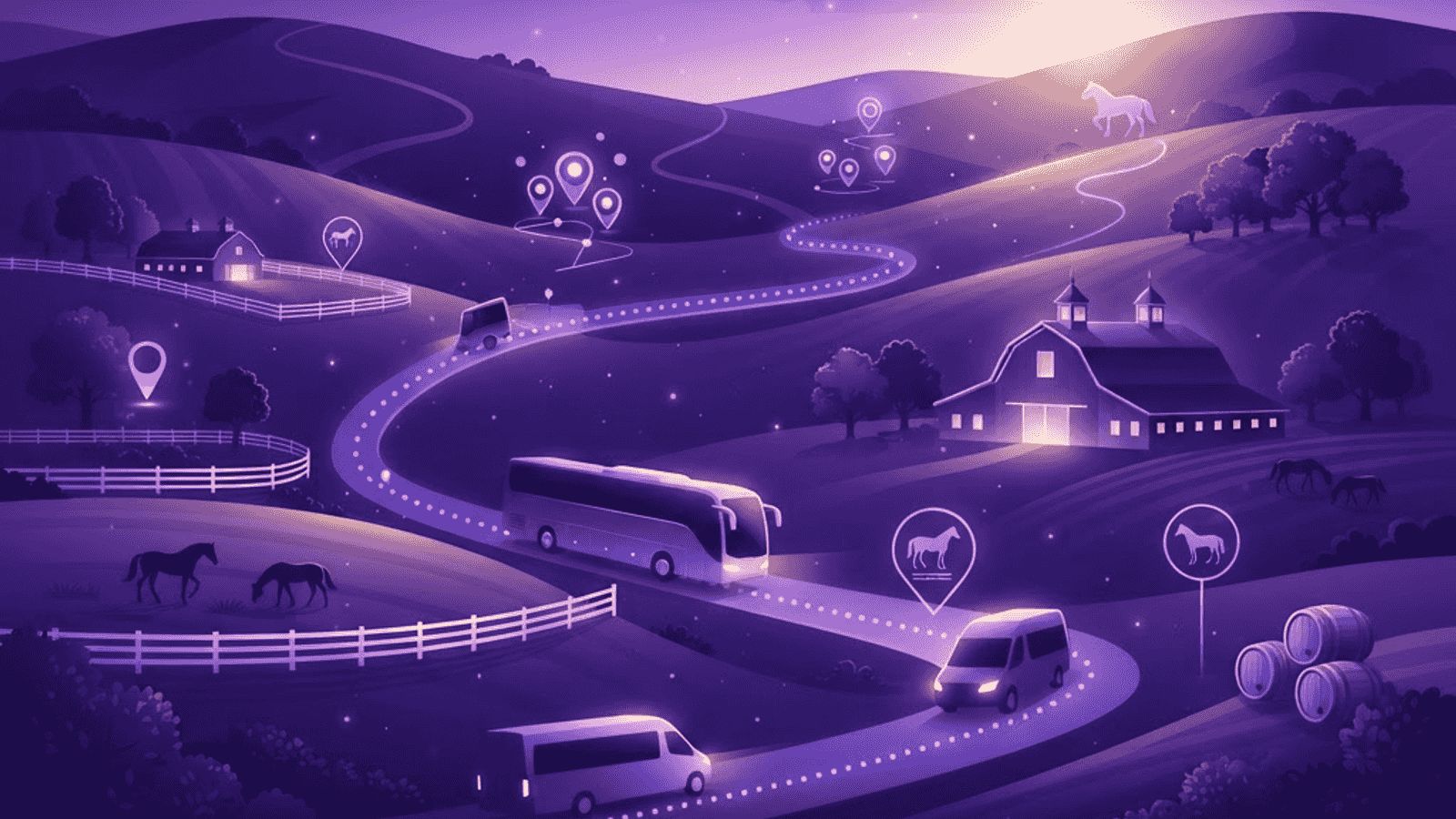
What Makes Lexington a Tour Destination
Few American cities of comparable size support as robust a guided tour industry as Lexington, and the reason is access. The two headline attractions here, working thoroughbred farms and operating bourbon distilleries, are largely inaccessible to visitors who simply drive up. Farms are private businesses with valuable animals, biosecurity protocols, and staff schedules built around training rather than tourism. Distilleries offer tours but book out and are spread across a wide rural geography with no practical transit connections.
Professional operators solve both problems. They hold standing relationships with farms that permit visits, they employ guides who understand pedigrees and racing history well enough to make a paddock meaningful, and they provide drivers, which matters a great deal on a bourbon itinerary where tasting is the point.
The Main Categories of Local Tours
Horse farm tours are the signature Lexington experience, typically running two to four hours and visiting one to three farms depending on the operator. Serious versions include stallion barns, broodmare paddocks in foaling season, training tracks in early morning, and sometimes Keeneland or the Kentucky Horse Park.
Bourbon tours cover distilleries across a wide arc from Frankfort and Versailles to Lawrenceburg, Loretto, and Bardstown. Half-day itineraries generally reach two distilleries, full-day itineraries three, and pushing beyond that produces palate fatigue rather than value.
Beyond those, operators run historic downtown walking tours, culinary and Distillery District experiences, cycling and outdoor tours through the surrounding countryside, and combination itineraries pairing a farm visit with a distillery.
The Top 10 Tour Operators in Lexington
1. Horse Country Inc.
Represents the farm-access consortium model, a cooperative approach where participating farms and equine businesses offer scheduled tours through a shared booking framework. This is the most direct route to visiting genuine working operations, including breeding farms, equine hospitals, and feed operations.
2. Thoroughbred Heritage Horse Farm Tours
A dedicated horse farm touring operator running small-group vehicle tours with guides who bring deep pedigree and racing knowledge. Best suited to visitors who want substance rather than a photo stop, including families and racing enthusiasts.
3. Mint Julep Experiences
Represents the regional bourbon touring category, operating scheduled and private itineraries from Lexington to distilleries across Central Kentucky. Strength lies in logistics, since coordinating multiple distillery time slots across long drives is genuinely difficult to do independently.
4. Central Kentucky Tours
A broad-portfolio local operator offering horse farm, bourbon, and combination itineraries. Operators of this type are convenient for visitors with one available day who want a taste of both signature experiences rather than depth in either.
5. Kentucky Horse Park Guided Experiences
The attraction-based model, where guided programming happens on a single large site. Advantages include predictable scheduling, weather contingencies, museum content, and family-friendly pacing, all without long rural drives.
6. Bluegrass Bourbon Tours
A private-charter oriented bourbon operator focused on customized itineraries for small groups, corporate outings, and special occasions. Private charter is the right choice for groups that want to select their own distilleries and control pacing.
7. Lexington Walking Tours
Covers downtown history on foot, including the Gratz Park district, Mary Todd Lincoln connections, Cheapside history, and the architecture of the historic core. Inexpensive, low-commitment, and a genuinely good introduction on a first afternoon in town.
8. Distillery District Food and Drink Tours
Culinary touring built around Lexington repurposed industrial district, combining craft distilleries and breweries with local restaurants. Appeals to visitors more interested in contemporary Lexington than in historic narrative.
9. Pedal Power Bluegrass Cycling Tours
Active touring on the rural roads around Fayette County, where the combination of rolling terrain, stone walls, and horse farms makes for exceptional riding. Operators supply bikes, support vehicles, and route knowledge that keeps groups off high-traffic corridors.
10. Kentucky Custom Travel and Charters
The full-service ground operator category, providing motorcoach and van charters with guiding for conventions, wedding groups, alumni events, and incentive travel. This is who large groups actually need, since capacity and insured commercial transport are the binding constraints.
Planning Around the Calendar
Timing shapes the experience substantially. Foaling season, roughly February through May, is when farms have mares and newborn foals in paddocks, which is the most compelling time for a farm tour. Keeneland race meets in April and October transform the city and book out both lodging and tours well in advance.
Summer brings heat and humidity along with reliable availability. Fall offers ideal weather, harvest activity, and strong distillery programming. Winter is quietest, with some farms limiting access, though bourbon touring runs year-round and pricing is friendlier.
Practical Considerations
Confirm group size before booking, since a fourteen-passenger van and a fifty-passenger coach produce very different experiences at a stallion barn. Ask specifically which farms or distilleries are included and whether they are confirmed or aspirational, because access varies by day.
Check age policies, as many farms restrict young children for safety reasons. Wear closed-toe shoes suitable for gravel and grass. Understand biosecurity rules, which sometimes prohibit visiting multiple farms in a single day or require visitors to avoid contact with horses. For bourbon tours, verify what tastings are included versus paid separately, and confirm the operator provides a driver rather than expecting one member of your group to abstain.
Getting the Most From a Tour
The best guided experiences in Lexington reward a little preparation. Reading briefly about thoroughbred breeding economics, or about the difference between bourbon and rye and what a mash bill actually is, converts a pleasant outing into a genuinely interesting one. Ask questions, because guides here are usually industry-connected and will go considerably deeper than the script if invited.