
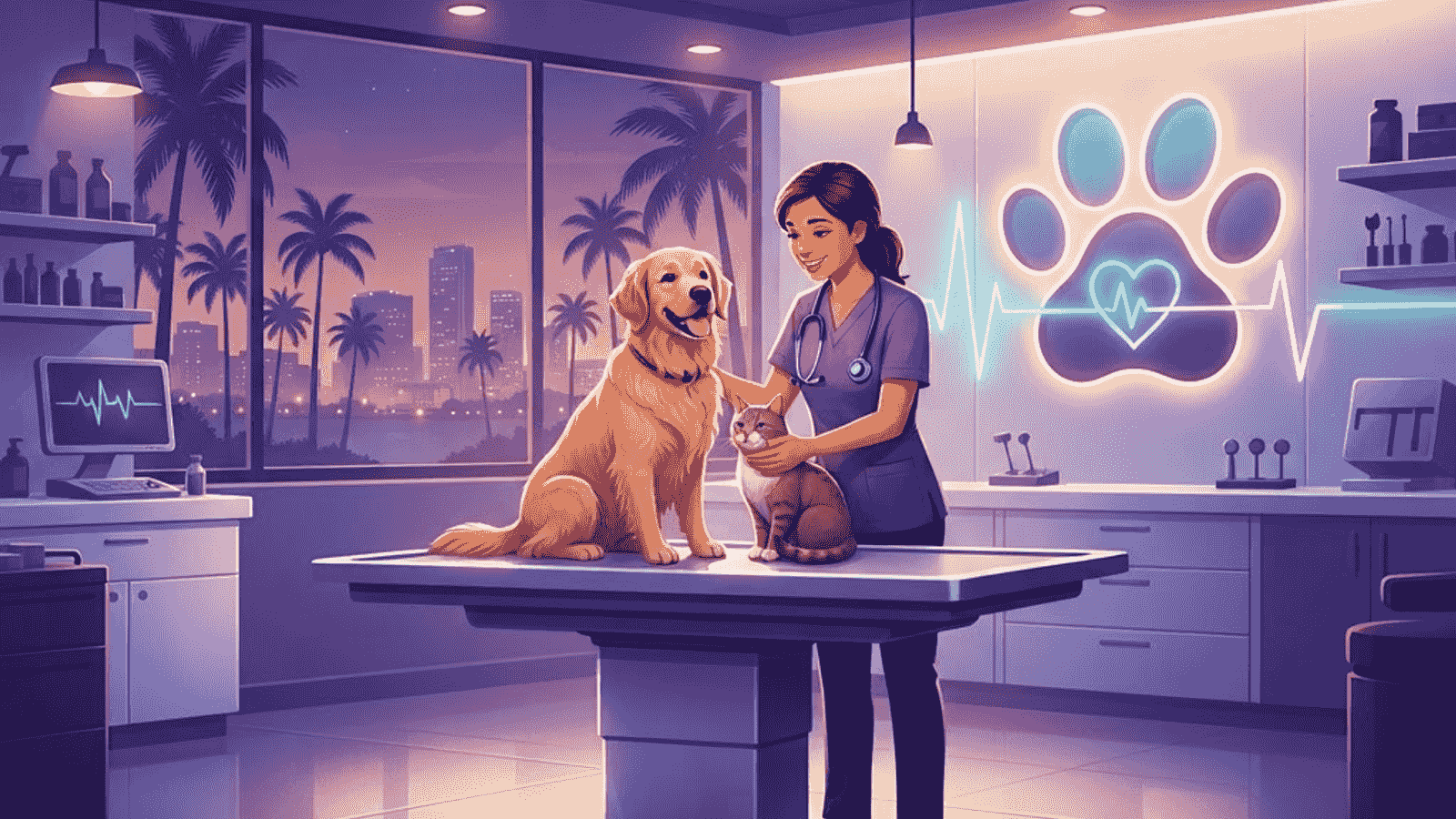
Veterinary Care in a Subtropical Climate
Pet ownership in Central Florida comes with conditions that differ meaningfully from most of the country, and good veterinary care here reflects that. Fleas, ticks and mosquitoes are active year-round rather than seasonally, which makes continuous parasite prevention essential rather than optional. Heartworm prevalence in Florida is among the highest in the nation. Heat and humidity create genuine risk of heat stroke, particularly for brachycephalic breeds such as bulldogs and pugs that are popular locally. Water access brings exposure to leptospirosis and, in some areas, encounters with alligators and toads that are toxic to dogs.
Orlando's veterinary market has developed accordingly, with strong preventive medicine emphasis, well-established emergency and specialty referral centres, and a substantial exotic animal practice segment reflecting the region's unusually high rate of reptile, bird and small mammal ownership.
Choosing a Veterinary Practice
Accreditation by the American Animal Hospital Association is a useful signal, since it is voluntary and involves evaluation across roughly nine hundred standards covering anaesthesia, pain management, surgery, dentistry, record keeping and facility standards. Only a minority of practices hold it.
Beyond accreditation, consider practical factors. Does the practice have in-house laboratory and digital radiography, which affects how quickly urgent cases are diagnosed? What are the after-hours arrangements, and which emergency hospital do they refer to? Is anaesthesia monitored by a dedicated technician with intubation and intravenous fluid support as standard, particularly for dental procedures? And how does the practice handle cost discussion, since a veterinarian who presents tiered options rather than a single expensive plan is generally easier to work with over a pet's lifetime.
1. Orlando Veterinary Hospital Practices with AAHA Accreditation
Accredited general practices across the metro provide comprehensive wellness care, dentistry, soft tissue surgery and internal medicine with standards independently verified. For routine care over a pet's life, an accredited general practice with stable staffing offers the continuity that catches gradual changes in bloodwork and body condition.
2. UF Veterinary Hospital at Ocala and Referral Partners
The University of Florida's veterinary teaching hospital serves as the region's academic referral centre for the most complex cases, including advanced imaging, oncology, cardiology, neurology and complicated surgery. Many Orlando practices maintain established referral relationships, and for a difficult diagnosis the academic option is often the definitive one.
3. Central Florida Veterinary Specialists
Specialty referral hospitals in the metro employ board-certified veterinary surgeons, internists, cardiologists, oncologists, ophthalmologists and neurologists, with computed tomography and magnetic resonance imaging on site. These centres handle orthopaedic reconstruction, chemotherapy protocols and complex internal medicine that general practices appropriately refer out.
4. Emergency and Critical Care Animal Hospitals
Around-the-clock emergency hospitals across Orlando, Winter Park and the southwest corridor provide overnight critical care, blood transfusion capability, emergency surgery and intensive monitoring. Knowing which facility you would use, and roughly how long it takes to reach, before an emergency occurs is one of the more valuable pieces of preparation a pet owner can do.
5. Winter Park and College Park Neighbourhood Practices
Long-established neighbourhood clinics in the older Orlando suburbs are known for continuity, with veterinarians who often care for successive pets in the same family across decades. Appointment times tend to be longer and the relationship more personal, which matters considerably for anxious animals and for end-of-life decision making.
6. Lake Nona and Suburban Veterinary Centres
Newer practices serving Lake Nona, Winter Garden, Horizon West and Oviedo tend to feature modern facilities, digital record access, online pharmacy integration and increasingly telehealth follow-up. For growing families in these fast-developing areas, proximity and convenient scheduling are genuine advantages.
7. Exotic and Avian Veterinary Practices
Central Florida has an unusually high concentration of reptile, bird, rabbit and small mammal owners, and specialised exotic practices serve them. This is genuinely different medicine, requiring species-specific anaesthesia protocols, husbandry expertise and diagnostic knowledge that general small animal practices do not hold. For any non-cat, non-dog pet, seeking an exotic specialist is strongly advisable.
8. Low-Cost Clinics and Humane Society Veterinary Services
Nonprofit and humane society clinics across Orange and Osceola counties provide vaccinations, spay and neuter surgery, microchipping and basic wellness care at substantially reduced cost. These services materially improve regional pet health outcomes and are an important resource for households where full-price veterinary care would otherwise mean no care at all.
9. Mobile and House-Call Veterinary Services
Mobile veterinarians serving the metro perform wellness examinations, vaccinations, bloodwork and in-home end-of-life care. For cats that experience severe transport stress, multi-pet households, elderly owners without transport, and families choosing home euthanasia, the house-call model solves a real problem and reduces animal anxiety considerably.
10. Veterinary Dentistry and Dedicated Dental Services
Dental disease is the most common diagnosed condition in adult dogs and cats and is substantially undertreated. Practices offering full dental radiography under anaesthesia, periodontal charting and extraction with pain management deliver something that non-anaesthetic teeth cleaning cannot, since disease below the gum line is invisible without imaging.
Preventive Care Specific to Florida
Year-round heartworm prevention is essential here, not seasonal, and annual testing should continue even with consistent prevention. Continuous flea and tick control prevents both dermatitis and tick-borne disease. Discuss leptospirosis vaccination if your dog has access to standing water or wildlife. Never leave an animal in a parked vehicle, since interior temperatures become lethal within minutes in Florida conditions, and exercise dogs in the early morning or evening to avoid both heat stroke and pavement burns.
Two additional local considerations deserve attention. Cane toads are present across the metro and their secretions are rapidly toxic to dogs, so recognising the symptoms and knowing to rinse the mouth immediately while heading to a veterinarian can be lifesaving. And every pet should be microchipped with current registration details, because hurricane displacement is the single largest cause of permanent pet loss in Florida.