
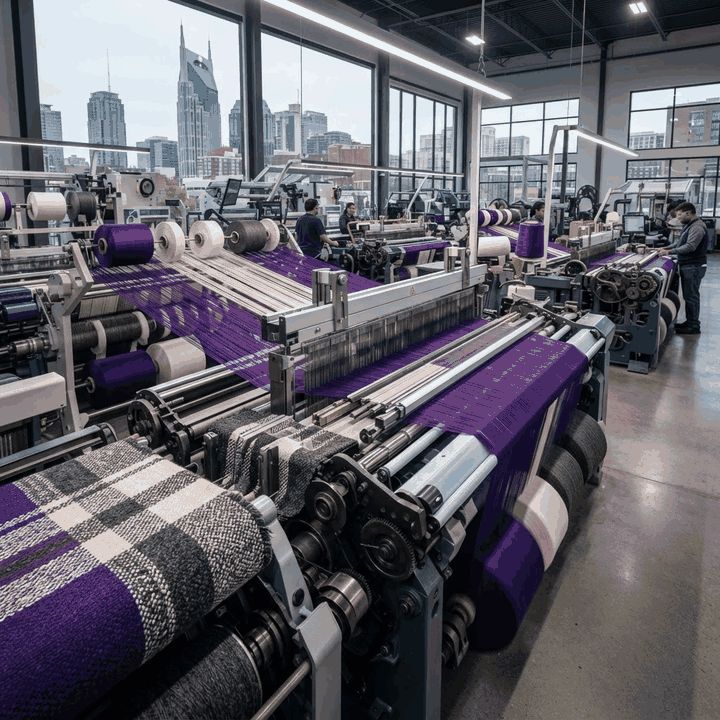
Textile and Apparel Manufacturing Near Nashville
Nashville's creative economy, healthcare sector, hospitality industry, and growing consumer-brand community all create demand for sewn products and textiles. The region is not a single concentrated mill town; instead, its supply network stretches across Middle Tennessee and neighboring Southeastern manufacturing centers. Buyers may need cut-and-sew production, uniforms, knitted fabric, technical textiles, dyeing, finishing, product development, or scalable sourcing. No one manufacturer excels at every category.
The companies below include local and statewide specialists as well as major manufacturers relevant to Nashville procurement teams. Capabilities and minimum orders change, so brands should verify current machinery, certifications, capacity, lead times, and material sourcing before committing production.
1. Omega Apparel
Omega Apparel, based in Middle Tennessee, is known for manufacturing military and government apparel. Its experience with demanding specifications, documentation, quality systems, and domestic production distinguishes it from fashion-only sewing operations. Brands that need structured garments, uniforms, or reliable compliance processes can learn from this disciplined manufacturing model. Prospective customers should confirm whether current programs and capacity fit their product category.
2. Volunteer Knitwear
Volunteer Knitwear is a Tennessee apparel manufacturer with experience producing knit garments. Domestic knitwear capability can shorten supply chains, improve communication, and make quality review easier for Nashville brands. It is especially relevant to companies developing T-shirts, fleece products, or casual apparel. Buyers should arrive with clear tech packs, graded patterns, approved fabric, labeling requirements, and realistic volume forecasts.
3. Performance Manufacturing
Performance Manufacturing provides cut-and-sew and apparel production capabilities in Tennessee. Contract manufacturers of this type can help turn a developed design into repeatable production, but success depends on manufacturing-ready specifications. Nashville entrepreneurs should distinguish product development from bulk sewing and ask whether patternmaking, samples, sourcing, cutting, finishing, packing, and fulfillment are included.
4. The OnPoint Manufacturing Network
OnPoint Manufacturing has been associated with technology-enabled, on-demand apparel production in the Nashville area. The model addresses a common industry challenge: brands often want smaller, more responsive production runs instead of large overseas commitments. Digital workflows and made-to-order thinking can reduce inventory risk, although buyers should carefully evaluate unit economics, available product types, current operating capacity, and integration requirements.
5. Aladdin Industries
Aladdin Industries is a historic Nashville name associated with insulated food and beverage products and manufacturing innovation. While its corporate evolution makes it different from a conventional fabric mill, the brand's legacy demonstrates Nashville's connection to material engineering and consumer-product production. Companies studying local manufacturing history can draw lessons from its focus on functional design, durable materials, and mass-market usability.
6. Precision Fabrics Group
Precision Fabrics Group manufactures engineered woven and nonwoven materials for specialized applications. Technical textile partners are important when performance requirements involve filtration, protection, healthcare, industrial uses, or controlled physical properties. Nashville's healthcare concentration makes advanced fabrics particularly relevant. Procurement teams should ask for test methods, certification evidence, traceability, tolerances, and change-control procedures.
7. Glen Raven
Glen Raven is a major Southeastern textile company recognized for performance fabrics used in outdoor, marine, shade, and industrial applications. Its long history in fabric engineering illustrates the advantages of established research, testing, and brand recognition. Nashville designers working on hospitality, outdoor living, awnings, or durable furnishings may consider materials from Glen Raven's portfolio through appropriate distribution and fabrication channels.
8. Milliken & Company
Milliken manufactures textiles and other materials for commercial, industrial, flooring, protective, and performance applications. Its research-driven approach is a differentiator for customers that need more than visual appeal. Material durability, flame resistance, moisture management, cleanability, and environmental attributes may all matter in Nashville's healthcare, hotel, entertainment, and commercial-interior projects.
9. Standard Textile
Standard Textile supplies textile products and systems for healthcare and hospitality environments. That specialization is highly relevant to Nashville, where hospitals, senior-care organizations, hotels, and tourism businesses represent major demand. Institutional buyers should evaluate lifecycle performance, laundering efficiency, infection-control considerations, replacement rates, and supply consistency rather than choosing linens on initial price alone.
10. Mount Vernon Mills
Mount Vernon Mills is a diversified American textile manufacturer producing denim, workwear fabrics, technical materials, and other textile products. It can be relevant to Nashville brands and industrial buyers seeking domestic fabric capability at scale. As with any large mill relationship, material minimums, finishing options, color standards, sampling timelines, and distributor access should be discussed early.
How Nashville Brands Should Select a Manufacturer
Begin with a complete technical package: drawings, measurements, tolerances, construction details, bill of materials, color references, labels, packaging, and testing standards. Request a sample and then a preproduction sample before bulk manufacturing. Ask which work is performed in-house and which processes are subcontracted. A low quote can become expensive if it excludes fabric, markers, cutting, trim application, inspection, freight, or rework.
Domestic production can offer faster communication, smaller runs, and improved visibility, but it is not automatically the best fit for every product. Match complexity and volume to the factory's equipment and workforce. Visit when possible, review quality records, and discuss forecast changes honestly. Nashville companies that treat manufacturers as long-term operational partners are more likely to achieve consistent quality, responsible growth, and products that reflect the city's strong creative identity.