
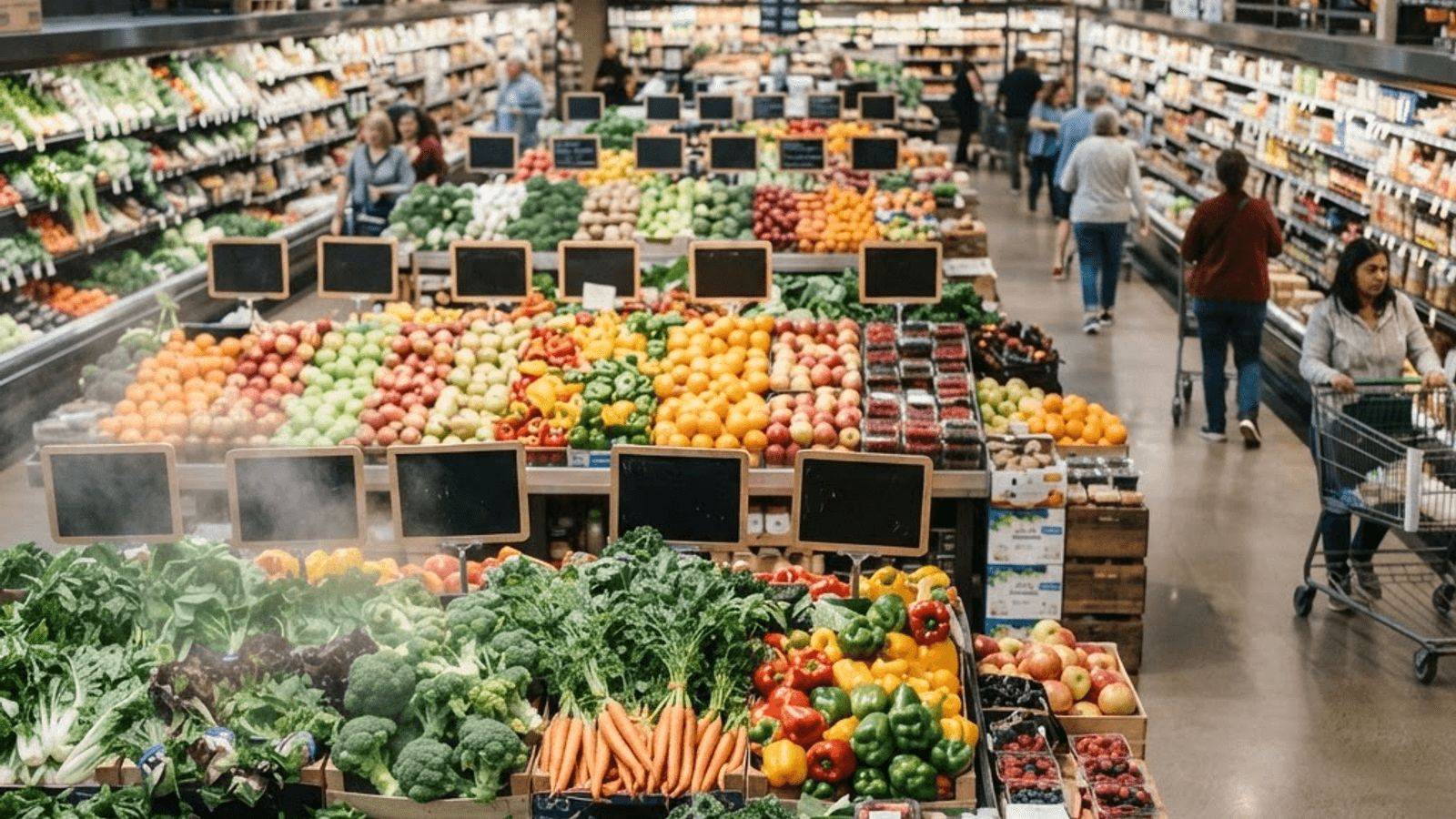
A Grocery Market With Unusual Competitive Balance
Most American metros are dominated by one or two grocery operators. St. Louis is not one of them. The market supports a fiercely loyal regional chain, several national conventional operators, hard discounters, warehouse clubs, natural foods specialists, and an exceptional network of international grocers. The result is that St. Louis households routinely shop three or four banners in a given month, splitting trips by category rather than committing to a single store.
That competition produces measurable benefits. Grocery price indices consistently place St. Louis below the national average for a standard basket, and produce quality at mid-tier stores here often exceeds what comparable stores stock in higher-cost markets. For shoppers willing to be strategic, the metro offers real leverage.
How to Evaluate a Supermarket Beyond Price
Price per unit is the obvious metric, but it is rarely the deciding one. Produce turnover matters more, because a store that sells through inventory quickly delivers fresher fruit at the same price. Meat department capability is another differentiator; stores with in-house butchers who will cut to order, grind fresh, and source whole primals give home cooks options that pre-packaged case-ready programs cannot.
Then consider prepared foods, private-label quality, pharmacy and clinic integration, allergen and specialty diet coverage, and the practical realities of parking, checkout throughput, and pickup or delivery reliability. A store that saves you fifteen minutes every week has real value even if its basket runs slightly higher.
The Ten Best Supermarket Chains Serving St. Louis
1. Schnucks. The hometown champion and the market’s default answer. Family-founded in St. Louis and still headquartered here, Schnucks combines broad store coverage with genuinely strong service departments, a well-regarded bakery and floral program, an in-house pharmacy network, and community investment that local shoppers notice. Its larger formats carry impressive specialty cheese, seafood, and international sections, and its loyalty and fuel rewards programs are competitive.
2. Dierbergs. The premium local operator and, for many St. Louisans, the quality benchmark. Dierbergs is known for exceptional produce standards, a meat department that behaves like an old-fashioned butcher shop, and a prepared foods and catering operation that anchors countless local gatherings. Its cooking school and recipe programming build a customer relationship that goes well beyond transactions.
3. Aldi. The efficiency leader. Aldi’s private-label-first model, compact footprint, and lean labor structure produce staple prices that conventional supermarkets cannot match, and its quality on dairy, baking goods, olive oil, and frozen items has become genuinely good rather than merely acceptable. Its rotating specialty finds create real shopper enthusiasm.
4. Costco Wholesale. The bulk value and quality combination. Costco’s Kirkland Signature line frequently outperforms national brands, its meat and seafood grading standards are high, and its pharmacy, optical, tire, and fuel operations make membership pay for itself for larger households. The tradeoff is package size and a limited SKU count.
5. Sam’s Club. The other warehouse option, differentiated by broader metro coverage and a strong app-based scan-and-go checkout that eliminates the club shopping’s biggest friction point. Competitive on fuel, bakery, and household consumables.
6. Walmart Supercenter and Neighborhood Market. Unmatched price coverage across the full basket and unmatched geographic reach, including areas of the metro underserved by conventional grocers. Its fresh departments have improved substantially, and its grocery pickup infrastructure is among the most reliable in the region.
7. Trader Joe’s. A specialty destination rather than a full-shop store. Trader Joe’s wins on curated private label, frozen prepared foods, snacks, cheese, and wine at prices that undercut natural-foods competitors. St. Louis locations see heavy traffic, and shoppers typically pair a Trader Joe’s run with a conventional store trip.
8. Whole Foods Market. The organic and specialty leader for standards-driven shoppers. Its quality criteria, prepared foods bars, supplement selection, and butcher and seafood counters justify its pricing for specific categories, and Prime member discounts have narrowed the premium meaningfully.
9. Global Foods Market and the international grocery network. One of the genuine treasures of St. Louis food retail. Global Foods in Kirkwood, along with a deep bench of Asian, Bosnian, Latin American, Middle Eastern, and Indian grocers across the metro, offers produce, spices, rice, noodles, and proteins at prices and varieties conventional stores do not carry. For anyone cooking beyond standard American recipes, these stores are not optional.
10. Straub’s Markets. The small-format luxury grocer, serving Clayton, Webster Groves, and the Central West End with a focus on prime meats, prepared entrees, fine wine, and personal service. It is not a weekly-basket store for most households, but for a special dinner or a hostess gift it is unmatched in the region.
Industry Trends Shaping Local Grocery
Private label continues to gain share aggressively, and the quality gap with national brands has narrowed to the point where store brands now drive store choice rather than merely reduce a bill. Digital coupon personalization has replaced the printed circular for most shoppers under fifty, which means loading offers to a loyalty account is now a required step to access advertised pricing.
Online ordering has stabilized into a two-track system: pickup, which most St. Louis chains execute well and cheaply, and delivery, which carries fees and substitution risk. Meanwhile prepared meal solutions have become the fastest-growing department in conventional supermarkets as households treat the grocery store as a competitor to restaurants rather than only to other grocers.
A Practical St. Louis Shopping Strategy
The most cost-effective approach in this market is deliberate splitting. Buy staples, dairy, and baking goods at Aldi; buy proteins in bulk at a warehouse club and portion at home; buy produce and service-counter items at Schnucks or Dierbergs based on which is closer; buy specialty ingredients at Global Foods or an ethnic market; and use Trader Joe’s for frozen and snack items. Households that do this routinely report reducing grocery spending by a meaningful margin without lowering quality.
Beyond that, shop with a list built around the weekly ad, learn your preferred store’s markdown timing on meat and bakery, and keep a running price book on the twenty items you buy most. Knowing what a good price actually is turns out to be the highest-return grocery skill.
Conclusion
St. Louis grocery shoppers benefit from a rare combination of a strong local operator, aggressive national competition, and one of the better international grocery scenes in the Midwest. Schnucks and Dierbergs anchor the market on service and quality, Aldi and Walmart anchor it on price, and the specialty players fill in everything else. Choose based on the trip rather than out of habit, and the metro’s competitive intensity works entirely in your favor.