
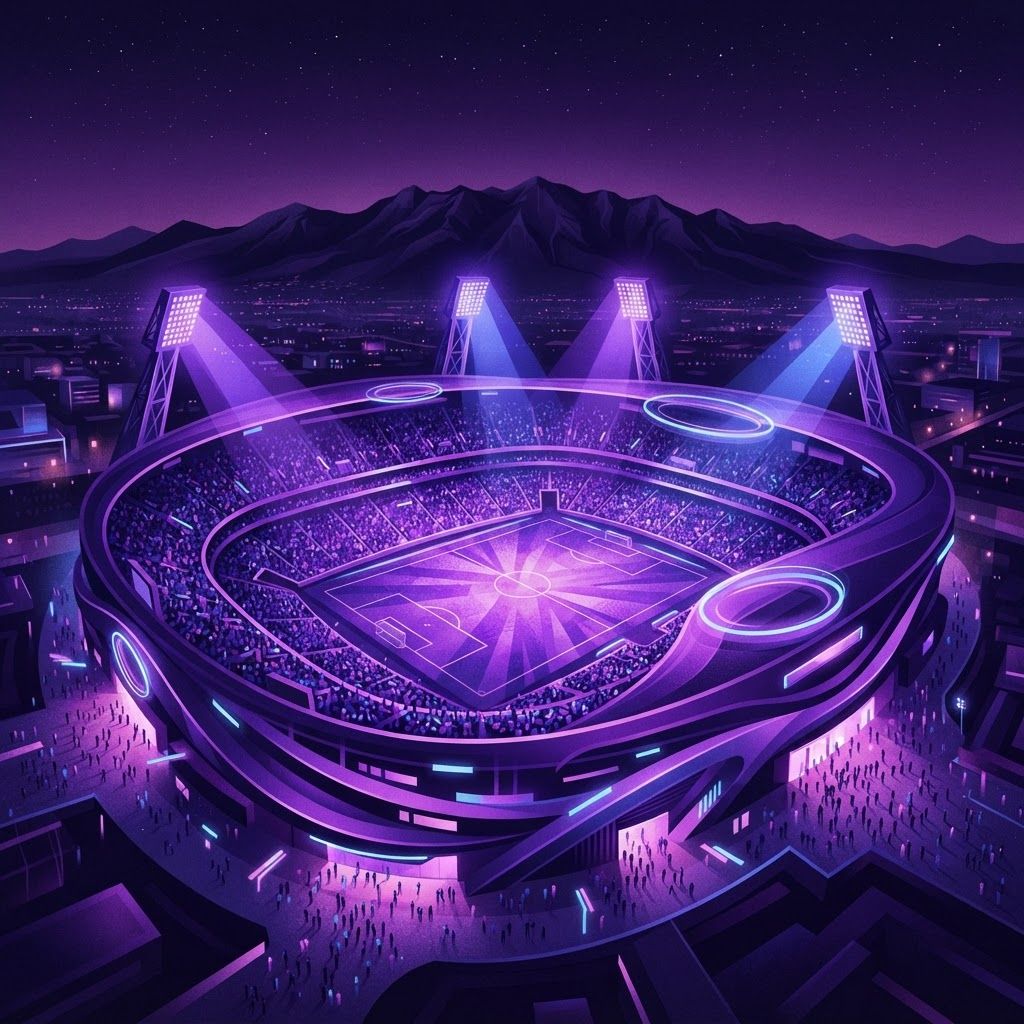
A Sports City Shaped by the Olympics
Salt Lake City's venue landscape cannot be understood without the 2002 Winter Olympics. Hosting the Games triggered a wave of construction and renovation that left the region with world class facilities it would not otherwise have built, and crucially, most of those venues remain in active use rather than sitting idle as monuments. Speed skating ovals, ski jumps, sliding tracks, and expanded stadiums all continue hosting competition, training, and public recreation more than two decades later.
Layered onto that Olympic infrastructure is a genuine multi sport culture. The valley supports professional basketball, Major League Soccer, minor league baseball and hockey, Division I collegiate athletics across multiple sports, and a deep amateur and youth scene. The proximity of the Wasatch Range means winter sport venues sit within a short drive of downtown, an unusual convenience among host cities.
Ten Notable Stadiums and Arenas
1. Rice Eccles Stadium. Home to University of Utah football and the site of the 2002 Olympic opening and closing ceremonies. Set against the foothills with mountain views from the upper decks, it has undergone substantial expansion including a south end zone rebuild that added seating, premium areas, and a fully enclosed bowl feel. The atmosphere on a fall Saturday is among the most intense in the Mountain West region.
2. Delta Center. The downtown arena that anchors professional basketball in Utah and now also hosts NHL hockey, along with concerts and large events. Its central location, transit access, and steep seating geometry produce notably strong acoustics and crowd noise. Ongoing renovations have modernized concourses, premium seating, and food offerings.
3. America First Field. The purpose built soccer stadium in Sandy serving Major League Soccer. Designed specifically for football rather than adapted from another sport, it offers close sightlines, a dedicated supporters section, and a mountain backdrop that makes it one of the more scenic venues in the league.
4. Jon M. Huntsman Center. The distinctive domed arena on the University of Utah campus hosting basketball, gymnastics, and volleyball. Its bowl design pushes crowd noise downward, and it has a particular reputation as a gymnastics venue where attendance regularly exceeds what the sport draws almost anywhere else.
5. Utah Olympic Oval. Located in Kearns and known as the fastest ice on earth due to its altitude and ice engineering. Numerous speed skating world records have been set here. Beyond elite competition it operates as a public facility with skating, hockey, and a running track, making Olympic infrastructure genuinely accessible.
6. Utah Olympic Park. Situated near Park City, this venue holds ski jumps, a bobsled and luge track, and aerial training facilities. It functions as a national training center while also offering public bobsled rides, zip lines, and tours, which keeps it economically viable and publicly relevant.
7. Smith's Ballpark. The longtime home of minor league baseball in Salt Lake City, sitting just south of downtown with mountain views beyond the outfield. Its intimate scale and affordable ticketing make it a family staple during summer, and its future has been part of broader discussion about baseball's footprint in the valley.
8. Maverik Center. The West Valley City arena that hosted Olympic ice hockey and now serves minor league hockey, concerts, and community events. Its size sits usefully between a college gym and a major arena, making it viable for mid scale touring acts and tournaments.
9. Ute Field and Eccles Football Center Complex. The training and practice infrastructure supporting University of Utah athletics. While not a spectator stadium in the traditional sense, the complex represents the substantial facility investment that underpins competitive collegiate programs and is often included in campus athletic tours.
10. Zions Bank Stadium. A smaller soccer specific venue within a larger training complex in Herriman, hosting professional reserve, women's, and youth competition. Its compact scale creates an unusually close viewing experience and it plays an important role in developmental soccer across the region.
What Makes These Venues Work
Several shared characteristics stand out. Sightlines in the valley's newer venues are genuinely good, largely because most were purpose built for a specific sport rather than converted. Mountain views function as an architectural asset that no other market can replicate, and designers have increasingly framed rather than blocked them.
Altitude is a recurring performance factor. At elevations above four thousand feet the thinner air affects ball flight, endurance demands, and in the case of the Olympic Oval, ice friction and skating speed. Visiting teams and athletes routinely account for it.
Transit and access have improved considerably. Light rail service connects downtown venues and reaches the soccer stadium in Sandy, which reduces parking pressure on event days and makes attending games without a car realistic, something many comparable markets still lack.
Attending Events Practically
Weather planning matters more here than in many markets. Fall football games can begin in warm sun and end near freezing after sunset, so layered clothing is genuinely necessary rather than cautious. Sun exposure at altitude is intense during afternoon events, making sunscreen advisable even in cooler temperatures.
For downtown venues, arriving by light rail generally beats driving, particularly when multiple events overlap. At the mountain venues near Park City, checking canyon road conditions during winter is essential, since storms can change travel time dramatically.
Ticket demand varies substantially by sport. Collegiate football and professional basketball draw the largest crowds and require advance planning, while minor league baseball and hockey typically offer day of availability and considerably lower prices, which makes them excellent options for families.
Final Thoughts
Salt Lake City's stadium landscape reflects an unusual combination of Olympic legacy, professional franchise investment, and strong collegiate tradition, all packed into a compact valley with mountains as a constant backdrop. The venues range from a downtown arena hosting two professional leagues to an Olympic oval that still produces world records, and nearly all of them remain genuinely accessible to the public. For sports minded residents and visitors alike, few metropolitan areas of comparable size offer this much variety within such a short radius.