
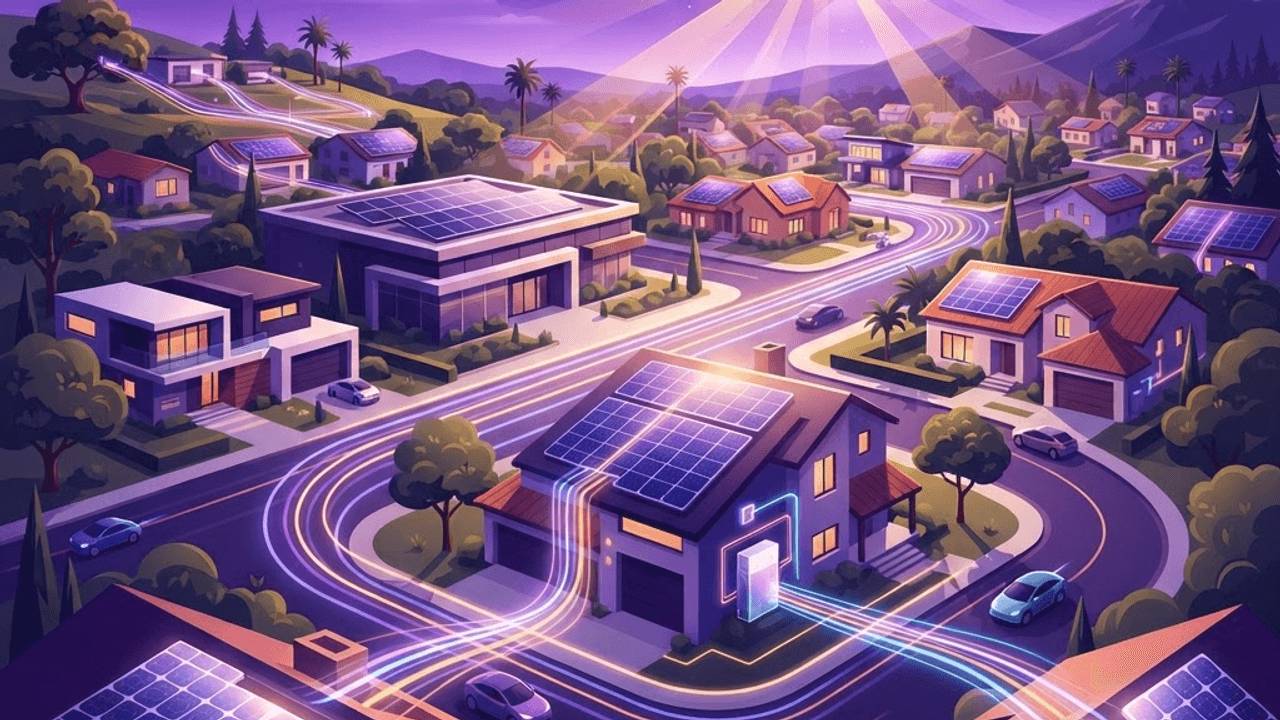
Why Solar Makes Sense in Sunnyvale
Sunnyvale earned its name honestly. The city receives abundant sunshine across most of the year, with long dry summers and relatively mild winters that together produce strong annual solar generation. Combine that resource with electricity rates among the highest in the nation and a state policy environment that has supported distributed generation for two decades, and the result is a market where rooftop solar has become genuinely common rather than exceptional.
For homeowners, the calculation typically involves offsetting a substantial share of annual electricity consumption, protecting against future rate increases and, increasingly, adding storage for evening usage and outage protection. For businesses, solar reduces operating costs on large roof areas and parking structures that otherwise generate no value.
Solar Companies Serving Sunnyvale
SunPower is closely associated with premium residential solar in California, known for high-efficiency panel technology and long warranty terms. Tesla Energy offers integrated solar and home battery products with a streamlined ordering process and strong brand recognition.
Sunrun operates at national scale with flexible financing including leases and power purchase agreements, making it accessible for households that prefer no upfront cost. Cinnamon Energy Systems is a South Bay installer with deep local experience in residential and commercial projects and familiarity with area permitting.
SolarCraft has served Bay Area customers for decades across residential, commercial and nonprofit installations. Sandbar Solar delivers commercial, agricultural and residential systems with engineering-led design.
Enphase Energy manufactures microinverter and energy management technology used across a large share of modern residential systems, improving per-panel performance monitoring and safety. Solar Technologies provides installation services throughout the Bay Area with attention to storage integration.
Semper Solaris handles residential solar and roofing together, which matters when a roof needs replacement before panel installation. Rounding out the list, Freedom Forever supports installations through a network of certified partners, offering broad coverage and standardized warranty programs.
System Components and Options
Photovoltaic panels convert sunlight to direct current electricity. Efficiency, temperature coefficient, degradation rate and warranty duration distinguish products more meaningfully than headline wattage alone.
Inverters convert that electricity for household use. String inverters are cost-effective for unshaded uniform roofs, while microinverters and power optimizers improve performance on complex roofs with partial shading by managing each panel independently.
Battery storage systems capture surplus generation for later use. Sizing depends on evening consumption, backup priorities and rate structure. Batteries can be configured to power the entire home or only essential circuits during an outage.
Monitoring platforms track production and consumption, identify underperforming equipment and support warranty claims. Racking and mounting hardware determines structural integrity and roof penetration quality, an underappreciated factor in long-term reliability.
Many installations now pair with electric vehicle chargers and heat pump equipment, coordinating generation with the largest electrical loads in a modern home.
Trends in the Solar Market
Storage attachment rates have risen sharply. Changes in how exported solar energy is compensated in California have made self-consumption more valuable, and batteries convert midday surplus into evening savings rather than low-value export.
System design has become more sophisticated, with modeling tools accounting for shading, weather patterns, degradation and rate schedules to produce more accurate savings projections. Consumers benefit from requesting these assumptions explicitly.
Roof integration has improved, with lower-profile mounting and better aesthetics addressing a common objection. Solar carports and canopies have gained traction for commercial properties with large parking areas.
Workmanship quality has emerged as a differentiator as the industry matures. Installations from a decade ago are now revealing which contractors built durable systems and which cut corners on flashing, wiring and structural attachment.
Evaluating a Solar Proposal
Request at least three quotes and compare them on system size in kilowatts, estimated annual production in kilowatt hours, equipment brands and models, warranty terms for each component, and total cost before and after incentives.
Scrutinize production estimates. Optimistic modeling inflates projected savings. Ask what shading analysis was performed and what annual degradation rate was assumed.
Check the roof first. Installing panels on a roof nearing the end of its life creates removal and reinstallation costs later. Many homeowners combine roof replacement with solar installation for this reason.
Understand the contract. Leases and power purchase agreements involve long-term obligations with escalation clauses and transfer requirements on sale. Ownership through cash or loan generally delivers better lifetime economics but requires more upfront involvement.
Confirm licensing, local permitting experience and post-installation service commitments, including response times for monitoring alerts and equipment failures.
Final Thoughts
Solar energy in Sunnyvale is a mature, well-supported option with clear financial and environmental benefits for suitable properties. The difference between an excellent installation and a disappointing one comes down to honest production modeling, quality equipment, careful workmanship and a contractor who remains responsive years after the panels are installed. Homeowners and businesses who evaluate proposals on those dimensions, rather than price alone, consistently report the strongest long-term results.