
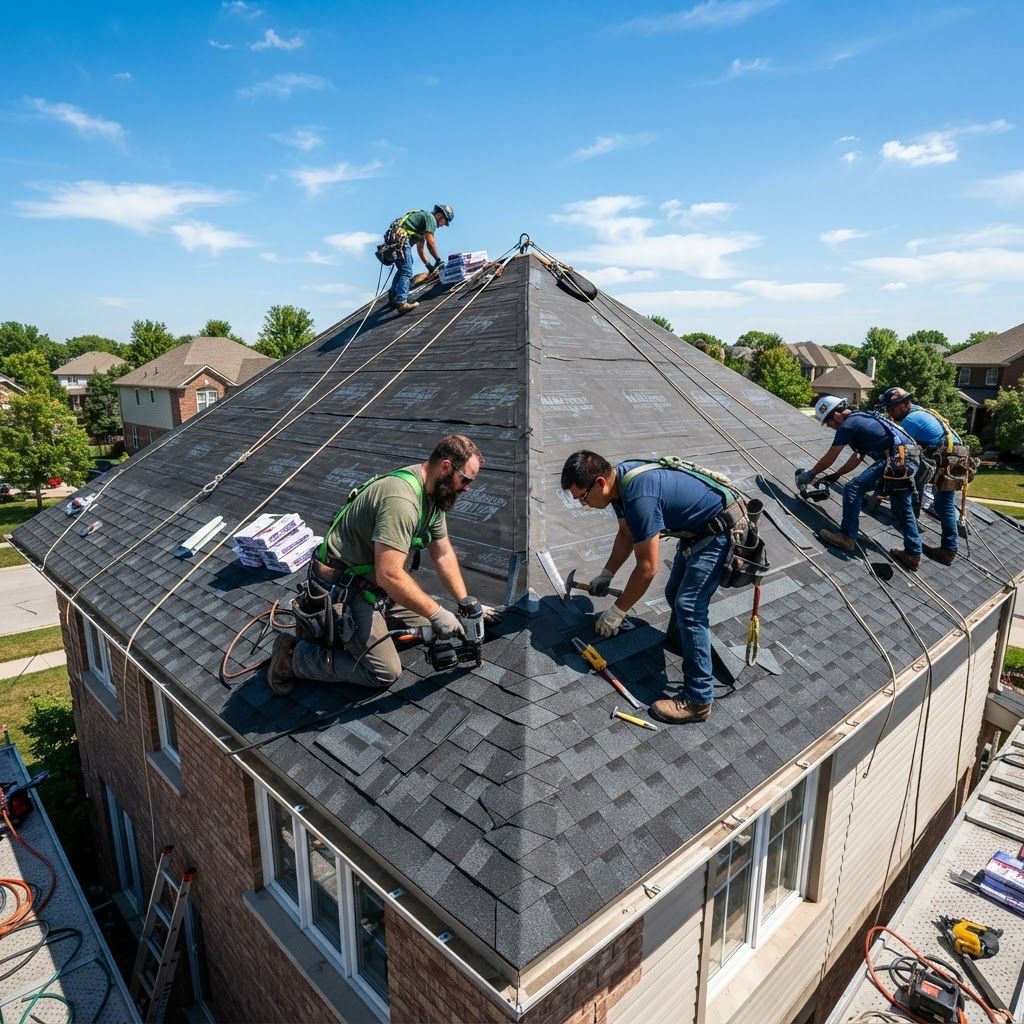
Why Roofing in St. Paul Demands More Than a Fast Tear-Off
A roof in Minnesota faces a brutal annual cycle. Summer surface temperatures on dark shingles can exceed one hundred fifty degrees, while January brings sustained subzero conditions, heavy snow loads, and repeated freeze-thaw cycling. Add spring and summer hail events, and the result is a climate that exposes every shortcut in a roofing installation.
The most common failure in St. Paul is not shingle wear, it is ice damming. When attic heat melts snow on the upper roof, the water runs down and refreezes at the cold eave, building a dam that forces water backward under the shingles. This is fundamentally an insulation and ventilation problem rather than a roofing material problem. Contractors who only sell shingles will replace your roof and leave the ice dams intact. Contractors who understand building science address attic air sealing, insulation depth, soffit intake, and ridge exhaust as part of the scope.
What a Complete Roofing Scope Should Include
A proper replacement includes full tear-off to the deck, deck inspection and repair of deteriorated sheathing, ice and water shield along eaves and valleys extending well past the interior wall line, synthetic underlayment across the field, new metal drip edge and valley flashing, properly integrated step flashing at walls, correctly sized ridge and soffit ventilation, and new pipe boots. Reusing old flashing is a frequent corner-cut that shortens roof life considerably.
Material choices matter as well. Architectural asphalt shingles remain the dominant option due to cost and performance balance. Impact-resistant shingles carry a higher upfront price but can reduce hail damage and sometimes lower insurance premiums. Standing seam metal roofing offers exceptional longevity and sheds snow effectively, though it costs substantially more and requires skilled installation. Flat and low-slope sections common on older St. Paul homes and porches typically need modified bitumen or single-ply membrane rather than shingles.
Ten Roofing Contractors Serving St. Paul
Northern Shield Roofing is known for comprehensive ice dam mitigation, pairing roof replacement with attic insulation and ventilation upgrades.
Capital City Roofing Company handles residential asphalt work at high volume with strong warranty administration and manufacturer certifications.
Summit Metal Roof Works specializes in standing seam and metal shingle systems, including snow retention design above entries and walkways.
Mississippi Flat Roof Solutions focuses on low-slope and commercial membrane roofing, including tapered insulation and drainage correction.
Heritage Slate and Tile Restoration serves historic homes with original slate, clay tile, and copper flashing requiring specialized repair rather than replacement.
Frostline Exteriors combines roofing with siding, gutters, and window work for whole-envelope projects.
Great River Storm Restoration is experienced in hail and wind damage claims, providing documentation and adjuster coordination support.
Eastside Roof and Gutter offers integrated gutter, downspout, and heat cable solutions on problem eaves.
Union Park Roofing Craftsmen emphasizes detail work on complex roof geometry with multiple valleys, dormers, and transitions.
Landmark Commercial Roofing completes the list serving multifamily, institutional, and industrial buildings with maintenance programs and roof asset planning.
Navigating Insurance Claims Intelligently
Hail and wind claims are common in the region, and the process rewards preparation. Document the roof condition before storm season with dated photos. After a storm, have a reputable contractor inspect for bruising, granule loss, and soft metal denting on vents and gutters before filing. Understand whether your policy provides replacement cost value or actual cash value, because the difference can be many thousands of dollars.
Be cautious with contractors who appear immediately after a storm offering to handle everything, waive deductibles, or sign you to an agreement contingent on claim approval. Waiving a deductible is not permissible in Minnesota, and high-pressure tactics are a reliable warning sign. Choose an established local company with a physical address and verifiable history in the metro.
Trends and Longevity Considerations
Impact-resistant and reflective shingle products are gaining share as homeowners weigh lifecycle cost. Improved synthetic underlayments have largely replaced felt due to tear resistance and safer installation. Solar-ready roof planning is increasingly requested, meaning conduit pathways and structural verification are addressed during replacement even when panels come later.
Attic performance is receiving overdue attention. Sealing recessed light penetrations, bath fan ducts, and top-plate gaps before adding insulation is the highest-value work available on many older homes, reducing both ice damming and heating costs.
Choosing Your Roofer
Confirm Minnesota licensing, general liability coverage, and workers compensation. Ask whether crews are employees or subcontractors, and who supervises the installation. Request a written proposal specifying underlayment type, ice barrier coverage width, flashing replacement, ventilation plan, and cleanup and disposal. Get the manufacturer warranty terms in writing along with the contractor workmanship warranty duration.
Avoid selecting purely on price. The difference between a well-detailed roof and a fast one is invisible on installation day and obvious after the third winter.
Conclusion
Roofing in St. Paul is a building performance project, not just a material purchase. The strongest contractors treat ventilation, insulation, flashing, and drainage as inseparable from the roof itself. Use the ten firms above as a starting point, insist on a complete written scope, and prioritize the details that determine whether your roof lasts fifteen years or thirty.