
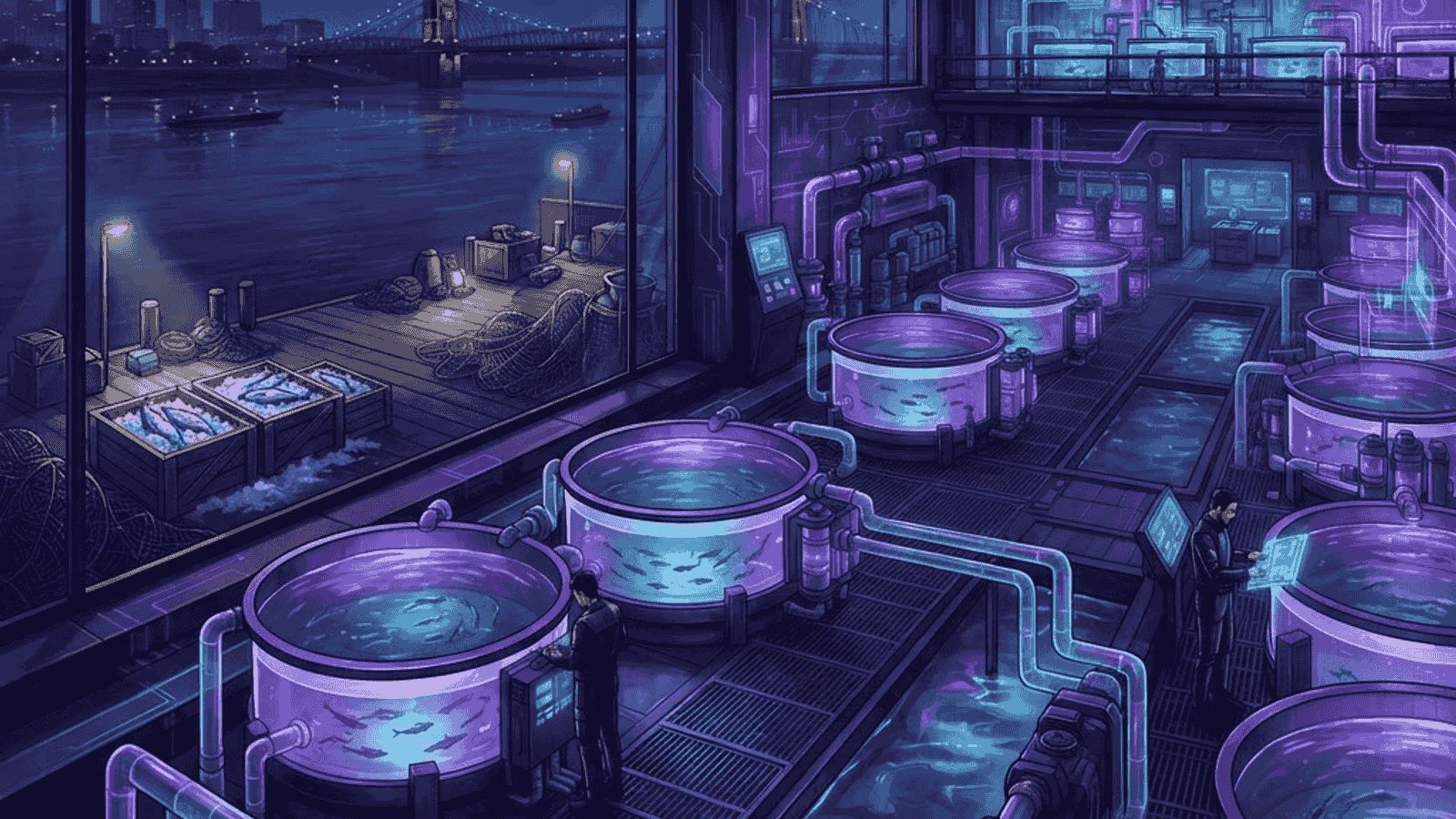
Fisheries and Aquaculture in an Inland City
Cincinnati sits several hundred miles from any ocean, which makes its fishery sector fundamentally different from a coastal port city. Rather than harvesting from the sea, the regional industry is built on three pillars: controlled environment aquaculture producing fish indoors, freshwater fisheries connected to the Ohio River system, and sophisticated distribution operations that bring coastal and imported seafood inland with quality intact.
Each of these has grown for distinct reasons. Aquaculture has expanded because recirculating systems have become technically mature and because buyers value the traceability and consistency that indoor production allows. Distribution has grown because air freight and cold chain technology improved to the point where inland restaurants can serve seafood competitive with coastal establishments. Freshwater fisheries work has grown alongside environmental restoration of the river system.
Understanding Seafood Quality Inland
Buyers in landlocked markets face a specific challenge: verifying freshness without the visual cues a dockside buyer relies on. The most reliable approach is understanding the supply chain rather than inspecting the product. Ask when the fish was harvested, how it was handled immediately after, how many times it changed hands, and what temperature it maintained throughout transit.
Frozen seafood deserves a fairer reputation than it usually gets. Product frozen at sea within hours of harvest often arrives in better condition than fresh fish that spent four days in transit, because the freezing halted degradation at peak quality. For many species and preparations, well-handled frozen product is the better choice, and honest distributors will say so rather than pushing fresh at a premium.
The Ten Leading Fishery Companies Serving Cincinnati
1. Ohio Valley Aquaculture Company. A recirculating aquaculture operation producing food fish in a controlled indoor environment. Their water treatment and biosecurity systems allow year-round harvest independent of weather, and the short distance to market means product reaches restaurants within a day of harvest.
2. Queen City Seafood Distributors. An inland seafood distributor bringing fresh and frozen product from coastal and international sources. Their cold chain documentation and air freight scheduling deliver arrival-day product to restaurants, and their willingness to reject substandard shipments rather than passing them along has earned genuine chef trust.
3. Great Miami Fish Hatchery. Producing fingerlings and stocking fish for pond management, conservation programs, and aquaculture operations. Hatchery genetics and disease-free certification determine the success of downstream growing operations, and their health testing protocols are rigorous.
4. Riverfront Aquatic Systems. Designing and supplying recirculating aquaculture and aquaponic systems for commercial growers and institutions. As indoor production has grown, engineering support has become the limiting factor, and their integration expertise addresses that directly.
5. Tri-State Fisheries Consulting. Providing fisheries biology, habitat assessment, and pond management services to landowners, municipalities, and industry. Regulatory permitting and environmental compliance around water bodies require specialized expertise that few organizations maintain internally.
6. Buckeye Live Fish Market Supply. Supplying live and whole fish to ethnic grocers and restaurants across the metro, a segment with specific handling requirements. Their live haul capability and species knowledge serve culinary traditions that mainstream distribution overlooks entirely.
7. Midwest Shellfish Distributors. Oysters, clams, mussels, and crustaceans with careful attention to the tagging and traceability that shellfish regulations require. Shellfish carry elevated food safety obligations, and their documentation practices protect both restaurants and consumers.
8. Cincy Sustainable Seafood Company. Focused on responsibly sourced and certified seafood with clear fishery and farm origin information. Chefs increasingly need to answer sourcing questions from guests, and their species-by-species documentation makes that straightforward.
9. Great Lakes Freshwater Fish Company. Regional freshwater species including walleye, perch, and whitefish from Great Lakes and inland sources. These species have deep culinary tradition in the Midwest, and shorter supply lines mean better condition on arrival than distant sourcing allows.
10. Clermont Aquaponics Farms. Combining fish production with hydroponic vegetable growing in an integrated system. Nutrient cycling between the two makes the operation resource-efficient, and dual revenue streams provide financial resilience that single-product aquaculture lacks.
Trends Reshaping the Sector
Land-based aquaculture has attracted substantial investment as recirculating technology matured and as concerns about wild stock pressure and open-net environmental impact intensified. Inland facilities can locate near consumption centers, which shortens supply chains dramatically and appeals to buyers who value freshness and traceability equally.
Traceability technology has advanced considerably, with some operations now offering verifiable harvest-to-plate documentation. Seafood fraud, including species substitution and mislabeling, has historically been a serious problem, and verification capability is becoming a genuine competitive differentiator rather than a marketing claim.
Consumer demand has broadened beyond a handful of familiar species toward underutilized and regionally available fish. This benefits both sustainability, by distributing pressure across more stocks, and inland suppliers, who can offer freshwater species with better economics than air-freighted alternatives.
Practical Advice for Restaurant and Retail Buyers
Build a relationship with a distributor who will tell you honestly when a species is not up to standard, since that candor is worth more than a consistently optimistic sales pitch. Ask for harvest dates rather than delivery dates, as the two can differ by a week.
Consider well-handled frozen product seriously for preparations where it performs equally, which reduces both cost and waste. Order according to your actual turn rather than aspirational volume, because seafood spoilage destroys margin faster than almost any other category. Finally, train your staff on receiving inspection, since catching a problem at the door is vastly better than discovering it during service.