
What Long Beach Weather Does to a Roof
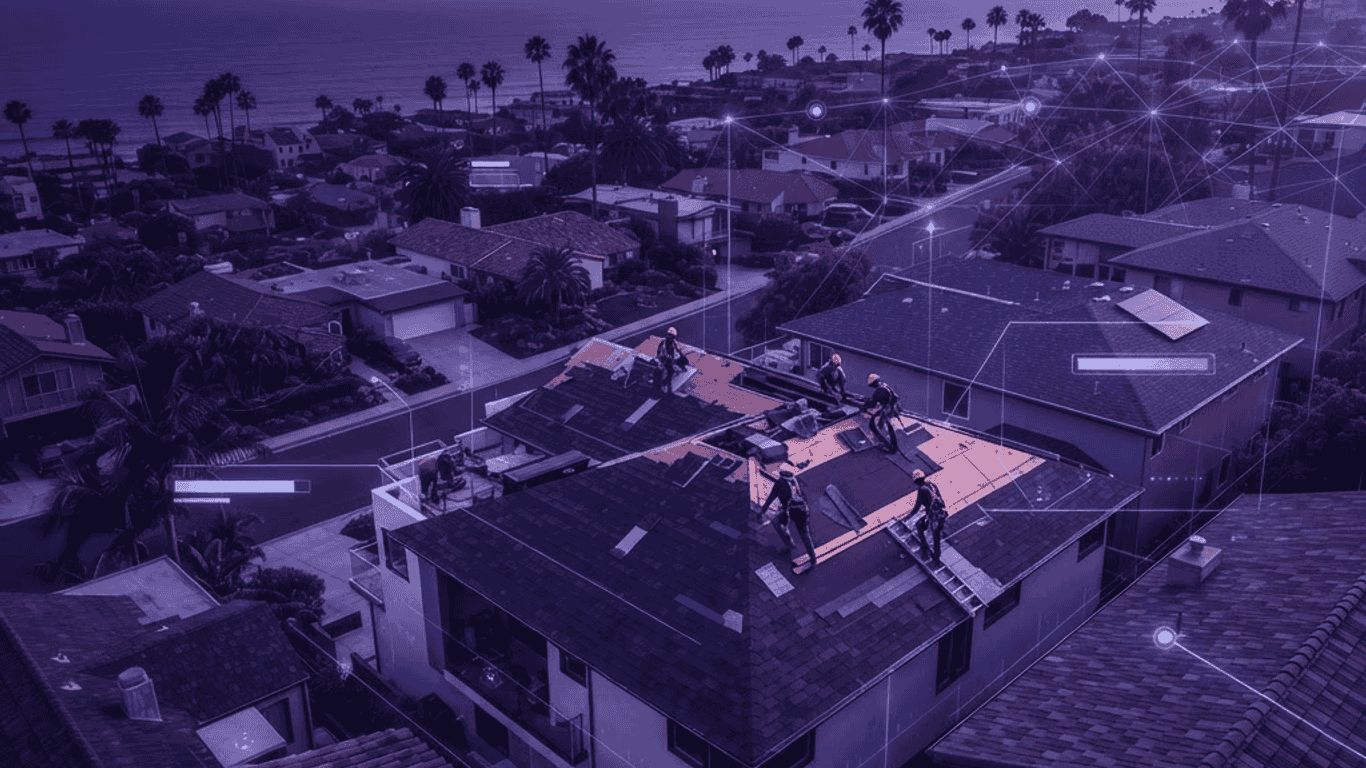
Long Beach enjoys a mild reputation, but its roofs face a punishing combination of conditions. Marine air carries chloride that corrodes fasteners, flashing, and unprotected metal. Long stretches of intense ultraviolet exposure break down asphalt binders and degrade single-ply membranes. Then, in a matter of weeks each winter, atmospheric river storms deliver a season worth of rainfall, exposing every weakness in a flashing detail or a clogged scupper. Add coastal wind uplift near the shoreline and it becomes clear why installation quality matters more here than in a drier inland climate.
The city also has an unusually diverse roofing stock. There are Spanish clay tile roofs on Craftsman and Mediterranean revival homes, low-slope built-up and modified bitumen roofs across mid-century commercial buildings, standing-seam metal on newer infill projects, and large single-ply expanses on warehouses near the port. A contractor who is excellent with steep-slope tile may have little experience with a large TPO field, and vice versa.
How to Judge a Roofing Contractor
Roofing is one of the trades where the difference between good and poor work stays hidden until the first heavy rain. These are the checks worth making.
- An active California contractor license with roofing classification, plus workers compensation and general liability coverage confirmed directly with the insurer
- Manufacturer certification for the specific system being installed, which is usually a prerequisite for the strongest material warranties
- A written scope that specifies underlayment type, fastener material, flashing metal gauge, ventilation, and disposal
- Willingness to inspect and address the deck rather than laying new material over compromised sheathing
- Clear separation between the workmanship warranty offered by the contractor and the material warranty offered by the manufacturer
- Stainless or hot-dipped galvanized fasteners specified for coastal exposure
Ten Roofing Contractors Serving Long Beach
1. Harbor Crest Roofing
Harbor Crest is widely recognized for residential re-roofs across Belmont Heights and Naples, with particular strength in tile and slate work. The company is meticulous about underlayment specification, which is the true waterproofing layer beneath any tile roof and the part most often shortchanged.
2. Signal Peak Roofing and Waterproofing
Signal Peak combines roofing with deck and balcony waterproofing, a valuable pairing on multi-unit coastal properties where leaks often originate at a transition rather than in the roof field itself. Its detailing at parapets and thresholds is a frequent point of praise.
3. Queensway Commercial Roofing
Focused on low-slope commercial systems, Queensway installs TPO, PVC, and modified bitumen assemblies across warehouses and office buildings. The company offers infrared moisture surveys, which help owners target repairs instead of replacing an entire roof prematurely.
4. Bixby Knolls Roof Works
A neighborhood-rooted residential specialist, Bixby Knolls Roof Works has built trust through straightforward assessments and a willingness to recommend repair when a full replacement is not yet warranted. That candor has produced a strong referral pipeline.
5. Pacific Shoreline Metal Roofing
This firm concentrates on standing-seam and metal shingle systems, including coastal-grade coatings and concealed-fastener profiles. Metal roofing suits Long Beach well when the correct alloy and finish are chosen, and Pacific Shoreline is careful about that specification.
6. Alamitos Bay Roofing Company
Serving marina-side properties, Alamitos Bay is experienced with tight access, high wind exposure, and the corrosion challenges of near-water installations. It routinely upgrades flashing metals beyond code minimums for longevity.
7. Port District Industrial Roofing
Built for scale, Port District handles very large single-ply and coating projects on logistics facilities. Its crews are practiced at phased work over operating buildings and at coordinating rooftop mechanical equipment with the roofing sequence.
8. Retro Row Restoration Roofing
Specializing in historic and character properties, this contractor works with clay tile salvage, wood shingle alternatives, and details sympathetic to original architecture. It is a sensible call for homeowners in historic districts with design review requirements.
9. Los Cerritos Solar Roofing
Los Cerritos integrates roof replacement with solar installation, which avoids the expensive mistake of mounting an array on a roof near the end of its life. Coordinated flashing at every penetration is the company signature.
10. Lakewood Village Roof and Gutter
Rounding out the list, this firm pairs roofing with drainage design, replacing undersized gutters and adding overflow scuppers. In a city where damage often stems from water that cannot leave fast enough, that focus is more valuable than it sounds.
Material Choices That Make Sense Locally
Architectural asphalt shingles remain the value option for steep-slope residential roofs, and modern high-definition profiles perform far better than the three-tab products they replaced. Concrete and clay tile offer excellent longevity and heat performance, with the caveat that the underlayment beneath them will need replacement long before the tiles do. Metal roofing delivers outstanding lifespan and wind resistance, provided coastal-appropriate coatings are used. On low-slope roofs, reflective single-ply membranes both extend service life and reduce cooling loads, which matters for California energy compliance on re-roof projects.
Cool roofing has moved from optional to expected. Higher solar reflectance lowers surface temperatures dramatically, which slows material aging and reduces air conditioning demand. Many Long Beach commercial owners now pair a reflective membrane with additional rigid insulation during replacement, capturing an efficiency gain that would be prohibitively expensive as a standalone project.
Planning a Re-Roof Without Regret
Timing matters. Scheduling work in late spring or early autumn avoids both peak storm risk and the crush of emergency demand that follows the first big rain. Obtain at least three detailed proposals and compare them line by line, because a lower price frequently reflects thinner underlayment, fewer layers of flashing, or reused rather than replaced metal. Ask specifically whether the bid includes tear-off to the deck, sheathing repair allowance, ventilation improvements, and permit fees. Finally, insist on photographic documentation of the deck and flashing before the finished surface covers it. Those photos are the only practical evidence of what lies beneath.
Final Thoughts
The best roofing contractors in Long Beach are the ones whose specialty matches your building. Match tile expertise to a tile roof, single-ply expertise to a warehouse, and restoration expertise to a historic home. Verify licensing and insurance independently, prioritize written scope clarity over headline price, and treat drainage as part of the roof rather than an afterthought. Do that, and a new roof should comfortably outlast the warranty period it came with.