
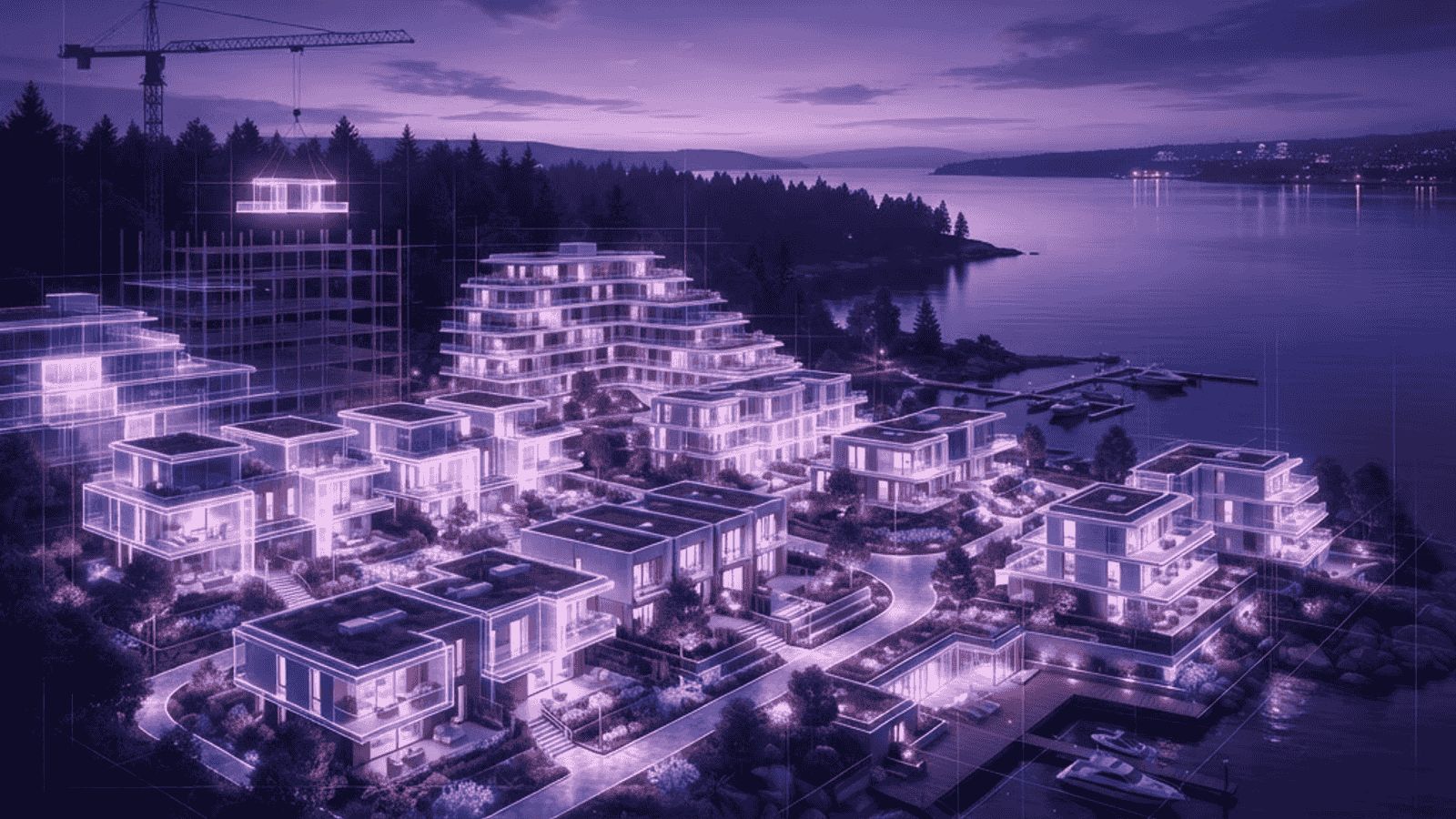
Development in a Town That Guards Its Character
Oyster Bay is not an easy place to build, and that is precisely why the developers who succeed here are worth knowing. The town's mix of historic districts, shoreline setbacks, wetland protections and large-lot zoning means that a project which would be routine elsewhere requires patience, local knowledge and genuine design skill. The result is a housing stock defined less by volume than by craft.
Demand has stayed durable. Buyers moving out from Brooklyn and Queens want space without sacrificing rail access, while long-term residents downsizing from large family homes are looking for smaller, well-built residences that do not feel like a compromise. Developers who can deliver either end of that spectrum without fighting the town's architectural grain tend to do well.
What Distinguishes a Strong Residential Developer
Three capabilities matter. The first is entitlement fluency, which means an experienced understanding of local review boards, wetland regulations and historic overlays. The second is build quality that survives coastal weather: proper flashing, drainage, moisture management and materials chosen for salt air rather than showroom appeal. The third is design restraint, because homes that respect the streetscape hold value better than those that overwhelm it.
The Top 10 Residential Real Estate Developers in Oyster Bay
1. Sagamore Residential Group
A well-established builder of custom single-family homes on larger inland and near-shore parcels. Sagamore Residential Group is known for shingle-style and colonial designs that read as authentic, and for an in-house project management structure that keeps schedules realistic.
2. Harborline Development Partners
Specialists in small-scale infill and boutique multi-unit residences near the village. The firm's strength is producing walkable, low-density housing that satisfies both planners and downsizing buyers, with an emphasis on energy-efficient envelopes and quiet mechanical systems.
3. Cove Neck Custom Builders
A high-end custom home builder working almost entirely from architect-led plans. Millwork, stonework and structural detailing are the calling cards, and the firm is often engaged for sensitive renovations of older estates as well as new construction.
4. North Shore Heritage Homes
Focused on restoration-sympathetic development. The team specializes in rebuilding and expanding early twentieth-century homes while preserving original proportions, a service in constant demand across the town's older neighborhoods.
5. Bayview Land & Construction
A land-forward developer skilled at difficult sites: sloped lots, drainage-constrained parcels and properties requiring extensive site engineering. Their willingness to take on complicated ground makes them a frequent partner for landowners with awkward inventory.
6. Millstone Communities
Builders of small planned clusters and townhome enclaves. Millstone Communities emphasizes shared landscaping, private drives and consistent architectural language, producing developments that feel cohesive rather than assembled.
7. Oyster Bay Homes & Estates
A locally rooted developer with a long record of family-scale projects. Reputation here rests on straightforward contracts, predictable change-order handling and a warranty follow-through that owners actually praise.
8. Anchor Point Residential
Notable for sustainability. High-performance insulation, heat pump systems, solar readiness and low-water landscaping are standard rather than upgrades, and the firm markets to buyers who evaluate homes on operating cost as well as appearance.
9. Laurel Ridge Development Company
Concentrated on mid-market new construction, an underserved segment locally. Laurel Ridge Development Company works to keep quality consistent while controlling scope, offering curated selection packages instead of open-ended customization.
10. Shoreline Craft Builders
A boutique operation handling a handful of projects a year, primarily waterfront and near-water homes. Coastal construction detailing, elevated foundations and flood-resilient design are central to their work, along with unusually close client involvement.
Trends Reshaping Local Residential Development
Energy performance has moved from a selling point to an expectation, with heat pumps, improved air sealing and solar-ready wiring now common in new construction. Flood resilience is a second major driver: elevated mechanicals, better site drainage and material choices that tolerate water are increasingly standard near the shoreline.
Buyer preferences have also shifted toward flexible interiors. Dedicated home offices, ground-floor bedroom suites for multigenerational living and finished lower levels appear repeatedly in current plans. Meanwhile, timelines remain longer than they were a decade ago, with approvals and specialty trades both contributing, so any developer promising an unusually fast schedule deserves scrutiny.
How to Evaluate a Developer Before You Commit
- Visit two completed projects, ideally one at least five years old, to judge how the work has aged.
- Ask how many projects the firm runs simultaneously and who supervises the site daily.
- Review the contract's allowance and change-order language line by line.
- Confirm experience with the specific approvals your parcel will require.
- Request references from owners rather than only from trade partners.
Final Thoughts
Choosing a residential developer in Oyster Bay is largely a question of fit. A waterfront rebuild demands coastal engineering experience; a historic-district renovation demands restraint and permitting patience; a mid-market build demands disciplined cost control. The firms profiled here cover that range, and the buyers who end up happiest are the ones who match a developer's demonstrated specialty to the specific project in front of them rather than choosing on reputation alone.