
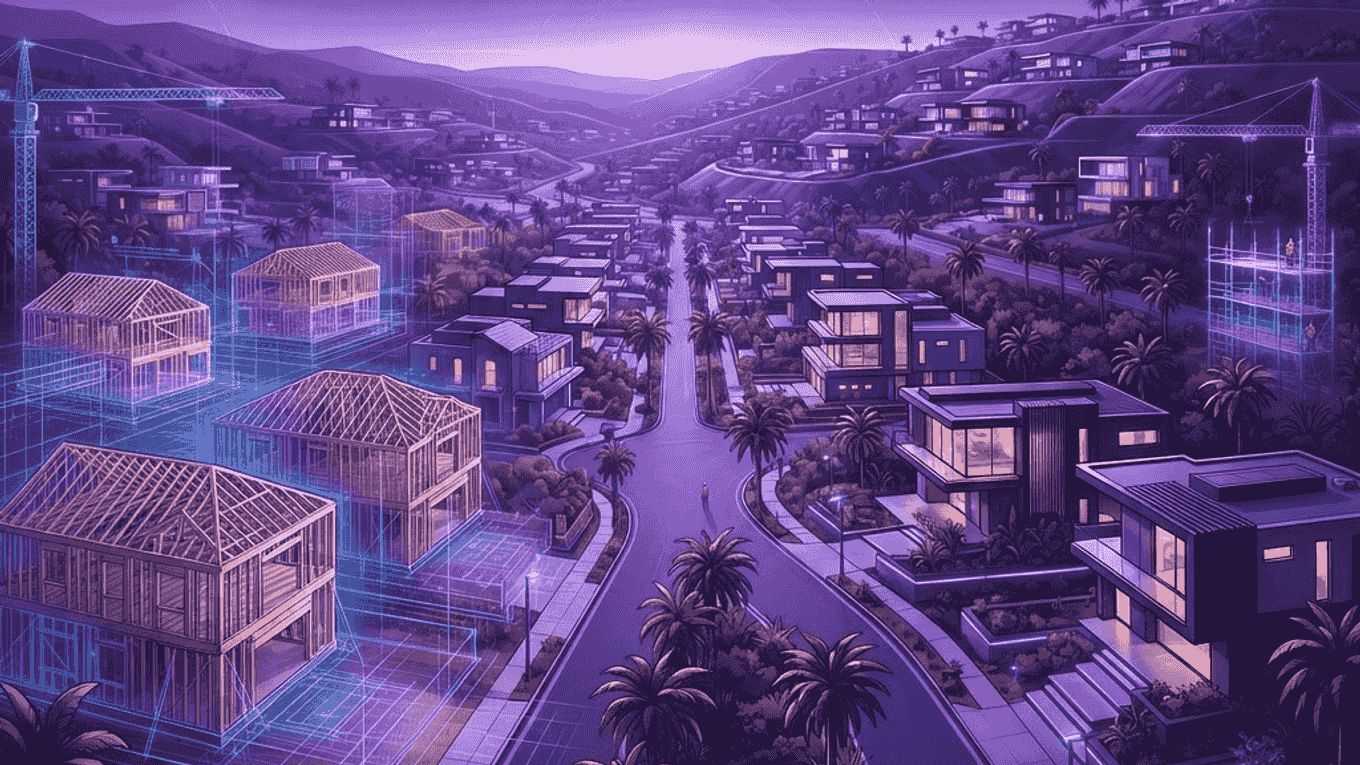
Residential Construction in a Master-Planned City
Irvine's housing stock is unusual because so much of it was delivered as coordinated village development rather than scattered infill. Streets, parks, schools, and retail were planned alongside the homes, which produced consistent neighbourhoods and a strong resale market. For builders, that consistency comes with obligations. Architectural review, landscape standards, setback rules, and community guidelines all shape what can be built and how it must look when finished.
Layered on top of local expectations are California's energy and building codes, which continue to tighten. Solar readiness, high-performance envelopes, efficient mechanical systems, electrical capacity for vehicle charging, and increasingly stringent ventilation requirements all influence design and cost. The residential companies that thrive in Irvine treat compliance as a design input rather than a paperwork exercise, and they can explain the trade-offs to buyers in plain language.
Production Builders Versus Custom Builders
Two very different business models serve Irvine. Production builders develop entire neighbourhoods using refined plan sets, negotiated supplier pricing, and repeatable construction sequences. Buyers get predictable quality, warranty support, and design options within defined limits. Custom and semi-custom builders work one home at a time, usually for owners who have specific requirements or an unusual lot. The cost per square foot is higher, the schedule is longer, and the process demands more owner involvement, but the result is tailored rather than selected from a menu.
The Top 10 Residential Construction Companies in Irvine
1. Irvine Pacific
As the homebuilding arm associated with the city's principal master developer, Irvine Pacific builds within the villages it helps plan. Its advantage is integration: architecture, landscape, and community amenities are coordinated from the start, and buyers get homes that fit their surroundings.
2. TRI Pointe Homes
Headquartered in Irvine, TRI Pointe is known for contemporary floor plans, strong interior design programmes, and a focus on indoor-outdoor living that suits the Southern California climate. Buyers frequently mention the quality of the design studio experience.
3. Shea Homes
Shea combines decades of California experience with a reputation for durable construction and responsive customer care. The company's plans often prioritise flexible living spaces, which appeals to multigenerational households common in Irvine.
4. Toll Brothers
Toll Brothers occupies the luxury end of production housing, offering larger homes with extensive structural options and premium finishes. Its model works well for buyers who want customisation without commissioning a fully bespoke home.
5. Lennar
Lennar's scale allows competitive pricing and well-equipped homes with a strong included-features package. Its multigenerational suite concepts have found a receptive audience among families sharing a single property.
6. KB Home
KB Home builds around buyer personalisation, letting purchasers configure layouts and finishes earlier in the process than many competitors. The company also emphasises energy performance and clear disclosure of operating costs.
7. The New Home Company
This Southern California builder focuses on architecturally distinctive homes in select locations. It is a good fit for buyers who want the security of a production builder with a more design-forward result.
8. Landsea Homes
Landsea has built its brand around high-performance and connected homes, integrating efficiency systems and smart technology as standard rather than as upgrades. That positioning resonates with technology-oriented Irvine buyers.
9. Brookfield Residential
Brookfield brings community-scale thinking to its projects, with attention to walkability, shared amenities, and long-term neighbourhood character. Its homes tend to hold value well in planned settings.
10. Custom and Semi-Custom Local Builders
Irvine also supports a group of established custom builders who handle estate homes, major additions, and full reconstructions on existing lots. These firms typically work with an architect and a structural engineer from the outset and manage association approvals on the owner's behalf. For unusual lots or highly specific requirements, they are often the only realistic option.
What Quality Actually Looks Like
Buyers tend to evaluate homes through finishes, but the elements that determine long-term satisfaction are mostly hidden. Framing accuracy, waterproofing at windows and decks, air sealing, duct design, insulation continuity, and drainage away from foundations matter far more than cabinet hardware. Ask builders how they test their work. Blower door results, third-party inspections, and documented quality checklists indicate a company that measures rather than assumes.
Timelines, Contracts, and Budget Discipline
A new production home usually follows a defined construction calendar, while a custom project depends on design completion, permitting, and material selection. Delays most often originate from late decisions rather than slow crews, so owners who finalise selections early protect their own schedules. Contracts should clearly define allowances, the change order process, warranty coverage, and the standard used to judge completion. On custom work, a realistic contingency of ten to fifteen percent is prudent, particularly when remodelling an older structure where conditions are only revealed after demolition.
Sustainability as a Practical Investment
Efficiency upgrades in Irvine tend to pay back through comfort as much as through utility bills. Better glazing reduces afternoon heat gain, properly sized mechanical systems run quieter and last longer, and improved ventilation supports indoor air quality during wildfire smoke events. Electrical planning for future vehicle charging and battery storage is far cheaper during construction than as a retrofit, and builders who raise the topic proactively are usually thinking about the owner's long-term interests.
Choosing the Right Builder
Visit completed communities and, if possible, homes finished several years ago rather than only current models. Ask owners about warranty responsiveness, since that is where reputations are truly made. Compare included features rather than headline prices. Whether you are buying into a new village or rebuilding on an established street, the builder you select will influence how the home performs and feels for decades, which makes careful evaluation the most valuable work you can do before construction begins.