
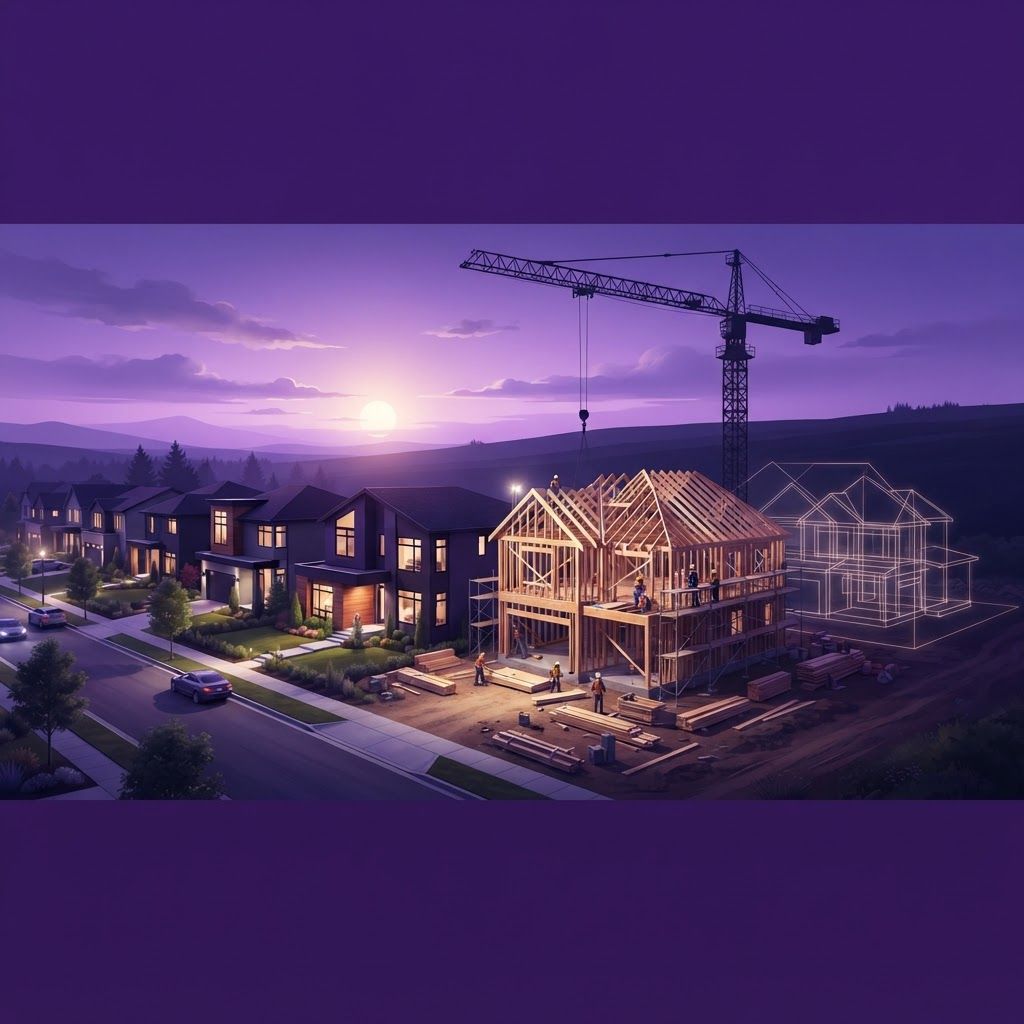
Residential Growth in Elk Grove
Few Northern California cities have grown as consistently as Elk Grove. Its transformation from an agricultural community into one of the state's larger cities happened primarily through residential construction, and that activity has continued in the southern portions of the city where master-planned communities remain under development. Demand comes from Sacramento-area professionals, Bay Area relocations seeking affordability, and multigenerational families drawn to larger lots and strong schools.
Residential construction here splits into several distinct markets: production homebuilding within planned communities, custom home construction on individual lots, major additions and whole-home renovations, and the rapidly expanding accessory dwelling unit segment.
Ten Residential Construction Options
1. National production homebuilders. Large builders operating in Elk Grove's newer communities deliver homes from established floor plans with predictable pricing and warranty programs. Their advantage is efficiency and financing integration; the trade-off is limited customization.
2. Regional Northern California homebuilders. Mid-sized builders focused on the Sacramento region often provide more design flexibility than national firms while retaining professional project management and established subcontractor relationships.
3. Custom home builders. Firms constructing one-off homes on private lots, coordinating architects, engineers and specialty trades. Suited to owners with specific requirements and the patience for a longer, more involved process.
4. Semi-custom builders. Offering a catalog of base plans with substantial modification options, this middle path delivers meaningful personalization without full custom cost and timeline.
5. Accessory dwelling unit specialists. Builders focused on secondary units, including detached cottages, garage conversions and attached suites. Demand has grown sharply as families house aging parents, adult children or rental tenants.
6. Whole-home renovation contractors. For buyers purchasing older Elk Grove homes on desirable lots, comprehensive renovation often delivers better value than new construction, particularly where mature landscaping and larger parcels are involved.
7. Modular and prefabricated home builders. Factory-built components assembled on site reduce weather delays and can compress schedules, an approach increasingly used for secondary units and smaller homes.
8. Multigenerational home specialists. Reflecting Elk Grove's demographics, several builders offer plans with secondary suites, separate entrances and dual primary bedrooms designed for extended families sharing a household.
9. Energy-efficient and solar-integrated builders. California building standards require high efficiency and solar generation on new homes, and builders differentiate through envelope quality, heat pump systems, battery storage and electric-ready design.
10. Owner-builder support services. For homeowners acting as their own general contractor, consulting services provide scheduling, permitting and subcontractor coordination assistance while the owner retains control and captures the contractor margin.
Understanding Cost Drivers
Construction costs in the Sacramento region are driven by labor availability, material pricing, site conditions and regulatory requirements. Foundation work varies significantly with soil conditions, which differ across Elk Grove neighborhoods. Utility connections, impact fees and permit costs represent a substantial line item that surprises many first-time builders.
Finish level drives an enormous share of the final number. The structural shell of two homes can be nearly identical while the finished cost differs dramatically based on cabinetry, flooring, countertops, fixtures and window specification. Establishing a finish budget early and holding to it prevents the most common form of cost overrun.
Realistic Timelines
Production homes in an active subdivision typically complete in several months once construction starts, though the wait for a released lot can be longer. Custom homes generally require a year or more from design through completion, with permitting and design consuming a meaningful portion before ground is broken. Accessory dwelling units usually complete faster, benefiting from streamlined approval processes.
Weather is less disruptive here than in many regions, but winter rain does affect foundation and framing schedules, and summer heat limits certain work to morning hours. Experienced local builders plan around both.
Evaluating a Builder
Visit completed homes and, if possible, homes currently under construction. Site organization and framing quality reveal a great deal about workmanship standards. Ask to see the warranty document before signing, and understand what is covered in the first year, the systems coverage period and the structural coverage period.
Speak with owners who moved in one to three years ago rather than only recent buyers. Problems with settling, drainage, mechanical systems and finish durability surface after a season or two, and those owners give the most informative feedback.
Financing Considerations
Construction financing differs from a standard mortgage. Construction-to-permanent loans disburse in draws as milestones complete and convert to a mortgage at completion. Lenders require detailed budgets, plans and builder documentation, which is one reason working with an established builder simplifies approval.
Owners should build a contingency reserve of a meaningful percentage of the total budget. Change orders, unforeseen site conditions and material price movement are normal rather than exceptional, and a project without contingency becomes stressful quickly.
Final Thoughts
Elk Grove offers residential construction options across the full spectrum, from efficient production homes to fully custom builds and rapidly deliverable secondary units. The right choice depends on how much customization matters relative to cost and timeline certainty. Verify licensing and warranty terms, talk to past clients who have lived in the homes, budget a real contingency and define finishes early. Those steps convert an inherently complex undertaking into a manageable one.