
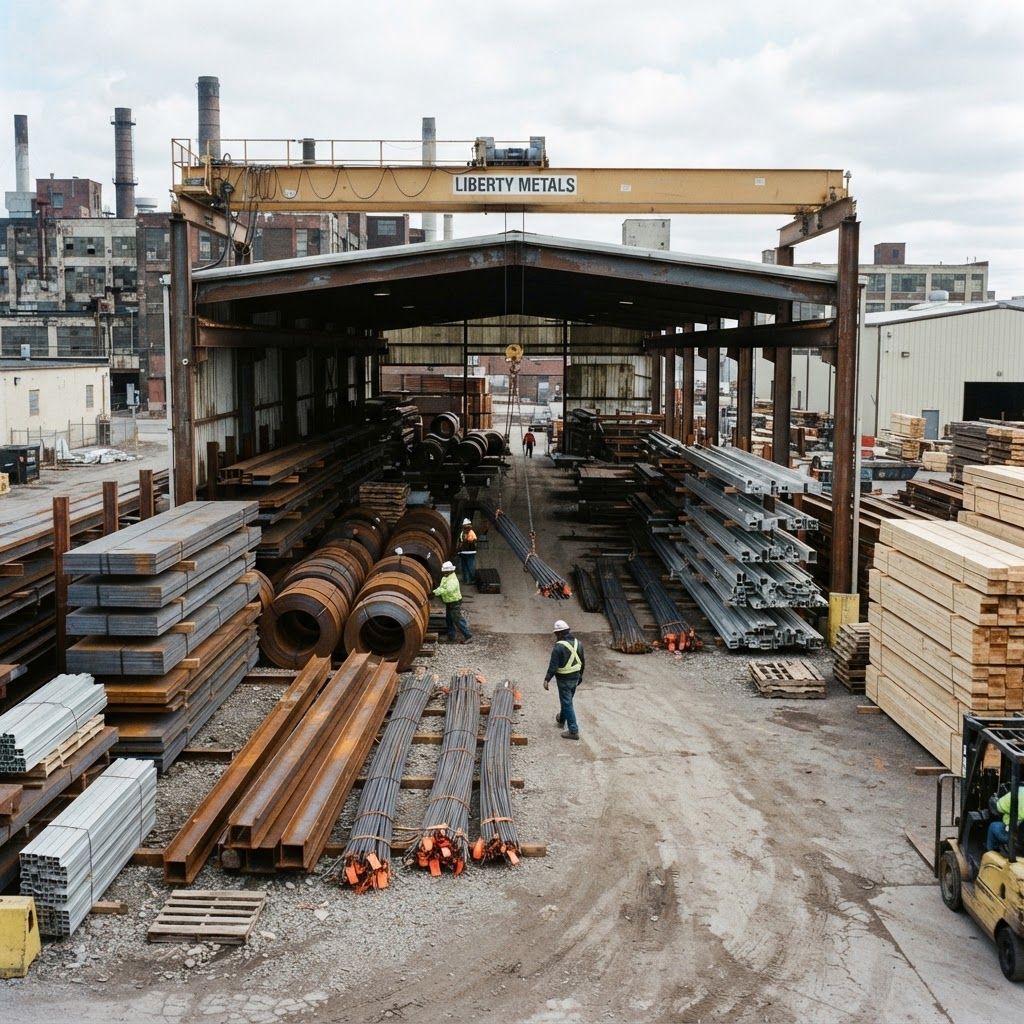
Raw materials are where manufacturing margin is won or lost. Labor efficiency and overhead control matter, but material cost typically represents the largest single input for a fabricator, builder or processor, and material quality determines whether finished goods pass inspection. Buffalo's industrial history means the city retains genuine depth in this space, with suppliers whose relationships with mills, refiners and producers date back generations.
Buffalo's Industrial Supply Advantage
The region's position is structurally favorable. Great Lakes shipping, extensive rail infrastructure, interstate access and proximity to Canadian producers converge here, which historically made Buffalo a natural transfer point for steel, grain and bulk commodities. That legacy survives in the form of established service centers, processing capability and warehouse capacity that a comparably sized inland city would not support.
Local demand reinforces it. Advanced manufacturing, automotive supply, aerospace components, food processing, construction and a growing plastics and composites sector all draw on the same supplier base, keeping inventory turning and pricing competitive.
The Top 10 Raw Material Suppliers in Buffalo
1. Queen City Metals Service Center
A full-line steel and aluminum distributor stocking sheet, plate, bar, tube and structural shapes. Value-added processing — shearing, sawing, plasma and laser cutting — lets fabricators receive near-net material and reduce in-house scrap and handling time considerably.
2. Niagara Specialty Alloys and Stainless
Focuses on stainless, nickel alloys, titanium and copper-based materials for demanding applications. Full material traceability and mill test reports are standard, which matters for aerospace, food equipment and pressure-containing work where documentation is mandatory.
3. Lakeshore Polymer and Resin Supply
Distributes engineering thermoplastics, commodity resins, masterbatch colorants and additives to injection molders and extruders. Technical support on material selection, drying requirements and processing windows helps prevent costly production trials.
4. Erie Basin Lumber and Building Materials
Supplies dimensional lumber, engineered wood, sheathing, hardwoods and millwork stock in commercial quantities. Careful moisture-content management and covered storage are meaningful advantages given Buffalo's humidity swings and freeze-thaw exposure.
5. Buffalo Aggregate and Concrete Materials
Provides sand, gravel, crushed stone, cement, admixtures and precast components for construction. Consistent gradation, reliable mix designs and dependable scheduling during the compressed regional building season are the primary selling points.
6. Great Lakes Industrial Chemicals
Handles solvents, acids, surfactants, coatings intermediates and process chemicals with proper regulatory handling. Safety data documentation, compliant packaging, secondary containment guidance and disposal support are as important as the product itself.
7. Southtowns Food Ingredient Wholesale
Serves bakeries, breweries, sauce makers and packaged food producers with flours, sweeteners, oils, grains, cultures and functional ingredients. Allergen segregation, lot traceability and food-safety certification underpin the entire operation.
8. Allentown Textile and Leather Sourcing
Supplies fabrics, upholstery textiles, webbing, foam and leather hides to furniture makers, apparel producers and leather goods studios. Access to smaller cut lengths makes it viable for the region's independent makers rather than only large manufacturers.
9. Cheektowaga Glass and Ceramics Materials
Distributes flat glass, tempered and laminated products, clays, glazes and refractory materials. The combined industrial and artisan customer base means unusual breadth, from architectural glazing to studio pottery supplies.
10. Buffalo Recycled and Secondary Materials Exchange
Brokers scrap metal, regrind plastics, reclaimed wood and secondary feedstocks. For manufacturers pursuing recycled content targets or simply lower input costs, verified secondary material with consistent specification is increasingly strategic rather than marginal.
How to Evaluate a Raw Material Supplier
Certification and traceability come first. Require mill test reports, certificates of analysis, or equivalent documentation appropriate to your industry, and confirm the supplier can trace a lot back to its origin. In regulated work, undocumented material is unusable regardless of its actual quality.
Understand pricing mechanics. Many raw materials move with commodity indices, currency and energy costs, so a quoted price may have a short validity window. Ask how pricing is set, whether index-based formulas or fixed-period agreements are available, and how surcharges are applied. For volatile inputs, a transparent formula is often more valuable than a low headline number.
Assess lead time and inventory strategy jointly. Consignment stock, vendor-managed inventory and blanket orders with scheduled releases can dramatically reduce your working capital while protecting against shortage. Also evaluate processing capability, because outsourcing cutting or slitting to a supplier with better equipment usually beats doing it inefficiently in-house.
Trends Affecting Material Sourcing
Supply chain resilience has replaced pure cost optimization as the dominant priority, pushing buyers toward dual sourcing and regional suppliers even at slight premiums. Recycled and lower-carbon material grades are becoming standard offerings as customers request embodied-carbon data. Digital procurement tools now give buyers real-time inventory visibility and index pricing transparency that was previously opaque. And nearshoring continues to benefit border markets like Buffalo, where North American production and cross-border logistics converge.
Final Thoughts
Strong material sourcing in Buffalo comes from treating suppliers as extensions of your production planning rather than interchangeable vendors. Share forecasts, agree on documentation standards up front, and structure pricing in a way both parties can sustain through commodity cycles. Qualify a secondary source for every critical input before you need it, and audit your top three materials annually for specification drift and cost creep. That combination protects both quality and margin.