
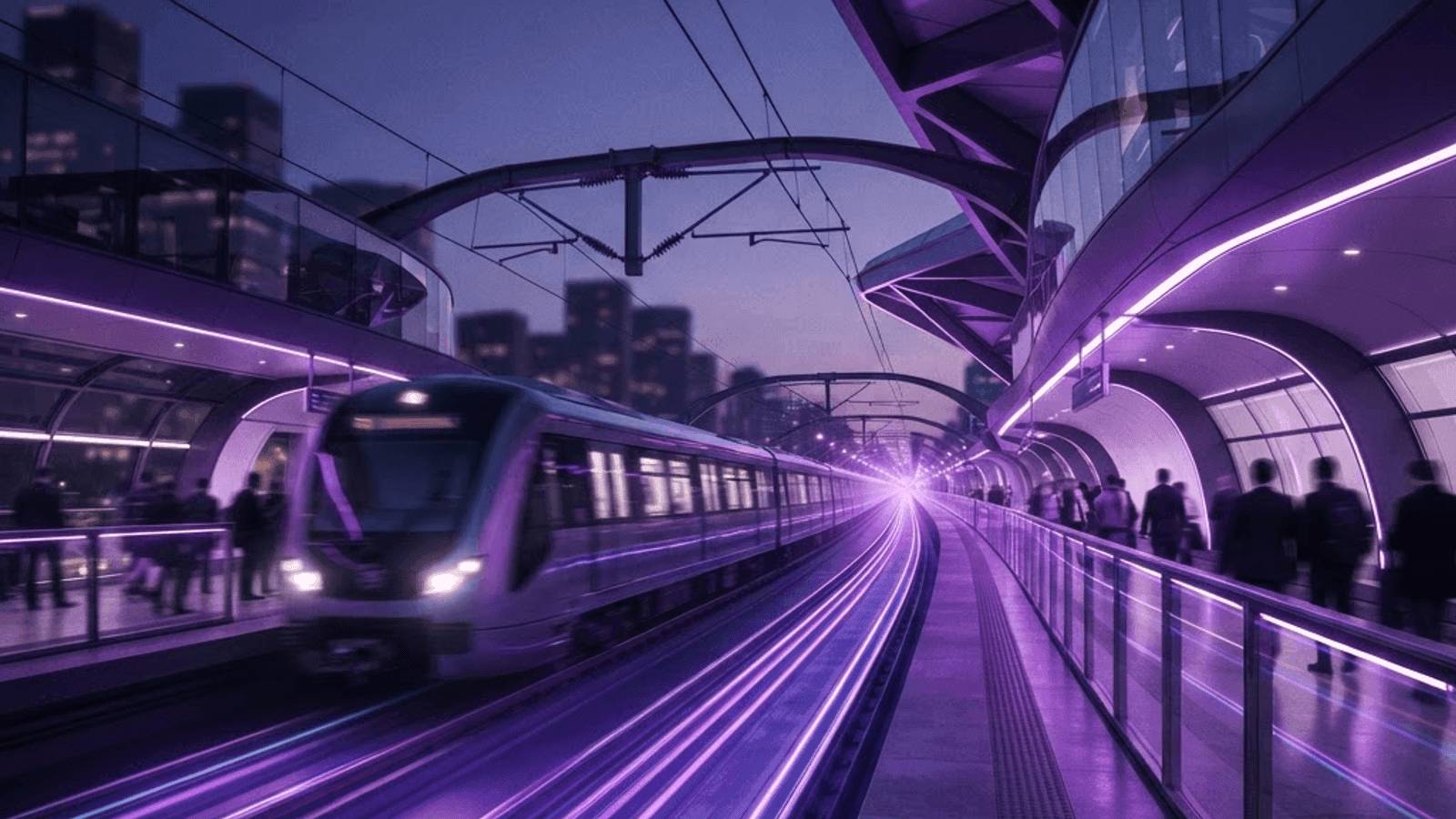
Rail's Role in Sunnyvale
Sunnyvale has a railway station at the centre of its downtown, and that single fact has shaped the city's development for more than a century. The corridor that now carries Caltrain services between San Francisco and Gilroy originally supported the agricultural economy that gave the area its orchards. Today it carries commuters, and the station has become the anchor for transit-oriented housing, offices, and retail.
Rail matters here for three distinct reasons. It moves commuters efficiently along a congested peninsula corridor. It connects the region to the wider state network for longer journeys. And it carries freight that would otherwise add thousands of truck trips to already busy highways.
How to Evaluate Rail Services
For passenger rail, the relevant measures are frequency, journey time, reliability, and station access. A service running every fifteen minutes changes travel behaviour in a way that an hourly service never will, because it removes the need to plan around a timetable.
Comfort and onboard facilities matter on longer journeys, including seating quality, luggage space, bicycle capacity, power outlets, and catering. Fare integration is another important factor, since the ability to use a single payment method across rail, light rail, and bus makes multimodal journeys practical.
For freight rail, the considerations are different. Shippers evaluate network reach, transit reliability, intermodal terminal access, equipment availability, and the cost advantage relative to trucking over a given distance.
The Top 10 Rail Operators and Services Serving Sunnyvale
1. Caltrain. The primary commuter rail service, running through Sunnyvale Station along the peninsula corridor. Its recent electrification has delivered faster acceleration, quieter operation, cleaner air, and significantly increased service frequency.
2. VTA Light Rail. Santa Clara Valley Transportation Authority's light rail network connects Sunnyvale's neighbouring employment centres, Mountain View, downtown San Jose, and Milpitas, providing local distribution from mainline rail.
3. Amtrak Capitol Corridor. A regional intercity service linking the Bay Area with Sacramento and the Central Valley, with connecting coach service from South Bay locations. It is a popular alternative to driving on congested interstate routes.
4. Amtrak Coast Starlight. A long-distance route running between Seattle and Los Angeles along one of the most scenic rail corridors in North America, accessible via nearby stations and connecting services.
5. Amtrak San Joaquins. A state-supported corridor service connecting the Bay Area with Fresno, Bakersfield, and onward bus links to Southern California, well used by travellers heading into the Central Valley.
6. Altamont Corridor Express. Known as ACE, this commuter service links the Central Valley with Silicon Valley, carrying workers who live in more affordable communities east of the Bay Area.
7. BART. The regional heavy rail system serving the wider Bay Area, now extended into Santa Clara County, providing connections to Oakland, San Francisco, and the East Bay from the South Bay network.
8. Union Pacific Railroad. The dominant freight railroad in the western United States, operating the lines that carry regional freight and intermodal containers through the corridor serving Sunnyvale businesses.
9. BNSF Railway. The other major western freight carrier, offering extensive intermodal service and access to national markets for shippers moving significant container volume.
10. California High-Speed Rail Authority. The agency developing the state's high-speed rail programme, which is planned to eventually use the electrified peninsula corridor, shaping long-term regional rail capacity and connectivity.
Trends in Rail
Electrification is the headline development on the peninsula corridor. Replacing diesel locomotives with electric trainsets has improved acceleration between closely spaced stations, cut journey times, reduced noise, and eliminated diesel emissions along a densely populated route.
Fare integration continues to advance through regional contactless payment, allowing riders to move between rail, light rail, and bus with a single account. Transit-oriented development around stations, very visible in downtown Sunnyvale, is increasing the number of residents and workers within walking distance of rail.
On the freight side, intermodal continues to take share from long-haul trucking on cost and emissions grounds, while railroads invest in terminal capacity and precision scheduling to improve reliability. Grade separation projects across the corridor are gradually removing level crossings, improving both safety and train speeds.
Practical Advice for Rail Travellers
Use a regional transit card or mobile payment for seamless transfers and better fares than single tickets. Check timetables carefully, as peak and off-peak service patterns differ substantially, with some trains skipping stations to reduce journey times.
If you cycle, learn the bicycle capacity rules for your chosen service and travel outside the busiest departures when possible. For long-distance Amtrak journeys, book early for the best fares and consider reserved seating or sleeper accommodation on overnight routes.
Allow buffer time when connecting between rail and flights, since a single delayed service can cascade. And for freight shippers, evaluate intermodal seriously for lanes over roughly seven hundred miles, where the cost and emissions advantages become substantial.
Final Thoughts
Rail is quietly one of Sunnyvale's greatest infrastructure assets. A downtown station on an electrified corridor, connections into regional and statewide networks, and access to major freight railroads give both residents and businesses options that most suburban American cities lack. As service frequency improves and integration deepens, rail's share of local travel is likely to keep growing.